Pinot noir is a beloved wine variety in NZ, favoured for its elegantly balanced fruit, florals and lithe profile. It’s an elegant wine so is easy to love – but hard to grow, hence being nicknamed the ‘heartbreak grape’. Its thin-skinned and susceptible to disease, so it took brave wine-making visionaries to attempt to grow pinot here in NZ. Early champions of the wine were told that they were mad.
Luckily for pinot lovers, one such ‘madman’ didn’t listen. Irishman Alan Brady came to Central Otago and planted pinot on a small plot in Gibbston Valley, despite people telling him repeatedly it would had produced the first modern commercial pinot noir in 1973 from Canterbury-grown grapes).
There was no looking back and pinot planting in the region surged from less than 150ha in 1990 to 2000ha by the year 2000. Alan is respected as the godfather of NZ pinot noir and at almost 90 was present at the recent Pinot Noir Conference in Christchurch still with a thirst for knowledge and the desire to share what he has learned along the way.
The three-day event was an opportunity to be inspired by the NZ pinot noir journey and to plan the future for this exciting wine variety.
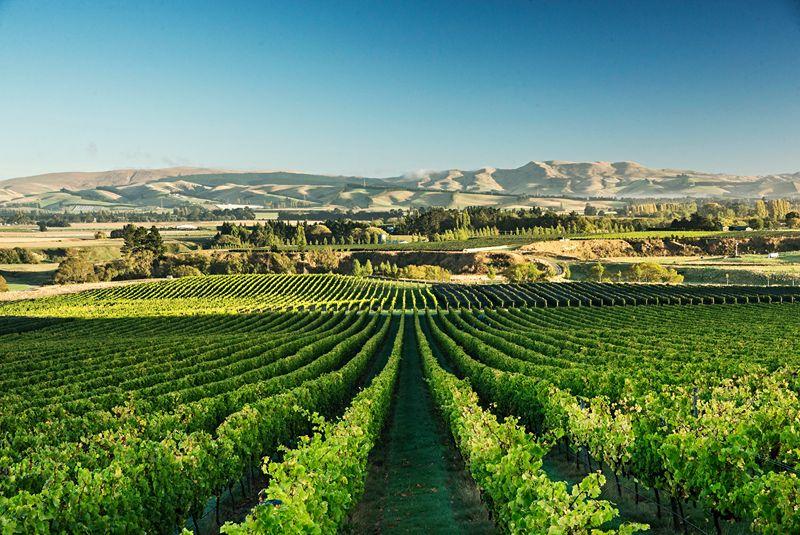
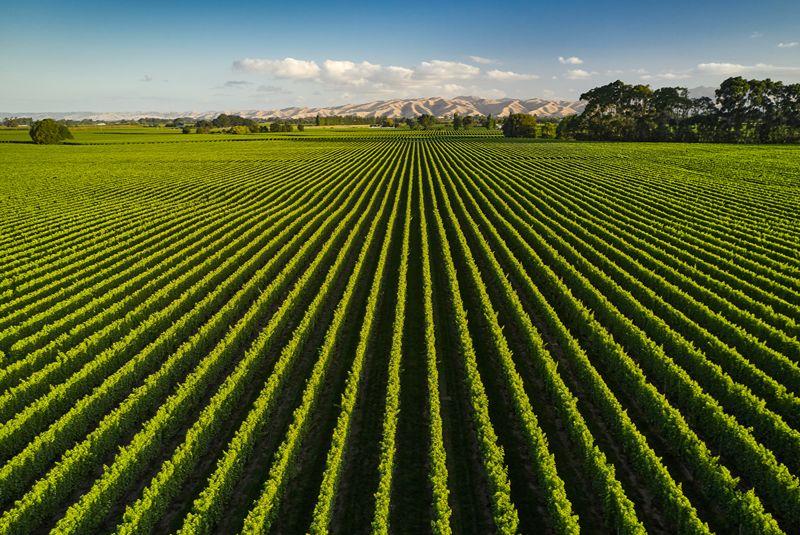
Today, NZ’s pinot plantings exceed 5700ha. Pinot noir grapevines like a cool climate and thrive in all wine regions from the Wairarapa south as well as in higher altitude regions of Hawke’s Bay. The largest concentration of plantings is in Marlborough.
There is no question that pinot noir is NZ’s most important red grape, so making this wine well represents a level of skill in growing and wine-making that not all wine regions are capable of, regardless of climate. It truly is a reflection of just how special NZ wine is and we want the world to know.
The value of wine exports has dropped slightly over the past year, though volumes remain strong with an exceptionally large 2025 harvest to drive growth.
NZ Winegrowers annual report indicates exports rose 5 percent by volume in the year ended June, though the value of exports was down slightly at $2.10 billion.
Association chair Fabian Yukich said there had been strong export growth to Asian markets over the past year, though the value of exports to the major United States market fell 4 percent to $762 million.
About 90 percent of the wine produced in New Zealand was exported to more than 100 countries.
Shipments to China grew 47 percent to $56m, while exports to South Korea lifted 92 percent to $44m.
Overall exports to second-tier markets, which excluded UK, USA and Australia which together accounted for 70 percent of exports, rose 17 percent in the past 12 months to just under $600m.
“According to market researcher IWSR, lighter refreshing styles are outpacing overall wine category performance,” Yukich said.
“This shift is driven by varietals with more refreshing palate profiles, which New Zealand excels in delivering.”
However, he said the industry was facing a number of challenges, with uncertainty around the long-term impact of tariffs on demand for New Zealand wine in the United States.
“While the increased tariffs have been in place since April, with a further increase in August, it is not yet possible to discern the effect of these in the export data.”
Vintage 2025
The 2025 vintage was unusually large with positive weather conditions bringing warm, dry days and cool nights, producing a high-quality harvest, though a lot of grapes were left on the vine.
Winegrowers chief executive Phillip Gregan said the grape yield was exceptional with the volume far exceeding the industry’s ability to process.
“The weather was so fantastic for grape growing that crop was really once in a generation,” Gregan said.
“There was no way we were ever going to be able to harvest all those grapes. We wouldn’t have had the capacity in our wineries. So there’s still plenty of our wine available to grow sales over the last.”
View the extended list of The World’s 50 Best (actually 51st to 100th) Vineyards.
The list of The World’s 50 Best Vineyards 2025 will be revealed at a live awards ceremony in Margaret River, Western Australia, on 19 November.
From established names to rising stars, find out more about the storied estates ranked 51st to 100th in the global ranking, each of which dazzles with world-class terroir, immersive visitor experiences, and unforgettable hospitality.
The 51-100 New Zealand wineries in this prestigious list include:
No.100 Ata Rangi, Martinborough
Ata Rangi in Martinborough is a boutique, organic estate that has earned New Zealand Grand Cru status. It was founded by a dairy farmer who successfully turned his hand to grape growing (with the help of his wife and sister), hence its name, which translates to ‘new beginnings.’
No.100 Ata Rangi, Martinborough
No.98 Felton Road, Central Otago
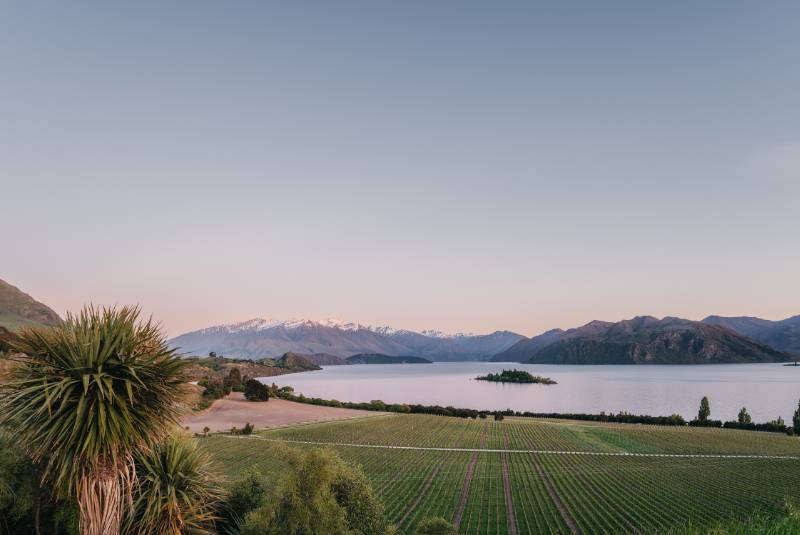
Felton Road is a pioneer of natural wine and an artisan producer of pinot noir, chardonnay and riesling vintages in New Zealand’s Central Otago region. Surrounded by snow-capped mountains, African Boer goats roam the rugged landscape of these organic and biodynamic vineyards.
No.98 Felton Road, Central Otago
No.90 Kumeu River Wines, Auckland
Kumeu River Wines in Auckland features wines made by New Zealand’s first-ever Master of Wine, Michael Brajkovich. Covering 30 hectares of heavy clay soil over sandstone, the vineyard is known for producing world-class chardonnay.
No.90 Kumeu River Wines, Auckland
No.89 Greystone Winery, Waipara
Greystone Winery in Waipara, on New Zealand’s South Island, is an organic, regenerative wine estate that offers guests off-grid accommodation in a glass eco-cabin overlooking the vineyard.
No.89 Greystone Winery, Waipara
No.52 Wairau River Wines, Marlborough
Wairau River Wines was founded by viticulturalist Hamish Rose and his brother and winemaker, Sam Rose. This idyllic New Zealand vineyard is renowned for crafting award-winning sauvignon blanc.
New Zealand wineries 1-50 in this prestigious list include:
No.44 Rippon – RE-ENTRY, Central Otago
Located within the world’s most southerly winemaking region, Rippon began its life in 1975 as an experiment by local New Zealand farmer Rolf Mills. Fifty years later, it remains under the watchful eye of the Mills family, and has retained its specialisation in biodynamic, organic wines from high in the Aotearoan hillsides.
No.44 Rippon
No.26 Cloudy Bay Vineyards – NEW ENTRY, Marlborough
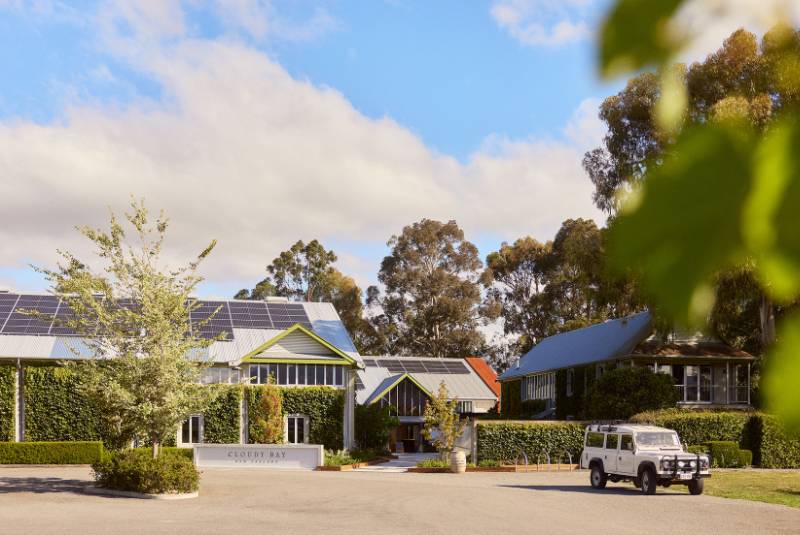
The overwhelming scale and beauty of NZ’s Cloudy Bay Vineyards can be taken in via four-by-four or even by helicopter. But for the ultimate itinerary, tour its vineyards before embarking on its private yacht into the Marlborough Sounds with a glass of signature sauvignon blanc in hand. It’s all-encompassing package earns it the title of The Best Vineyard in Australasia 2025.
Reminder: Currently, there is no function planned for this January, but your committee is currently considering a specific idea for 2027. That said, if you have an idea that we also might consider, please talk to a committee member.
February – Askerne Wines
March – Penfolds Tasting: wines from your Club Cellar, plus new wines
Acknowledgments
Your committee would like to acknowledge how the Club works for and on behalf of everyone in the wine industry. We are a sought-after Club for the wineries, especially the ones that have presented in the past, and want to present to us again. This is down to everyone who attends and orders at our monthly events. Lets continue this into 2026.
Survey update
Thank you to everyone who answered the Survey that we recently sent out. We received 41 responses in total. To give a summary of responses:
On the question of which influences your decision to remain a member, there were large numbers besides ‘an opportunity to try new and different wines’; ‘to meet winemakers and hear them talk about their wine’ and also ‘socialising with other members – this seems to sum up the reason for our Club!
There was an overwhelming response to the question. If you could only choose between these two … To try new and different wines won over To purchase wine at discounted price.
If you decide to purchase wine, what is your main consideration – more people leaned towards the combination answer of quality and price of the wine.
What price would influence your decision not to purchase wine had an interesting tally of responses. We had pretty even responses to $20, $40, $60, with slightly more ticking ‘Price is unlikely to prevent me purchasing a wine that I really like.
What style of BYO restaurant dining would you prefer we organise, had slightly more people opting for ‘Cafe/Bistro Dining, over Fine Dining and Ethnic restaurants. This reply gives us a steer to focus on, thanks.
What price (incl. corkage) would you consider too great at a restaurant, had a tie between $100 and ‘My decision would not be based on cost’.
Is easy access to public transport a consideration in your decision to attend a restaurant event, again had an interesting response percentage: 60% said ‘no’, and 40% said ‘yes’.
Do you enjoy the events presented by the Club that don’t involve purchase options had an overwhelmingly positive response!
In relation to events presented by the Club, would you like to see – we had an overwhelmingly positive response under ‘About the same number’.
It is positive for your committee that members feel that things are going in the right direction. Please feel free to talk to a committee member if you have any concerns or ideas to pass on, thanks.
The 2025 New Zealand wine harvest has been widely welcomed following 2024’s reduced yields. Across the regions, winemakers reported not only a normalisation of volumes but also excellent fruit quality – notable in a country where diverse geography often leads to variability.
A warm, dry spring set the season up well, though a cooler, wetter December and January period tested nerves before settling into a classic Indian summer. While perhaps not as straightforward as the outstanding 2024 vintage, 2025 looks set to produce wines of finesse and charm across the regions and varieties, with the first releases just months away.
Auckland
Michael Brajkovich MW of Kumeu River expressed relief at a ‘normal’ sized vintage after two seasons down by 35-40%. Auckland experienced the driest summer since 1958, with consistent warmth but no heat spikes.
‘The fruit ripened evenly and with gradual aroma and flavour development,’ Brajkovich said. Chardonnay was once again the star, arriving early and in pristine condition.
Gisborne
Described as a ‘magnificent vintage’ by Kirsten Searle of Matawhero, 2025 brought full physiological ripeness and a return to normal yields after two lighter years. Chardonnay excelled, providing excellent fruit for both table wines and sparkling bases.
Searle also highlighted the Gewürztraminer from Matawhero’s Riverpoint vineyard as particularly impressive – a fitting celebration for the winery’s 50th anniversary.
Hawke’s Bay
There is genuine excitement in Hawke’s Bay, with some suggesting that 2025 may rival the renowned 2013 vintage. Ben Tombs noted Craggy Range’s earliest-ever harvest, with Chardonnay off the Gimblett Gravels picked on 8 February.
Whites show ‘electric flavour profiles with moderate alcohol’ while Syrah, despite late-summer humidity challenges, enjoyed extended hang time without excessive sugar accumulation, promising finely structured, vibrant reds.
Wairarapa
After four small vintages, Martinborough celebrated a strong yield. A relatively calm spring and lighter winds led to strong shoot growth and abundant flowering. Intensive canopy management paid off with Pinot Noir showing a savoury, charming profile.
Tombs commented on lower acidity and softer tannins compared to the more firmly structured recent vintages at Craggy Range’s Te Muna vineyard.
Nelson
Todd Stevens of Neudorf reflected positively on the vintage: ‘It’s still early but the whites appear beautifully balanced, while the Pinots show poise and should present very well.’ Initial signs point to good consistency across this smaller but significant region.
Marlborough
Murray Cook of Dog Point summed up 2025 as ‘a season of patience’. ‘With generous yields, the fruit took some time to ripen fully. Thankfully, we were blessed with classic dry and warm conditions which kept fruit quality high over what was our longest harvest period (46 days) in 24 years,’ he added.
However, with global inventories still high amid flat consumption and geopolitical uncertainties, many producers opted to leave fruit on the vines. The upside: only the best fruit was picked and consumers can look forward to excellent quality from this key region.
North Canterbury
A rollercoaster year, with Greystone’s Dom Maxwell describing it as one that ‘challenged us, then offered a lot, then challenged us again, and finally delivered in the end’.
Pure fruit flavours and clean fermentations made it a worthwhile ride. ‘We’re excited about the quality we have in the winery,’ Maxwell added.
Central Otago / Waitaki
Valli’s Jen Parr described an unusually compressed harvest of around half the usual span. Despite spring frosts affecting yields, she was thrilled with the ‘tremendous concentration’ and ‘crazy colour’, particularly in Gibbston and Bendigo.
Small berries and clean fruit were common themes with Parr commenting that wines possess richness and an appealing ‘joyful’ quality that should drink well young but also reward a few years in bottle.
The Waitaki Valley – often marginal – had one of its best vintages in recent years, for both ripeness and volume.
Two parallel universes of Marlborough Sauvignon Blanc exist: one in which quantities are measured in shipping-container units destined for grocery stores everywhere, the other where artisan winemakers work ceaselessly to demonstrate that terroir and craftsmanship can speak through one of the world’s most popular wine styles.
The latter being a more interesting place to live and drink, let’s take a look at the latest efforts of Appellation Marlborough, the group of more than 65 producers dedicated to evangelizing and showcasing the sub-regionality of New Zealand’s largest and most misunderstood wine appellation.
This group of producers, most of them small, has spent considerable effort seeking out, studying, and making wine from the many distinct areas of Marlborough, each with its own microclimates and geologies. The resulting wines demonstrate that not all Marlborough Sauvignon Blanc is created equal.
Which is to say, not all of it is farmed conventionally to massive yields, harvested mechanically, deliberately worked a bit harder to increase those famous green flavors, fermented at low temperatures with thiol-driven yeast strains to further amplify tropicality, and left just slightly sweet for its millions of adoring fans around the world.
Savvy Artisans
The official subregional map of Marlborough courtesy of Appellation Marlborough
Instead, we have entered an age of single-vineyard–designated Sauvignon Blancs capable of expressing the nuances of site and vintage variation. Some of these wines are fermented in oak and built in a more classic French style for aging, while others are fermented with ambient or more neutral yeasts. All prove far more interesting than your typical $10 supermarket Savvy.
In the service of telling this story, the folks at Appellation Marlborough recently began assembling an annual collection of wines to send to writers and critics around the world, serving as ambassadors for this newer, more nuanced world of Marlborough Sauvignon Blanc.
Labeled the Appellation Marlborough Collection, this set of 12 wines was selected from more than 90 submissions through a blind tasting conducted by Stephen Wong MW and Cameron Douglas MS of New Zealand, and Toni Paterson MW of Australia.
Primarily featuring the 2025 vintage, the collection also includes a couple of wines each from 2024 and 2023.
One Helluva Vintage
A view of vineyards in the Wairau Valley
By all accounts, the 2025 vintage in Marlborough came as a welcome relief after several tough years in the region, which is still reeling from post-pandemic market fluctuations, challenging seasons in 2021 and 2023, swings from undersupply to oversupply, and a 2022 vintage that nearly went unpicked due to COVID lockdowns.
In contrast to those troubles, 2025 was about as serene as vintages get, with a mild spring, untroubled (if slightly early) flowering, and higher-than-average yields. What began as a warm summer turned cooler in January and February, extending the season and slowing ripening in ways that tend to get winemakers very excited and happily jabbering about flavor development and phenological ripeness.
In short, you would have had to take your eye off the ball considerably to make bad wine in 2025. Most producers seem positively delighted with the quality of their wines, and based on my tasting below, I would tend to agree.
These twelve wines are wonderful examples of the quality and individuality to be found in New Zealand Sauvignon Blanc, for those willing to take a little time, a bit of effort, and spend just a little more.
Tasting Notes
Not all of these wines are exported to the US, and in the case of one, not exported at all. I have made my best guess at what US pricing would be for those wines that are not easily found online.
Palest gold in color, this wine smells of blackcurrant leaf and lime zest with a hint of wet wool. In the mouth, stony flavors of lemon pith, green apple, black currant leaf, and wet wool have an interesting savory quality and a faintly chalky texture. Excellent acidity with a stony resonance in the finish. Regeneratively farmed fruit, 25-year-old vines, machine harvested. Fermented in stainless steel and matured on light lees. 13% alcohol. 2 g/l residual sugar. Closed with a screwcap. NZWG-certified sustainable. Vegan. Score: between 9 and 9.5.
2025 Clos Henri “Estate” Sauvignon Blanc, Central Wairau, Wairau, Marlborough, New Zealand
Palest gold in the glass, this wine smells of lemon and pomelo pith mixed with a hint of green apple. In the mouth, wonderfully bright lime and lemon zest flavors have a faint salinity and a lovely wet pavement minerality. There’s a quivering electricity to this wine that is extremely compelling. A hint of passionfruit and green apple lingers in the finish. Certified organic grapes are machine harvested, and free run juice is fermented in stainless steel and ages for 3 months on the lees with battonage. 13.5% alcohol. Less than 1 g/l residual sugar. Closed with a screwcap. Score: between 9 and 9.5.
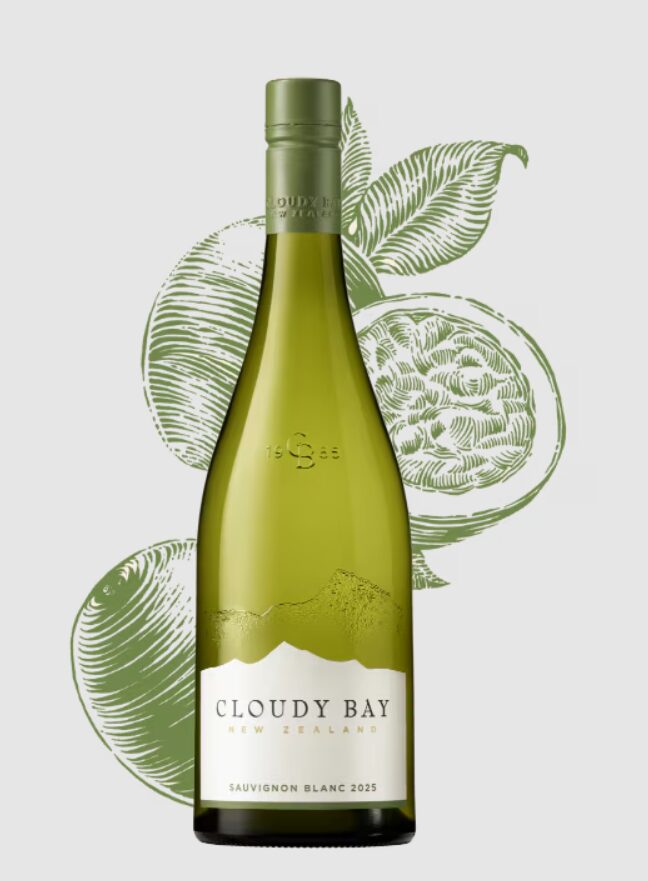
2025 Cloudy Bay Sauvignon Blanc, Wairau, Marlborough, New Zealand
Palest gold in the glass, this wine smells of passionfruit and guava with a hint of candied lime. In the mouth, crisp green apple and passionfruit flavors mix with a touch of lime zest. Very good acidity. Fermented in stainless steel with around 1.8% of the final blend fermented in large-format oak, and another portion fermented with ambient yeasts. 13.5% alcohol. Closed with a screwcap. Score: between 8.5 and 9.
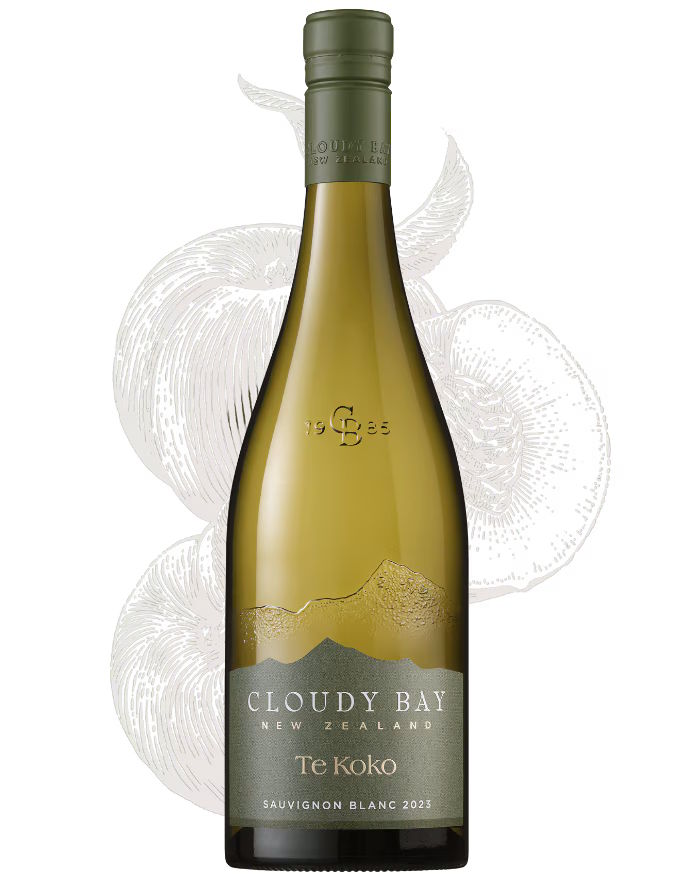
2023 Cloudy Bay “Te Koko” Sauvignon Blanc, Wairau, Marlborough, New Zealand
Pale gold in color, this wine smells of struck match, lemon, and lime pith, with a hint of crushed nuts. In the mouth, bright lemon peel, nut skin, and notes of vanilla mix with a silky texture and a touch of salinity. Excellent acidity and nice length. After pressing, the juice is settled for 24 hours and then racked into 7% new French oak barrels and large format cuves, where it ferments with a combination of ambient and commercial yeasts. It then ages for 11 months on the fine lees in a combination of vessels, including small and large-format barrels as well as concrete. 13.5% alcohol. Closed with a screwcap. Score: around 9.
2023 Greywacke “Wild” Sauvignon Blanc, Marlborough, New Zealand
Pale gold in the glass, this wine smells of citrus pith and a hint of roasted nuts. In the mouth, mouthwatering flavors of crushed nuts, lemon peel, pomelo pith, and wet chalkboard have a lovely, faint salinity to them and a hint of toasted oak that lingers in the finish. A mix of machine and hand harvesting fruit, which is then lightly pressed and cold settled before being fermented with ambient yeasts in oak barrels, a “small percentage of which” were new. Fermentation lasted nearly 6 months, and the wine was aged for another 12 months with occasional lees stirring. Around two-thirds went through malolactic conversion. 13.5% alcohol. Closed with a screwcap. Score: around 9.
Pale gold in color, this wine smells of passionfruit and orange peel. In the mouth, bright passionfruit and gooseberry flavors mix with green apple and a faint saline brightness. Excellent acidity and lovely purity. 12.7% alcohol. 3.1 g/l residual sugar. Closed with a scerwcap. Vegan. Score: around 9.
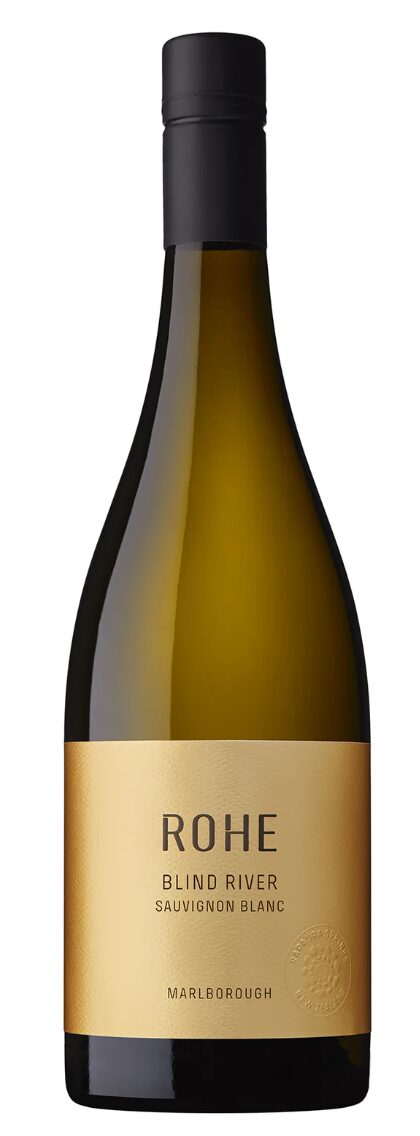
2025 Rohe Sauvignon Blanc, Blind River, Marlborough, New Zealand
Palest gold in the glass, this wine smells of green apple, cut grass, and wet pavement. In the mouth, green apple and guava flavors have a lovely stony quality and a faint herbal note that lingers in the finish along with notes of lime pith. Very good acidity. After pressing, the juice was fermented in stainless steel at various temperatures. Aged for three months before bottling. 13% alcohol. 4.6 g/l residual sugar. Closed with a screwcap. Score: between 9 and 9.5.
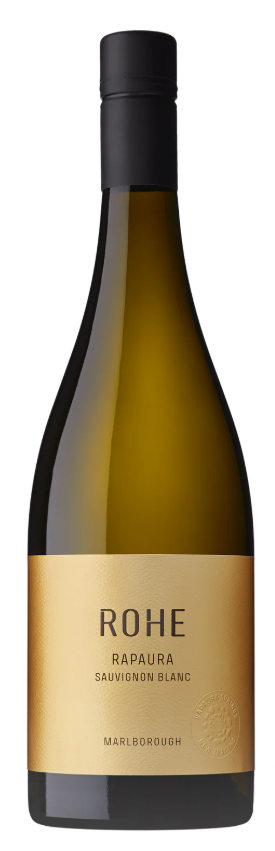
2025 Rohe Sauvignon Blanc, Rapaura, Marlborough, New Zealand
Palest gold in the glass, this wine smells of cut grass, kiwifruit, and lime zest. In the mouth, zippy lime and green guava flavors have a salinity to them and a hint of a grassy herbal note that creeps into the finish with a touch of honeydew melon. After pressing, the juice was fermented in stainless steel at various temperatures. Aged for three months before bottling. 13% alcohol. 4.1 g/l residual sugar. 13% alcohol. Closed with a screwcap. Score: between 9 and 9.5.
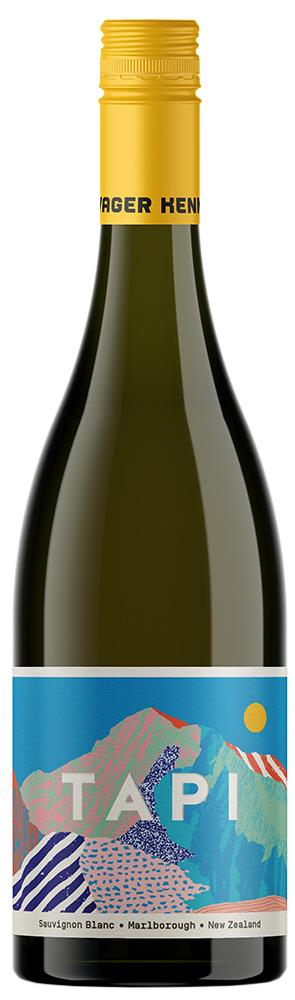
2025 TAPI Sauvignon Blanc, Marlborough, New Zealand
Pale gold in the glass, this wine smells of salty green apple and passionfruit. In the mouth, bright passionfruit flavors mix with wet pavement and a lovely lemon pith note. Very good acidity and a silky texture round out the aromatic package. The machine-picked and pressed into stainless steel for fermentation, with 10% of the wine fermented in old oak barrels. Aged on its lees for 4 months before bottling. 13% alcohol. 3.5 g/l residual sugar. Closed with a screwcap. Vegan. Score: between 8.5 and 9.
2024 Te Pā “Oke” Sauvignon Blanc, Lower Wairau, Wairau, Marlborough, New Zealand
Pale gold in color, this wine smells of toasted oak, candied lemon peel, and lime leaf. In the mouth, bright lemon peel and pith mix with a touch of vanilla and roasted nuts, as a silky texture lingers on the palate with a hint of salinity. Hand-picked and whole-bunch pressed into 320L cigares for fermentation with ambient and non-Saccharomyces yeasts. Left unsulphured on gross lees over the winter, then racked to neutral barrels for another 6 months of aging. 13.5% alcohol. 2 g/l residual sugar. Closed with a screwcap. Score: around 9.
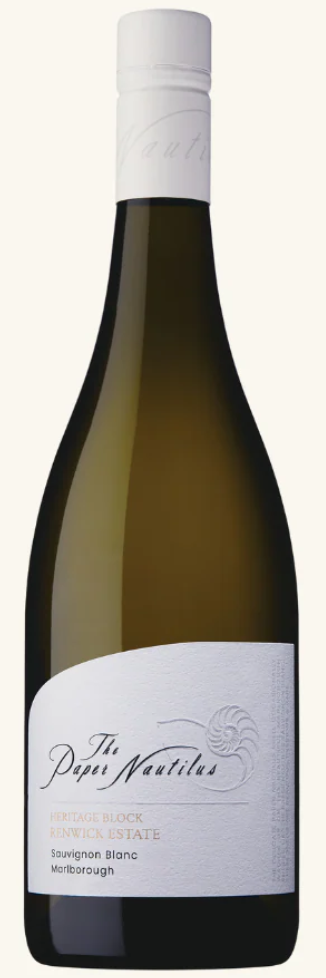
2024 Nautilus “The Paper Nautilus” Sauvignon Blanc, Marlborough, New Zealand
Pale gold in the glass, this wine smells of honeysuckle, candied lemon peel, and white flowers. In the mouth, faintly sweet flavors of lemon peel, lime pith, and pink grapefruit have a nice filigreed acidity. There’s a sweet lemon cucumber note that lingers in the finish. Hand-picked and whole-bunch pressed, then settled before racking into a 13-year-old 5000L French oak cuve for fermentation. Inoculated with a non-Saccharomyces yeast for a 30-day fermentation. Then matured on lees for another 8 months before bottling. 13.5% alcohol. 3.4 g/l residual sugar. Closed with a screwcap. Vegan. Score: between 8.5 and 9.
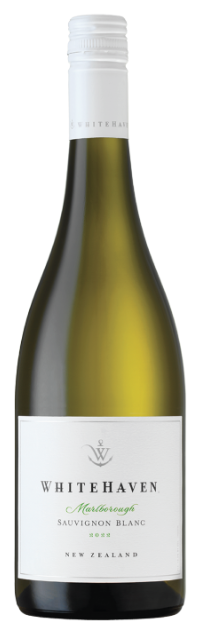
2025 Whitehaven Sauvignon Blanc, Marlborough, New Zealand
Near colorless in the glass, this wine smells of blackcurrant leaf, green apples, and a hint of that classic feline aroma. In the mouth, crisp green guava, green apple, lemon pith, and lime leaf. Very good acidity and a faint grassy salinity round out the package. Machine-harvested and then pressed. Juice settled and then fermented in stainless steel. Aged on light lees in tank for 2 months before bottling. Sterile filtered. 13% alcohol. 1.4 g/l residual sugar. Closed with a screwcap. NZWG-certified sustainable. Vegan. Score: between 8.5 and 9.