Cloudy Bay, clear vision: the roundabout story of New Zealand’s most famous wine

Douglas Blyde 17Apr 2025 | The London Standard

‘After our first vintage, my Italian viticulture professor came over with tears in his eyes’

The founder of Cloudy Bay wine, David Hohnen, has teamed up with entrepreneur Rupert Clevely — of Geronimo Inns fame — and the Marlborough Grape Growers Cooperative to launch Marlborough Heartland, a Sauvignon Blanc which captures the essence of a remarkable landscape.

Hohnen doesn’t just move through the wine world, he tears through it on a motorbike. Literally. In 1969, aged 20, he rode from Adelaide to Sydney, loaded his bike onto a P&O liner, and crossed the Pacific to California, petrol still sloshing in the tank. He landed in Fresno, a dusty, agricultural outpost in the Central Valley, where the local university offered five-acre student vineyards and a neglected teaching winery which hadn’t produced a drinkable drop in years. That changed when Hohnen got the keys.

“They gave me five acres of Carignan and told me to get on with it,” he says. “The winery was a mess. I spent three months scrubbing tanks. After our first vintage, my Italian viticulture professor — a good man called Vince Petrucci — came over with tears in his eyes and said, ‘Thank you, this is the first wine I’ve been able to drink from this place.”’ Hohnen was hooked.

Back in Western Australia by 1970, Hohnen helped plant the early vines which became Cape Mentelle. There was no blueprint, just instinct, energy and the conviction that wine ought to express something beyond itself. “In ‘74 we had our first real vintage. ‘78 was terrific — critic James Halliday gave us a great write-up. We were in a shed, crude kit, but the wines had promise.”

Then, in 1983, he was ambushed by a grape. A few bottles left by visiting Kiwi winemakers turned everything. He says: “It wasn’t just good – it was electrifying.”

Armed with curiosity and air miles donated by his brother Mark, Hohnen zigzagged across New Zealand in search of the right spot for Sauvignon Blanc. Gisborne was too lush. Hawke’s Bay, too humid. Then came Marlborough. “It was brown. Dry. Sunlit. I thought, “Gotcha!”’

From trout to triumph

By 1985, Cloudy Bay was born; funded by a brutal million-dollar loan at 23.5 per cent interest. The decision was sealed after Hohnen’s brother’s business partner, Simon Fraser (of the Loch Ness Frasers), caught a trophy trout on a fishing trip in the area. “I always said Cloudy Bay owes it to a fish.”

They built the winery at speed, introduced a tilt-up slab technique that had never been used in New Zealand, and sent grapes north to Kevin Judd, the pioneering winemaker Hohnen had met at a wine show in Auckland. The 1985 vintage was blended with a little Riesling and Semillon, allowing it to age gracefully. “It worked,” says Hohnen says. “People still remember their first glass.”

Cloudy Bay wasn’t launched. It bolted onto the scene: “People thought we contrived the allocation. We didn’t. It was a runaway horse. I just sat firm in the saddle, held the reins, and tried to steer.” Demand constantly outpaced supply. “Probably never caught up in my time.”

Veuve Clicquot came calling. Under the stewardship of Joseph Henriot, and later Cécile Bonnefond, Cloudy Bay thrived. “They were smart. Understood wine. Understood brand. Let us get on with it.”

By 2000, Hohnen found himself Chairman and MD of both Cape Mentelle and Cloudy Bay. “Not my choice of title. For a country hick, it sat heavy. I decided to leave. Should’ve gone straight away. Instead, I stuck around for the handover — the worst mistake I ever made.”

He drifted, gloriously. Raised free-range pigs with real care, railing against their status as “the four-legged chooks of the world.” Then came the charcuterie, but done properly: low intervention, slow drying, clean, honest flavours.

The return

In 2022, Cloudy Bay called him back. They’d rebuilt the original winery as a visitor centre and named it the Founder’s Centre. “It was emotional. We’d parted well, and we’re friends again now.”

He had one last idea: enter Marlborough Heartland – a new label, made in collaboration with Rupert Clevely (of Geronimo Inns) and the Marlborough Grape Growers Cooperative, a formidable alliance of 80 growers who usually make bulk wine.

“They do 16 million litres a year,” Hohnen says. “I said, let’s make something special. We picked eight vineyards on deep pebble soils in the central Wairau Valley – the black country. That’s where the best Sauvignon comes from. Ripe, not green. No tomato leaf. Just bright fruit, full palate, lovely tingle. For just over a tenner, it speaks.”

His daughter, Freya — top of her class, a seasoned winemaker, and mother of two — is on the blending bench. “She does the high notes. I do the low. You’ve got to have both.”

A sense of place

What’s in the name? Like Cape Mentelle or Cloudy Bay, it’s geographical. “Some said ‘Cloudy’ sounded like cloudy wine. They were wrong. Place matters. It grounds you.”

Today, the second vintage of Marlborough Heartland is sailing towards England. Sainsbury’s has backed it. The supermarket’s wine agency partner, Watermill Wines, helped secure the listing. “They’ve got the buyers. We’ve got the story.”

And what a story. Cloudy Bay went on to become the world’s best-known white wine. No fuss, no spin, just magnetic Marlborough Sauvignon bottled by a man who listened when the land spoke.

Says Hohnen: “I’ve never had anything from New Zealand. But that’s because I’m Australian. Not sure they like to admit an Aussie created their most famous wine. Doesn’t matter. I’m just happy to be back.”

What’s next? “I don’t look back. I’ve made mistakes, sure. But winemaking is a privilege. You meet good people — real people — farmers whose wealth comes from the earth. Not suits.”

If he could share a bottle with anyone? “It’d be family. Always family. Someone once said, “Without family, you’d have to fight with strangers!” We’ve done pretty well.”

So ends this chapter, with the vines back under his feet and the Marlborough sun on his face. David Hohnen, still steering the horse. Still making the wine speak…

Horticulture: Kiwi start-up’s Catnip Wine Ready for Export

The Country | 27 May, 2025

A new horticultural initiative could transform New Zealand into a commercial catnip producer, paving the way for the export of locally made pet wines to international markets.

Kiwi start-up, Muttley’s Estate, has created a shelf-stable pet wine that can be stored for up to 12 months.

Catnip (or Nepeta cataria) was introduced to New Zealand as a garden herb in 1870 and is estimated to positively impact mood in about two-thirds of cats while helping to soothe anxiety in dogs.

Global demand for catnip is rising, driven by pet product manufacturers and natural health industries.

The catnip essential oil market alone is projected to grow by 5.8% annually by 2030 to reach $400 million.

Kiwi start-up, Muttley’s Estate, is believed to be the world’s first manufacturer to have created a shelf-stable pet wine that can be stored for up to 12 months.

The breakthrough has made large-scale production and export more viable.

John Roberts, director of Muttley’s Estate, said catnip was a resilient crop that had adapted to grow well in New Zealand’s temperate climate and well-drained soils since it was first introduced.

He said the commercial-scale farming of catnip would further diversify New Zealand’s horticultural sector.

Roberts said, with a growing domestic footprint, the company had now set its sights on the lucrative US market, where pet owners sought premium, novelty products for their furry companions.

“One of the key advantages of catnip is that even a small crop yields enough to produce a batch of pet wine, allowing us to create a high-value product without requiring extensive land investment,” he said.

“With the growing international interest in catnip and the ‘humanification’ of pet diets, it was a natural extension to explore the development of a premium beverage for pet owners to celebrate with their pets.”

Roberts said Muttley’s Estate had already signed more than 40 retailers since launching the range in New Zealand less than a year ago.

“We believe the reputation of NZ’s wine sector in North America will help us establish an entry into this market and we [are] now actively looking for US distributors.”

Roberts said research showed the impact of chronic anxiety and stress among pets had become more prevalent due to a combination of urbanisation, multi-pet household dynamics, ongoing issues relating to the pandemic and shifting lifestyles.

“International studies have found almost a third of dogs showed high sensitivity to noise, with fireworks a particular problem, while 29% of dogs were said to be highly fearful, and 14% showed highly problematic aggression.

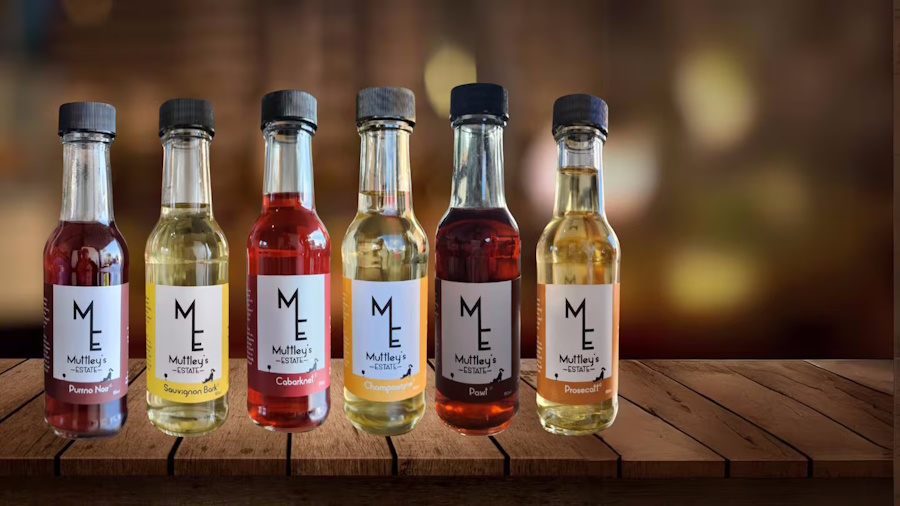
The Muttley's Estate offers multiple “varietals,” each featuring a different concentration of catnip.
The Muttley’s Estate offers multiple “varietals,” each featuring a different concentration of catnip.

“Symptoms of anxiety in cats are often more subtle, yet owners reported signs of tail flicking, avoiding eye contact, and shifting head/body away repeatedly [every week or every other day] or more often than usual.”

He said the range was created to help alleviate some of the modern stressors on pets, but unlike conventional wines, the products contained zero alcohol.

“The range offers multiple ‘varietals,’ each featuring a different concentration of catnip: lighter whites such as the Champawgne appeal more to cats, while the deeper blends such as the Purrno Noir and Pawt are popular with dogs,” he said.

Muttley’s Estate is already selling through veterinary clinics and pet retailers across New Zealand.

It has also held tasting events at local dog parks.

“We were overrun by canines wanting to taste the pet wine, and it demonstrated the positive response across a wide variety of breeds,” Roberts said.

The company was now working with New Zealand Trade and Enterprise to identify distributors in overseas markets.

“We’d love to see entire fields of catnip grown right here,” Roberts said.

“The idea that we could turn a small backyard experiment into a nationwide horticultural endeavour, and share it with pet lovers worldwide, is really exciting.

“It’s a chance for New Zealand to do something fresh and unexpected – yet again.”

The company is also investigating the potential of catnip for human consumption, with trials underway to determine its suitability for the human market.

“Catnip is related to the mint family, so it is safe for humans,” Roberts said.

“We’re working with food technologists to explore the possibilities.”

The death of the champagne flute – and what you should be sipping from instead

Tessa Allingham, The Telegraph | 19 July 2025

They’re too small, inhibit flavour appreciation and, according to one sommelier, should be ‘outlawed’. But what are the better alternatives?

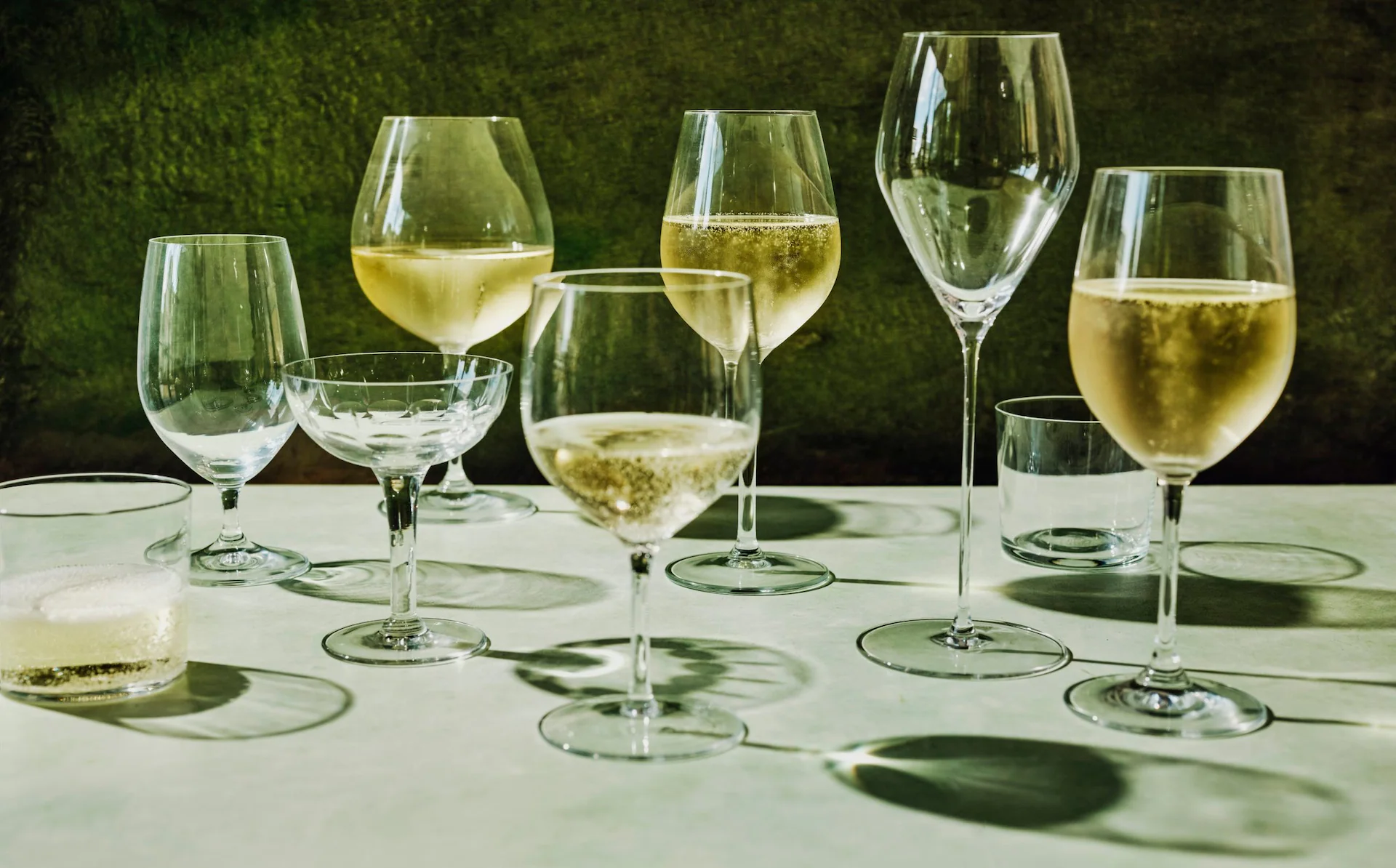
The Telegraph consulted wine experts to find out the dos and don’ts of drinking champagne Credit: Haarala Hamilton

Maximilian Riedel has a mission: to rid the world of champagne flutes. “My goal is to make them obsolete within my lifetime,” says the 11th-generation glassmaker from Austria. “Champagne and sparkling wines deserve to be shown at their very best. A narrow flute does nothing for them.”

He is not alone in the charge against the tall, slender vessel – or in his determination to see wine glasses replace them. With 70 per cent of our perception of flavour coming from aroma, Riedel argues, the more open shape, whether a traditional white wine glass, a tulip-shaped one or bigger burgundy glass, enables the wine to be appreciated fully.

Acclaimed publican Heath Ball ditched “hundreds of flutes” when he took over The Angel in Highgate, London, in November 2024 – though he has reluctantly held a few back “because some people do like them and I hate to say no”.

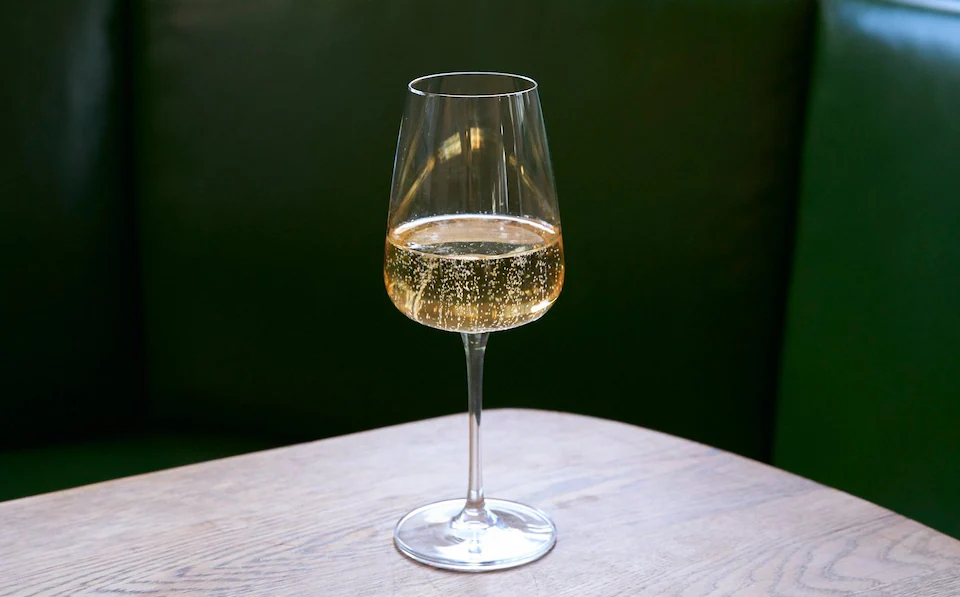
At The Angel in Highgate, Heath Ball has largely dismissed flutes in favour of wider glasses

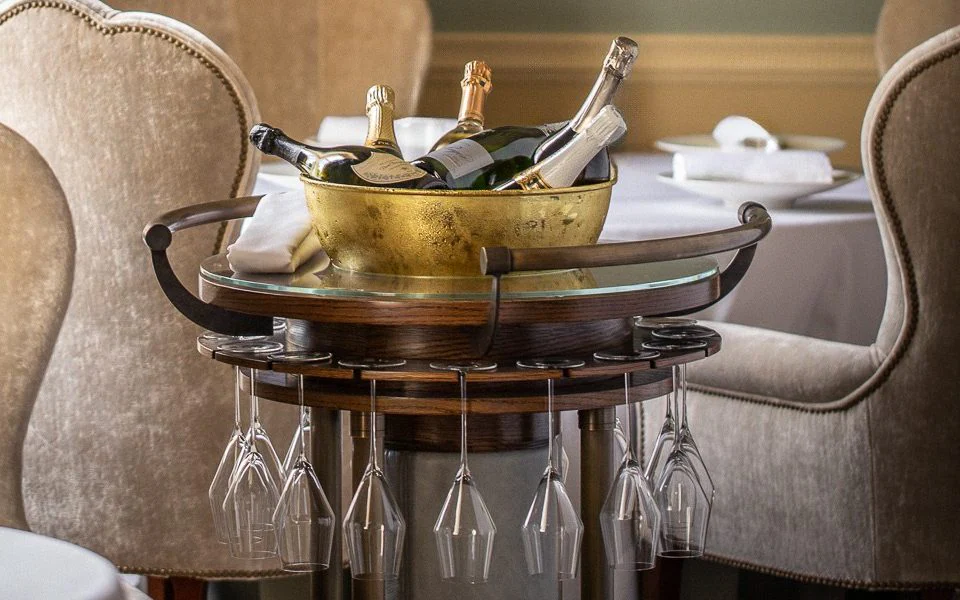
They should be “outlawed” insists sommelier Sandia Chang, who founded the online grower-champagne shop Bubbleshop and runs the two-Michelin-starred Kitchen Table restaurant in the capital with her chef husband James Knappett. And there’s not a flute in sight on the champagne trolley at the luxurious Grantley Hall near Ripon in North Yorkshire.

Flutes have been the go-to glass for champagne ever since – so legend says, and Riedel reports – 18th-century Benedictine monk and abbey cellarman Dom Pérignon said he liked to “watch the dance of the sparkling atoms” in a slim glass. As champagne became a drink associated with celebration, the flute contained a measured serving just right for a toast.

But sparkling wine is increasingly appreciated as a versatile, food-friendly drink worthy of more than just chin-chin moments at weddings. “We’re seeing more and more people drink sparkling wine just as they would a still wine,” says Ball. “And when you shift it from the flute [into a wine glass] it becomes more relaxed and more enjoyable. I’m all for that.”

So if flutes are out, what should you pour your next glass of fizz into?

A white wine glass

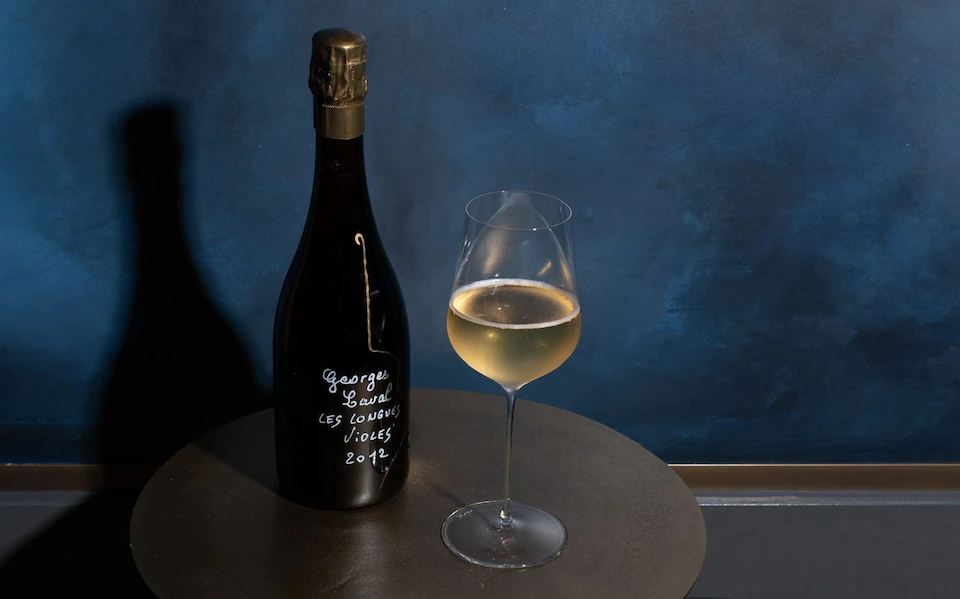
“All sparkling wines are better enjoyed in wine glasses rather than flutes,” argues Chang. “Flutes may look pretty but it’s almost impossible to appreciate the aromas of the wine without getting just bubbles up your nose.” And no, the flute’s shape doesn’t necessarily keep bubbles bubblier for longer: “A well-made sparkling wine will not lose its bubbles during the time it takes to drink a glass,” she says.

Sommelier Sandia Chang argues that sparkling wines are better suited to a white wine glass than a flute

The bowl of a white wine glass allows aromas and flavours to develop, and acidity to become balanced. “The wine looks good,” says Ball, “it’s better value for the customer, and more relaxed and contemporary.”

It’s more generous too. At The Angel, Ball will pour Château Palmer champagne or Australian lambrusco into an elegant wine glass as a 175ml serving, rather than the 125ml typically held in a flute. “With flutes, you fill the glass, then two sips later it’s all over. Where’s the fun in that?”

The universal shape of a white wine glass makes it a practical choice, a consideration even for a top sommelier like Isa Bal, co-owner with chef Jonny Lake of Trivet, the two-Michelin-star restaurant in Bermondsey. At home he keeps things simple – and saves space – with one set of glassware for all wines, including champagne: “A white wine glass does the job perfectly,” says Bal. “Leave it to restaurants and bars to have all those different glasses, and enjoy them when you’re out.”

Andrew Rogerson, who oversees the wine programme at Michelin-starred Shaun Rankin at Grantley Hall restaurant, cuts to the chase: “The less you spend on glassware, the more you can spend on champagne.” Who can argue with that?

A tulip-shaped wine glass

The narrower meeting point of bowl and stem in a tulip-shaped glass means bubbles are released gradually, its wider “hips” allow oxygen to reach the liquid, and the tapered rim captures and concentrates aromas.

“Those aromas are such a key part of how the champagne is experienced, how it tastes,” says Rogerson. Sommeliers steering the Grantley Hall trolley select subtly different-shaped glasses (most are German-made Zalto) for each champagne: it’s a narrower one for Shaun Rankin’s blanc de blanc because the wine’s delicate, leaner notes don’t require as much aeration to be enjoyed. A broader glass suits the richer Femme de Champagne by Duval-Leroy, while the Krug grand cuvée is poured into a glass the champagne house developed in collaboration with Riedel. “It has a broad, almost diamond shape that allows more space for aromas to develop,” says Rogerson. “The base of the bowl comes to a point to aid the formation of bubbles, and the wider body allows you to swirl the wine, speeding up oxidation and revealing the flavour in a way not achieved by more narrow glasses.”

The Grantley Hall wine trolley features various slightly differently-shaped glasses for different champagnes

Champagnes from Trivet’s renowned wine list, which includes tiny-production grower champagnes such as Pierre Péters grand cru Le Mesnil-sur-Oger, are also poured into delicate tulip-shaped glasses, the better to appreciate the wine.

A burgundy glass

Older vintages, or full-bodied rosé champagnes with aromatic red-fruit notes, can benefit from a larger pinot noir glass. “The intensity and complexity can require more interaction with oxygen,” says Rogerson. “They can also be best enjoyed at a slightly warmer temperature, making red wine glasses perfect. I was lucky enough to enjoy a glass of 1988 Cristal champagne, and in a red burgundy glass it opened up beautifully.”

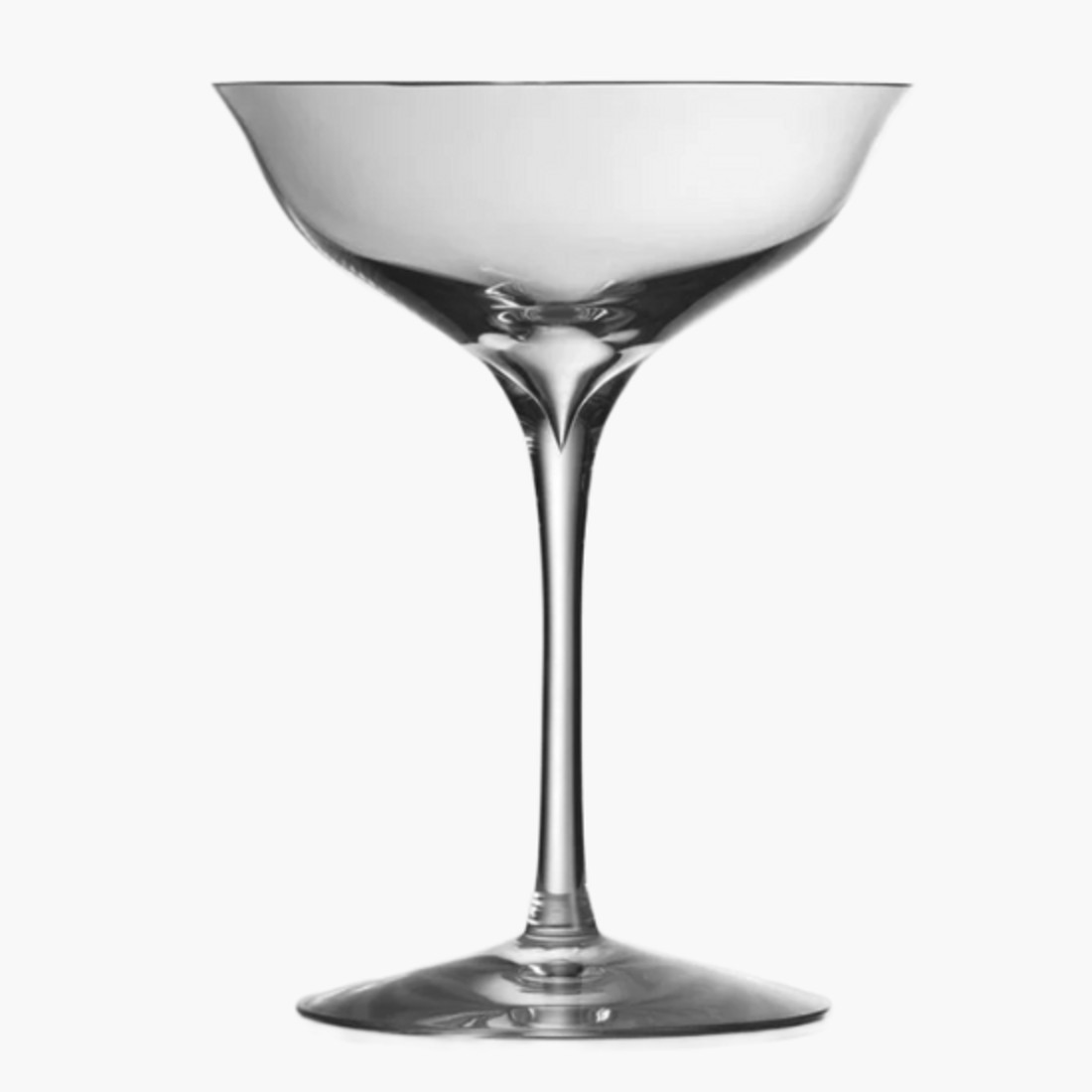
A coupe (but only for vintage vibes)

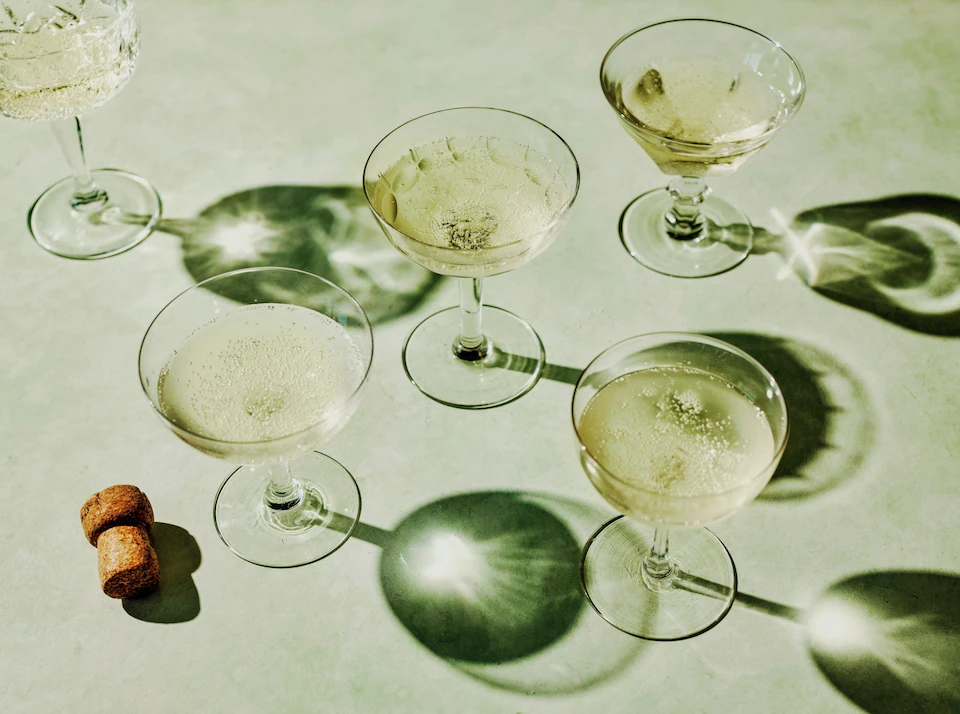
Champagne can lose its bubbles and aroma quickly in a coupe or champagne saucer, but there’s still vintage and photogenic charm in this wide, shallow glass, says Fran Cutler, renowned planner of many a society party: “For a wedding or a special birthday toast, or when you just want people to feel more elegant, I love a coupe. There’s something about the shape that’s so timeless – the way you can cup it in your hands just feels glamorous. It has that charm that you don’t get with flutes or wine glasses, making people feel sexy, inviting a bit of mischief to the occasion.”

Coupes have a sexy, vintage air about them – but be mindful the champagne loses its bubbles quickly in this vessel Credit: Haarala Hamilton

The style is forever associated with the Great Gatsby-esque flamboyance of the 1920s but the rumour that coupes were first modelled on Marie Antoinette’s left breast is just that – a rumour – though they were popular during the 18th century. “The coupe is playful,” says Rogerson. “You might not get the most technically from the champagne, but if [a coupe] brings the most enjoyment, then people shouldn’t feel shy about asking for one. We always keep a few on the trolley just in case.”

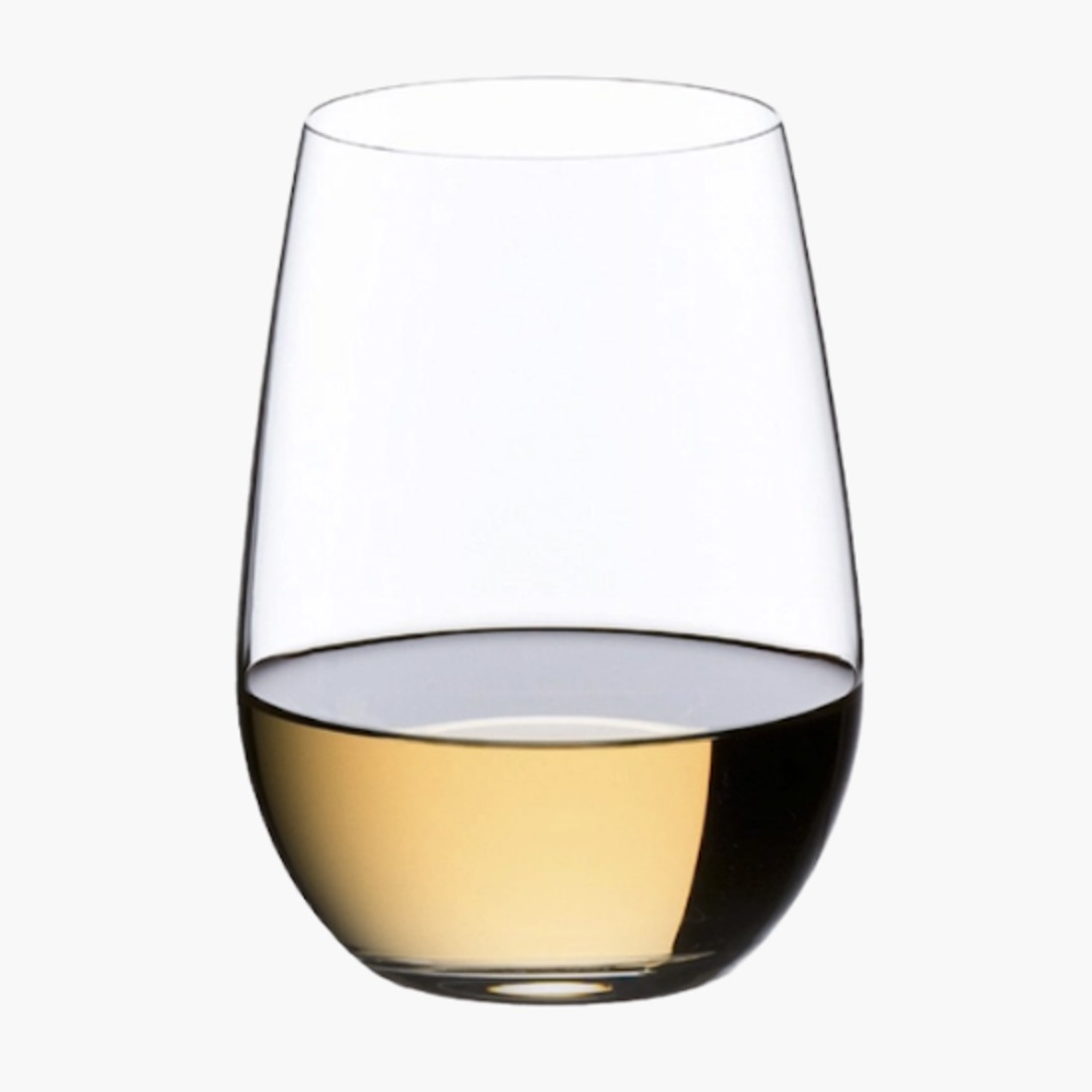
A tumbler (so long as its crystal)

Small, chunky glasses should be avoided “for any type of wine,” believes Cutler. “That should be obvious, but I’ve seen it done, and it’s a shame – and a bit wasteful, especially when you’ve invested in good champagne. Glassware should be selected to set the mood for a good time.”

But is there a place for fizz in a tumbler? Riedel was recently spotted – on Instagram at least – splashing chilled Bruno Paillard champagne into one while on an Alpine hike. Needless to say, it was not a plastic beaker dredged from the back of the cupboard, but his own rather more elegant O to Go crystal glass tumbler.

Champagne flutes are out – try these instead


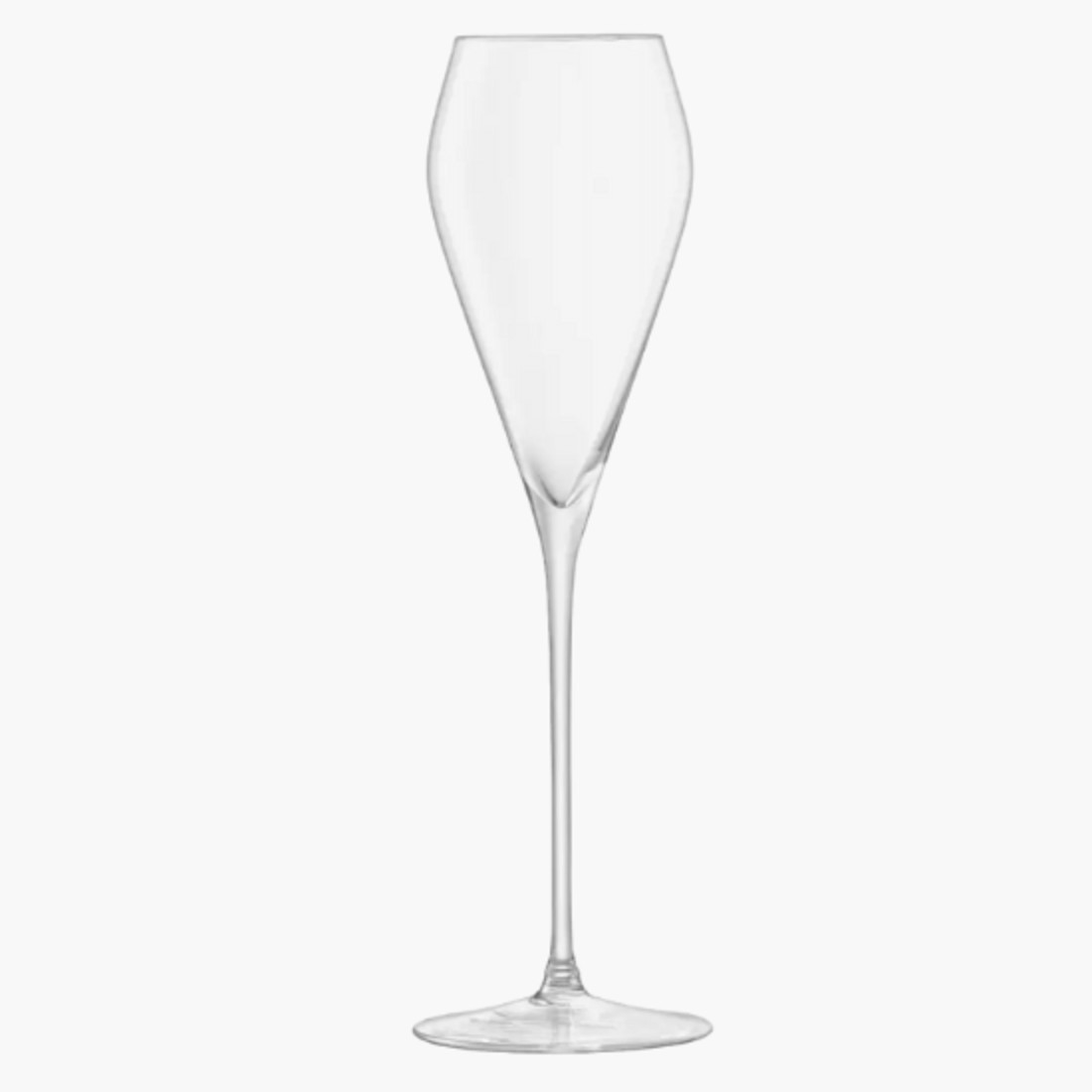
Tulip-shaped glass Mouth-blown glasses with tall stems, if you still hanker after a flute.
Tulip-shaped glass – mouth-blown glasses with tall stems, if you still hanker after a flute.
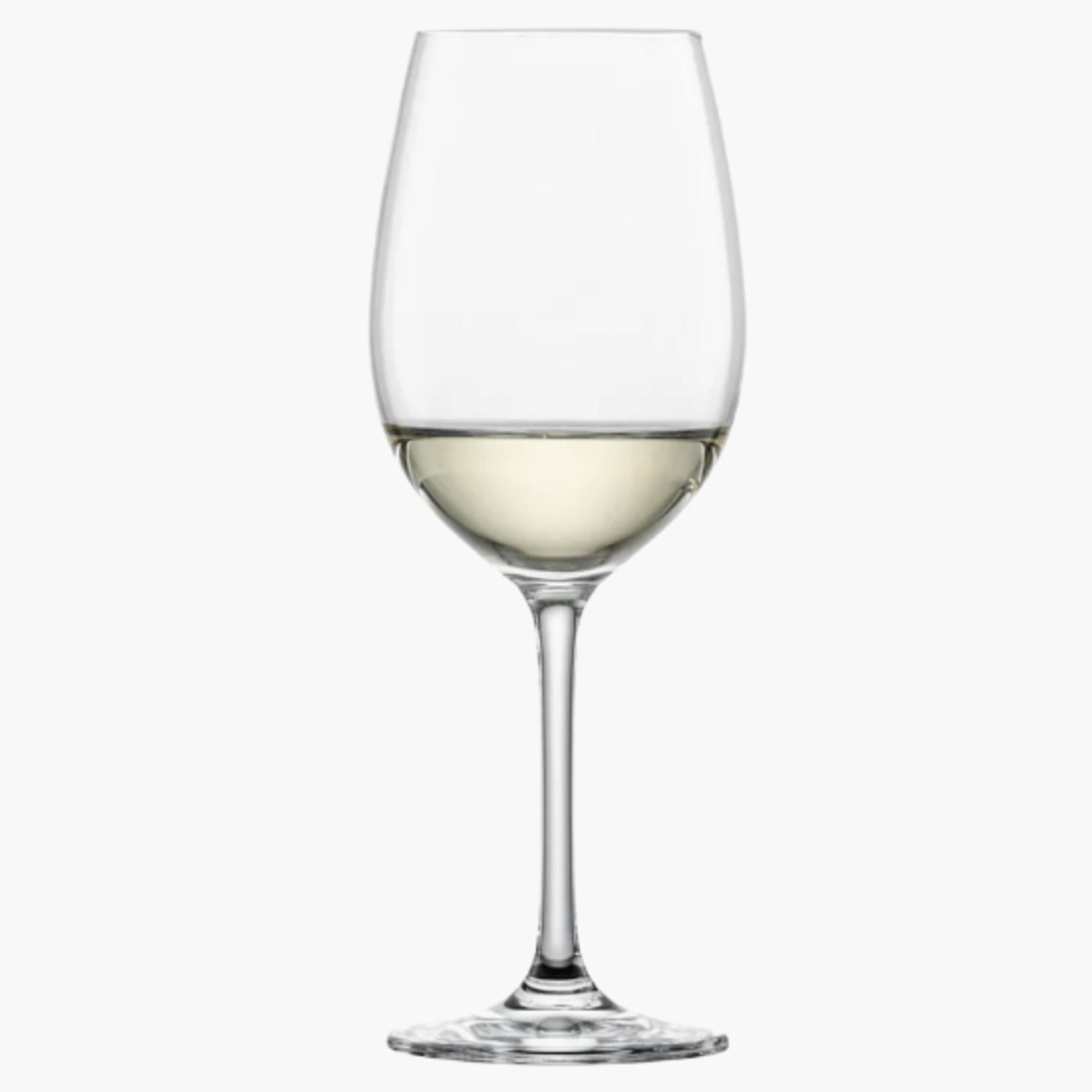
White wine glassA great all-rounder, and dishwasher-safe, too.
White wine glass – a great all-rounder, and dishwasher-safe, too.
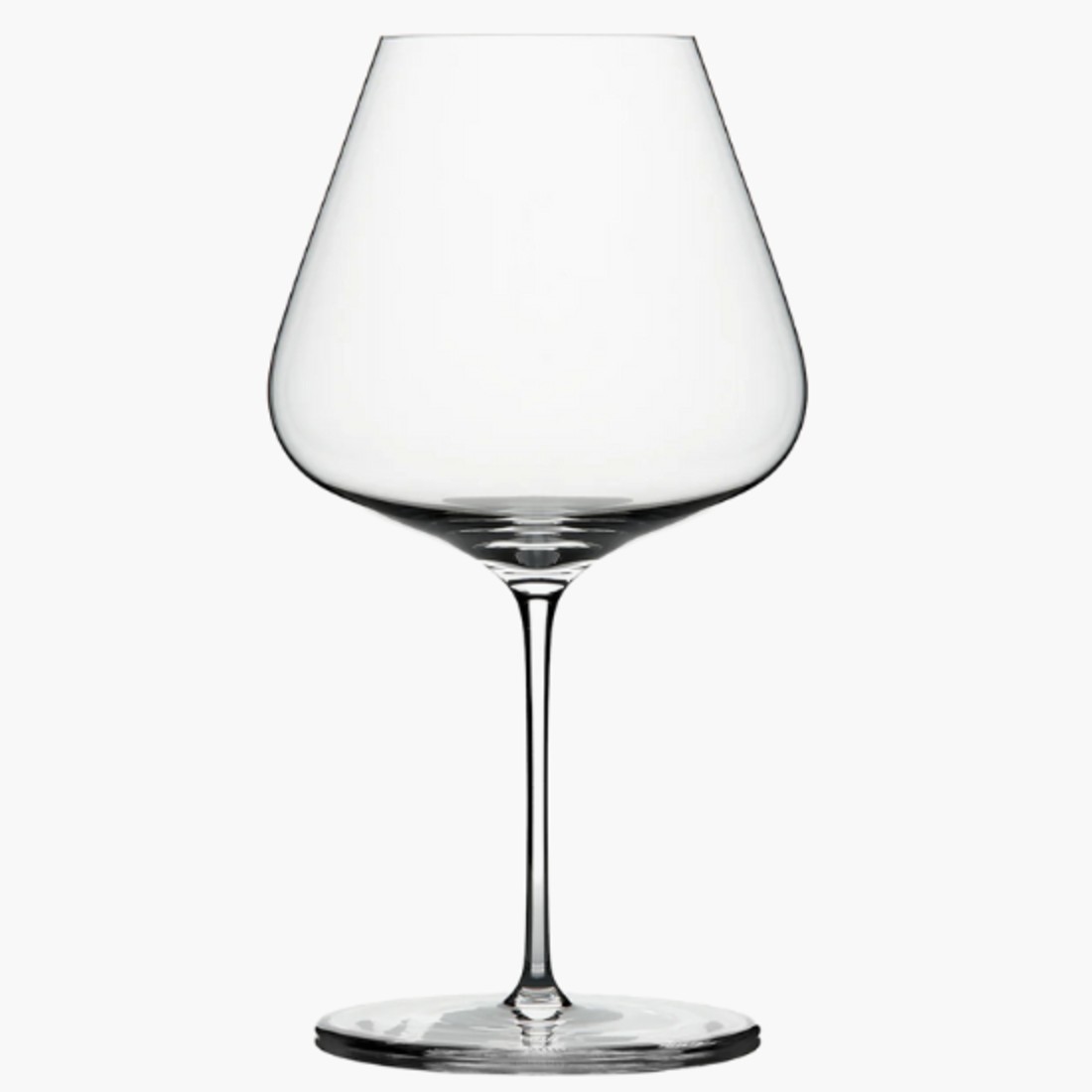
Burgundy glassZalto Denk’Art, £105 for two, Borough Kitchen With a generously sized, wafer-thin bowl.
Burgundy glass – with a generously sized, wafer-thin bowl.
CoupeWaterford Elegance champagne belle, £90 for two, Waterford Contemporary and delicate with a subtly flared rim.
Coupe Waterford Elegance champagne belle – contemporary and delicate with a subtly flared rim.
TumblerRiedel O to Go White, £30 each, Riedel The chic stemless option.
Tumbler Riedel O to Go White – the chic stemless option.


Some tips, before you reach for that wine glass…

Don’t
Stick your fizz in the fridge. The bottle should be well chilled before opening (between 8-10C is ideal, according to Riedel, because if too cold the flavours are masked), but 30 minutes in a wine bucket filled with ice is better to achieve this quickly if you forgot to put it in the fridge.

Do
Try decanting champagne. The process can lessen foaming, help soften acidity and release flavour. Riedel calls it “a revelation”, especially with young bottles, though he doesn’t recommend the process for older ones or champagnes with particularly delicate bubbles.

Don’t
Fill the glass more than half- or two-thirds full. This gives space for aromas to develop and concentrate.

Do
Keep the wine glass flat on the table when pouring – if you’ve got the skills of a sommelier. “The trick is to pour the champagne into the glass in one steady unbroken stream without the wine bubbling over the rim,” says Chang. The rest of us should adopt the 45-degree tilt and a slow pour to minimise foaming. “Wet” the glass first with a little champagne to let bubbles settle before continuing to pour.