Many winemakers have been facing a ‘catastrophic’ economic situation with rising costs and full cellars, industry leaders warned as they met France’s agriculture minister this month.
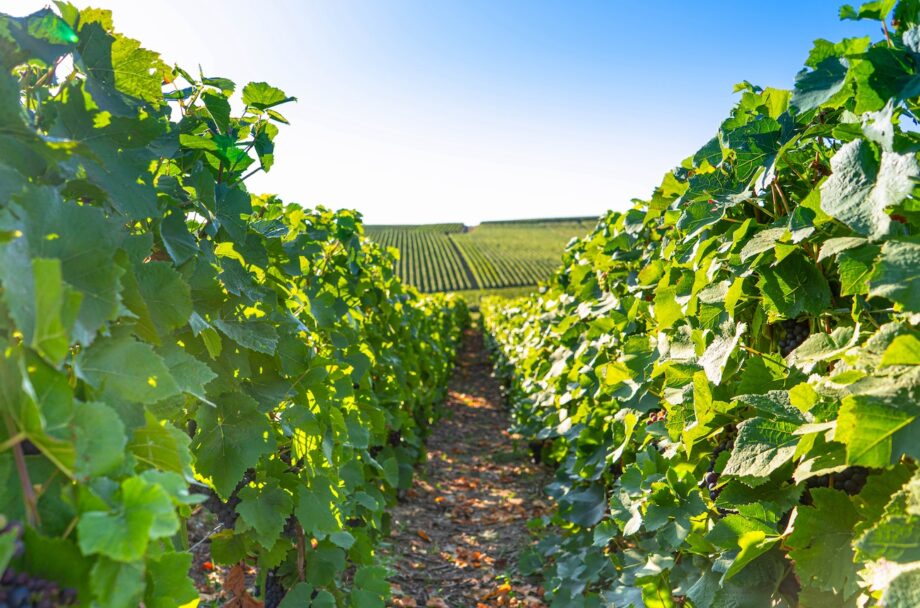
French vineyards, Credit: wilatlak villette / Moment via Getty Images
French wine is in a crisis that constitutes ‘one of the most serious in its history’, with both structural and cyclical challenges, industry bodies warned this week as they met with the country’s agriculture minister, Annie Genevard.
Winemakers currently face a ‘catastrophic’ economic situation, said the groups, including the Association Générale de la Production Viticole (AGPV), and Jeunes Agriculteurs, which represents young vintners.
Consumer markets are saturated, many cellars are ‘full to bursting’ ahead of the 2025 harvest and costs are rising, they said.
Producers are also dealing with repeated climatic hazards and international trade issues.
Calling for more urgent measures to help ‘save our wine sector’, they warned the industry is at a turning point and the choice is to either support it or witness its collapse.
France’s government has already offered to compensate growers to rip out vines to reduce supply. In late 2024, growers applied to grub up around 27,00 hectares in total, using around €109m of the €120m budget.
Most of the money left over will be used to create an emergency fund for young winemakers, the trade bodies said following their meeting with the agriculture minister this week.
Other measures were also discussed, such as protecting farmers’ income and the possibility of grubbing-up more vines. The trade bodies praised the minister for listening to their concerns.
French wineries aren’t the only ones facing difficulties. At the EU level, the European Commission recently proposed reforms to help make the bloc’s wine sector more competitive.
Proposals include efforts to promote wine but also to allow member states to pay producers for ‘green harvesting’, to cut supply.
Funds have previously been released for crisis distillation of excess wine, and this policy has made a return in some EU countries in recent years.
Several vineyard regions worldwide have also been grappling with oversupply, from parts of California to some areas of Australia.
Global wine consumption fell to its lowest level since 1961 last year, albeit this still constituted 214 million hectolitres (mhl), said the International Organisation of Vine & Wine recently.
There are more than 150 wineries in Barossa and about 90
cellar doors. Newstalk ZB host Roman Travers heads to one
for an afternoon of leisure and learning.
Being told to stand still, draw in a deep, diaphragmatic breath, and to allow your senses to fully take in where you are, sounds like an instruction given at a yoga retreat. But here I am, standing in the Barossa Valley, only 50 minutes from the city centre of Adelaide, and my senses are exploding with that warm, fragrant, tranquillity that only rural Australia can give you. Why aren’t more of the world’s soaps and scented candles based on the mindfully cleansing aroma of eucalyptus trees?
Barossa Valley is where good taste meets great company. Photo / NZ Herald
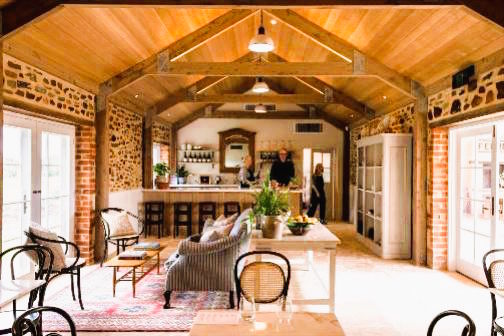
I’ve arrived at Alkina Wines, on the cusp of Greenock. The wee village is so close, a popped cork from a bottle of bubbles may well hit it from their cellar door, if the wind was right. The courtyard setting is stunning and peaceful. Permeated occasionally by the arrival of new groups of people excited to be sharing each other’s company with good food and excellent wine. There’s a very relaxed atmosphere here that instantly makes me feel welcome, with the staff warmly encouraging you to rearrange the chairs around the courtyard in order to form the tables you need. A group of six women have just arrived and as they laugh and cackle away like early-morning magpies, I listen and watch with interest as they decide upon their lunch selections. My waiter, Sarah Castle, casually leaves photo albums and books about the owner on my table as she goes about describing the wine and food to me.
Some cellar doors, like Alkina, let you form your own group tables for a social experience
I’m happy to be led by her recommendations, which are just divine. Sarah moonlights as a food stager and photographer and she’s genuinely engaged with me as a customer and the products that she lovingly presents and serves. I watch the easy way she floats from table to table, checking preferences, topping up glasses, taking food orders and introducing the next varietal. Sarah works like a happy octopus, with bottles, platters and plates flowing easily along with her light laughter. When you come to somewhere as delicious as Alkina, be happy to be inspired and led by those who love their work and the products they create.
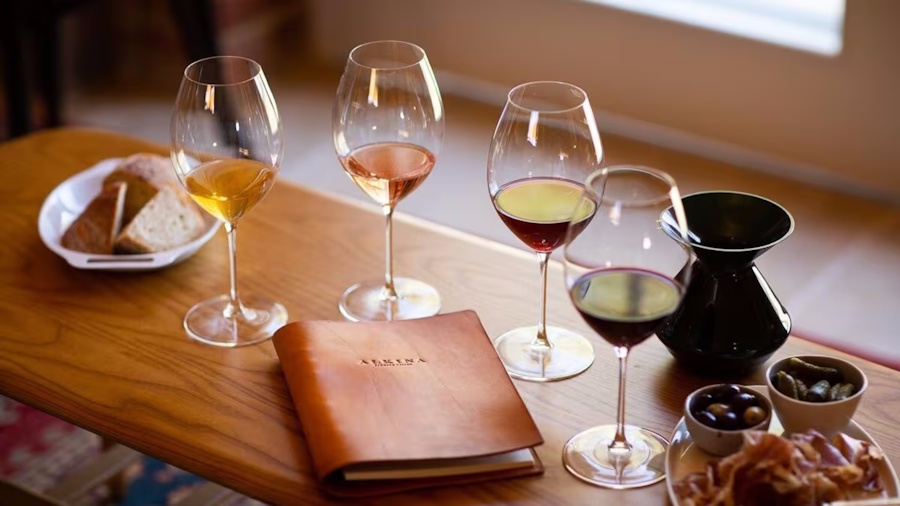
I’ve noticed no one is here to push you into buying wine. Instead, they want you to come back and recommend their vineyard and cellar door to everyone back home. And you will, once you’re made to feel adequate with your inadequate wine knowledge. Some cellar doors take the price of the tasting off when you do buy their product. I ’m very much learning on the hoof and I’m not keen on spitting my wine into the large spittoon, adorning every table. “Just sip a smaller amount of wine, then tip what you don’t want to drink into the spittoon” Sarah tells me as she returns to the table with a lunch that would be fitting in any Mediterranean climate. They’ve had no substantial rain here since November.
I’ve claimed a large table under a covered area with an open fire and a pizza oven, perfect for any season. Slowly, I work my way from bubbles to rose, crisp, light whites to delicate, then robust kick-you-in-the-toolbox reds. At one point, a woman wanders past my table to study some antique French cheeseboards stacked next to the woodfired pizza oven. “You might fit one or two in your handbag,” I remark, and she reveals she is from the south coast of South Australia, visiting with her friend and their husbands. The two couples have spent the past 15 years having annual holidays in Wānaka. We got chatting about why I’m here and the gorgeous accommodation that I’m staying in – The Old Homestead.
“Would you like to come and see the villa?” I ask. Within seconds, they’re all up and ready to march the short distance across the limestone gravel courtyard to the huge two double bedroom homestead that’s mine for the next two nights. This is the kind of accommodation you dream of having when you’re away on holiday. A huge kitchen, an enormous lounge with a log fire, and copious amounts of tinder-dry gum, split and set to go. There are also two double bedrooms with enormous ensuites. I feel like a real estate agent, showing off a home for sale that isn’t mine, just like any real estate agent.
“You’ll need a bigger handbag,” I tell Sharon as they eye up all the exquisite pieces of furniture that make Alkina’s Old Homestead feel like a proper home. I’ve only been here for a few hours and already I’ve met locals and other tourists like me, all as happy as a flock of Galahs to share their expertise and stories.
Making the most of a tasting – Slowing down and learning how to live in the moment and enjoy everything can take some time, so give yourself plenty of it. If you love a good yarn and you’re willing to ask questions, you only need to plan a day with two or three cellar door visits. Talk to those in the trade and to those who organise wine tours. They all want you to enjoy your time here, and too often they speak to tourists determined to have four-six tastings in a day. The cellar doors don’t swing open until 11 am and that first one might be your first meal as well.
The people of Barossa love what they do, and they love the product you’re heading up their vineyard driveway to see. Whether it’s a random drive with you at the wheel or a strategically planned expedition, there’s every chance that you’ll meet sommeliers, vintners and a cast of Barossa people who are warm, authentic and filled to the top of the glass with great stories. If you’re not on a well-thought-out mission, talk to the staff where you are. Ask them what they’d recommend next.
Towards the end of the tasting, they’ll have a great sense of what you like and therefore, where to send you to next in your dusty rental car.
I know it’s an added cost, but I recommend having transport booked. Whether that’s Barossa Taxis or ‘Door to Door’ in a chauffeur-driven Land Rover, Mercedes or Jaguar, you won’t have that fear rolling around in the back of your mind of “have I swallowed more than I’ve spat?”
The value of wine exports has dropped slightly over the past year, though volumes remain strong with an exceptionally large 2025 harvest to drive growth.
NZ Winegrowers annual report indicates exports rose 5 percent by volume in the year ended June, though the value of exports was down slightly at $2.10 billion.
Association chair Fabian Yukich said there had been strong export growth to Asian markets over the past year, though the value of exports to the major United States market fell 4 percent to $762 million.
About 90 percent of the wine produced in New Zealand was exported to more than 100 countries.
Shipments to China grew 47 percent to $56m, while exports to South Korea lifted 92 percent to $44m.
Overall exports to second-tier markets, which excluded UK, USA and Australia which together accounted for 70 percent of exports, rose 17 percent in the past 12 months to just under $600m.
“According to market researcher IWSR, lighter refreshing styles are outpacing overall wine category performance,” Yukich said.
“This shift is driven by varietals with more refreshing palate profiles, which New Zealand excels in delivering.”
However, he said the industry was facing a number of challenges, with uncertainty around the long-term impact of tariffs on demand for New Zealand wine in the United States.
“While the increased tariffs have been in place since April, with a further increase in August, it is not yet possible to discern the effect of these in the export data.”
Vintage 2025
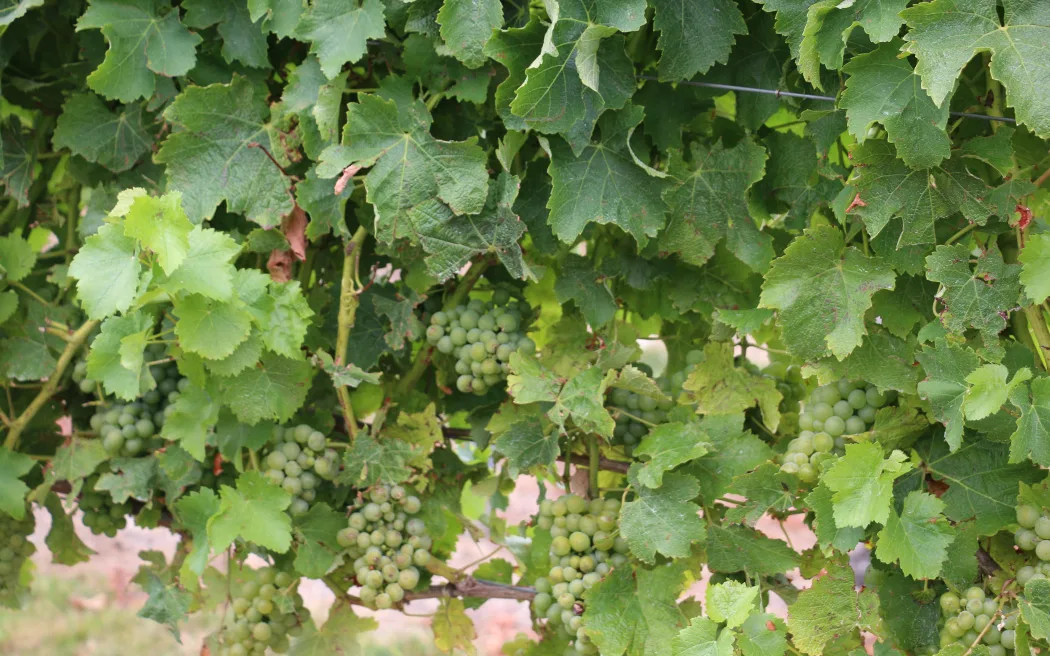
The 2025 vintage was unusually large with positive weather conditions bringing warm, dry days and cool nights, producing a high-quality harvest, though a lot of grapes were left on the vine.
Winegrowers chief executive Phillip Gregan said the grape yield was exceptional with the volume far exceeding the industry’s ability to process.
“The weather was so fantastic for grape growing that crop was really once in a generation,” Gregan said.
“There was no way we were ever going to be able to harvest all those grapes. We wouldn’t have had the capacity in our wineries. So there’s still plenty of our wine available to grow sales over the last.”