Here’s a summary of the June 2026 newsletter from The Cellar Club Inc.
June Event: Margrain Vineyard Presentation
Date & Time: Wednesday, 10th June, 8pm
Presenter: Kate Throp, Margrain’s Cellar Door/Sales/Marketing/Admin lead
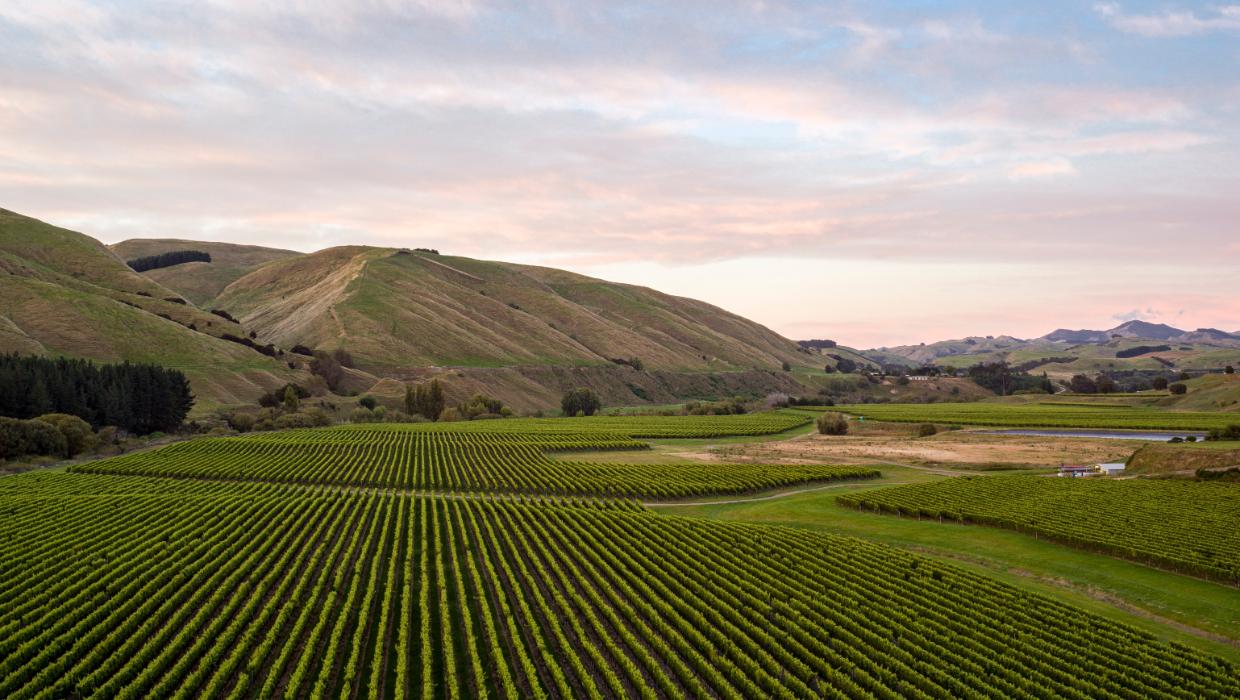
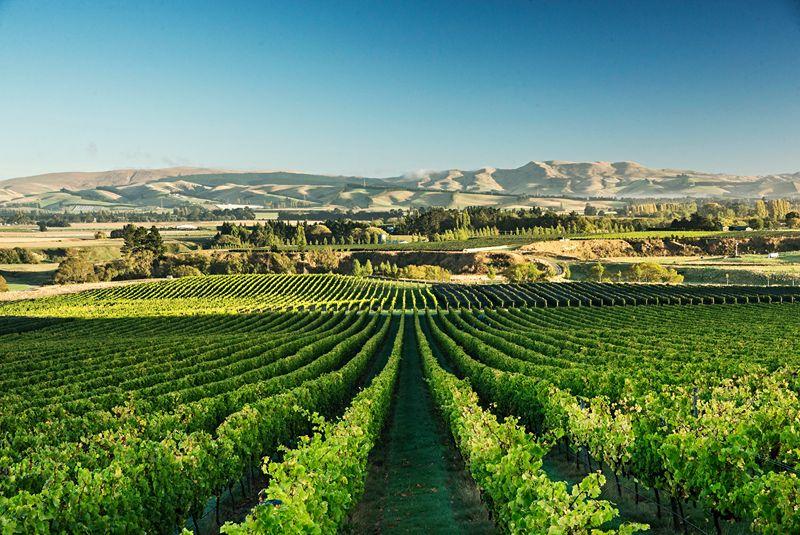
About Margrain: A family-owned vineyard in Martinborough, established in 1992, known for its commitment to quality and a complete vineyard experience (tastings, tours, accommodation, and dining).
Wines Featured: La Michelle Methode Traditionelle, Pinot Gris, Riesling, Chenin Blanc, Chardonnay, Rivers Edge Pinot, Home Block Pinot.
Extras: Cellar Door open daily, kitchen open Wed–Sun, vineyard tours, and accommodation available.
Club Updates
May AGM Recap:
All committee members remain for another year.
Subscriptions stay at $25 for 2026/27.
Wayne Kennedy was unanimously made a Life Member.
Financial and President’s reports are on the club website.
Screwcaps Collection:
The club will stop collecting screwcaps after the AGM.
Members can bring any remaining screwcaps to the June meeting for donation to Kidney Kids NZ.
For recycling locations, visit recyclemap.co.nz.
Looking Ahead
July: Proposed Mid-Winter Dinner at The Johnsonville Club; members’ attendance feedback requested.
August: Margrain, Wairarapa event.
September: To be confirmed.
Wine News
Bell Hill (Canterbury) Named NZ Winery of the Year 2026 by The Real Review.
Recognized for consistency and excellence.
Other top wineries: Felton Road (runner-up), Prophet’s Rock, Quartz Reef, Bilancia.
Special awards for Cloudy Bay, Neudorf, Burn Cottage, Chateau Garage, Greywacke.
Rising Stars: Jascha Oldham-Selak and Sanne Witteveen.
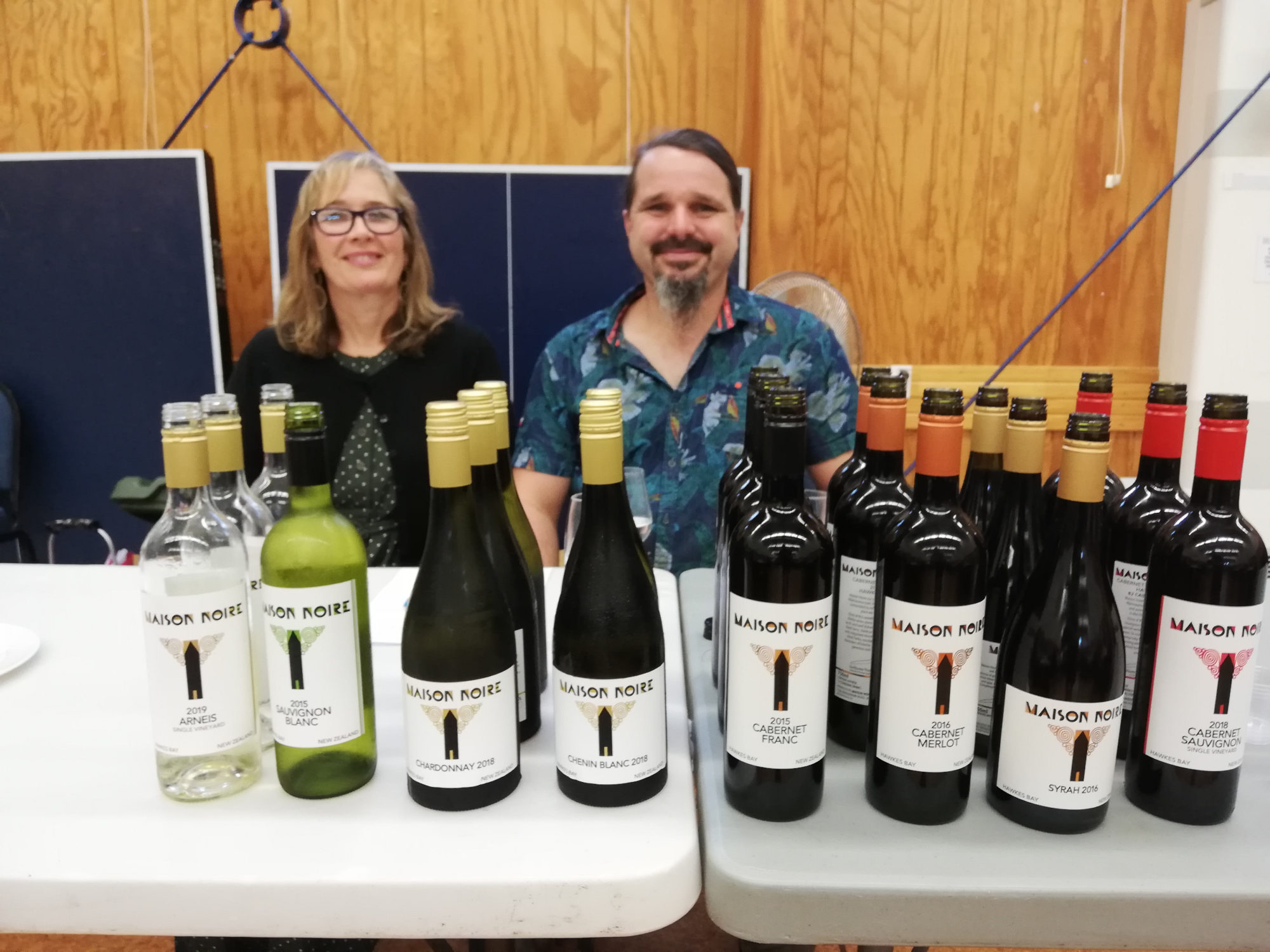
Some of your committee attended, by invitation, a Wine Fair at The Wellington Club on Tuesday 24th June. The evening showcased the rich diversity of NZ’s wines and their distinctive winemakers from boutique producers across the country. And introduced most of us to a number of the smaller vineyards from Central to Matakana.
If you would like to Google some of the vineyards or hear more about them, these were the vineyards at the evening:
Schubert, Martinborough- est. in 1998
Hans Herzog, Blenheim – planted in 1996
Te Motu, Waiheke Island – est. in 1999 – the oldest family-owned vineyard on the island
Puriri Hills, Auckland – set up in 1996 – they make red wines in the French style
Rock Ferry, Blenheim – set up in 2005 – organic new world wines [10 varieties]
Valli, Central Otago – est. in 1993
Dragon Bones, Waitaki Valley, North Otago off-grid – est. 2005
Organised Chaos, Clive, Hawkes Bay
Mon Cheval, Waipara
Zenkuro Sake, Central – est. 2015 – rice and yeast are imported from Japan, they want to change the public perception of how to drink this
Corofin, Blenheim
Gillman, Matakana – est. 1998 – they make unapologetically only red wines
Julz – Collaboration Wines, Hawkes Bay – est. 2010
The evening was an interesting sampling from some great vineyards, with above average priced wines that were discounted for the evening. It was nice to be able to talk with the growers/wine makers about how they produce the product and about their differing views on terroir etc.
Craggy Range in Martinborough won a Best in Show for its pinot noir. Craggy Range
A Martinborough vineyard is toasting its success after being awarded a prestigious ‘Best in Show’ honour at this year’s Decanter World Wine Awards.
Craggy Range’s 2024 pinot noir was the only wine from New Zealand to get the top honour.
More than 200 judges tasted thousands of wines from 57 countries and only the top 50 get a Best in Show award. That amounts to just 0.3% of all wines tasted.
Craggy Range chief winemaker Ben Tombs called it a “fantastic” achievement.
“It is the most influential wine awards in the world,” he told Stuff Travel.
“It’s an awesome accolade to have. It goes towards our ambition … to stand along the great wine estates of the world. So it gives you a lot of confidence.”
The judges hailed the pinot noir as “an uncompromisingly dark wine that plays to New Zealand’s strengths in terms of purity and vivacity of fruit: raspberry, cherry and plum come streaming from the glass, and the fine meshing of fruit and oak in this wine adds to its lustre and appeal”.
Craggy Range chief winemaker Ben Tombs called it a “fantastic” achievement. Craggy Range
“In the mouth, the wine is both long and broad but not in any way clumsy, and the fruit flavours (raspberry to the fore again) are hypnotic.“
Tombs said the 2024 vintage in Martinborough is “really strong and unique”: “It was quite a warm and dry summer period, and you had these really small berries that gave heaps of concentration.”
He added the vintage was “pretty iconic” and “it just translated all the way through to wine … into the glass”.
Tombs said the award is a big boost for the area.
“It’s special for Martinborough as well. We’re a tiny little region. It’s only 500 hectares of actual pinot noir that’s planted, which is minuscule in the scheme of it.
“So to have that award for Martinborough is incredible.”
Globally, New Zealand finished 11th with a total of 303 medals when all the Best in Show, platinum, gold, silver and bronze awards are handed out by Decanter. France, Italy and Spain were the top three countries.
But where Aotearoa comes into its own is when the results were broken down by the number of medals earned relative to a country’s vineyard area and wine production volume.
It’s similar to the Olympics when a country’s medal tally is rated by population rather than the total number of podium places.
Decanter’s two key indicators are:
Medals per 1000 hectares of vineyard (kha) – showcasing quality output relative to land.
Medals per million hectolitres of wine (mhl) – indicating how much of a country’s production reaches an award-winning standard.
Here, New Zealand finished second in the world, with 2.94 medals/kha and 84.2 medals/mhl.
Judges wrote: “Despite its modest size, the country achieved 303 medals from just 3.6 million hectolitres of wine – an extraordinary concentration of quality.”
Greece finished top of this metric.
As for who will win next year, Tombs is expecting something special from both Craggy Range vineyards in Martinborough and Hawke’s Bay.
“2025 is shaping up to be quite, quite different, but really strong again. It’s a different flavour profile. It was actually quite overcast throughout summer, so we’ve actually got some really more savoury pinot this year.
Sustainable, restorative farming, letting the fruit do all the talking
What a fabulous evening for everyone who attended. With an entertaining presenter and wines made in the Alsatian style that were different, for our tasting pleasure.
While the wines were above our normal price range, people enjoyed the different wine styles and orders were healthy. This is encouraging to your committee. Their cost to members was offset by a generous discount and the waiving of the delivery fee. Thank you Luna Estate for your support and
great tasting.
A reminder of the wines we tried on the night:
Luna Brut Rose a delightful welcoming wine for the evening
Luna Estate Sauvignon Blanc 2023 a blend of two very different blocks from Bue Rock Vineyard
Luna Estate Pinot Gris 2023
Luna Estate Pinot Meunier Rose 2024
Luna Estate Eclipse Chardonnay 2023 mature vine fruit used for this drop
Luna Estate Blue Rock Pinot Noir 2021 a blend from both of their vineyards
Please note some of this information is from Cambridge Road’s website.
At the Luna evening in August, the presenter Joel Watson mentioned that a fellow local
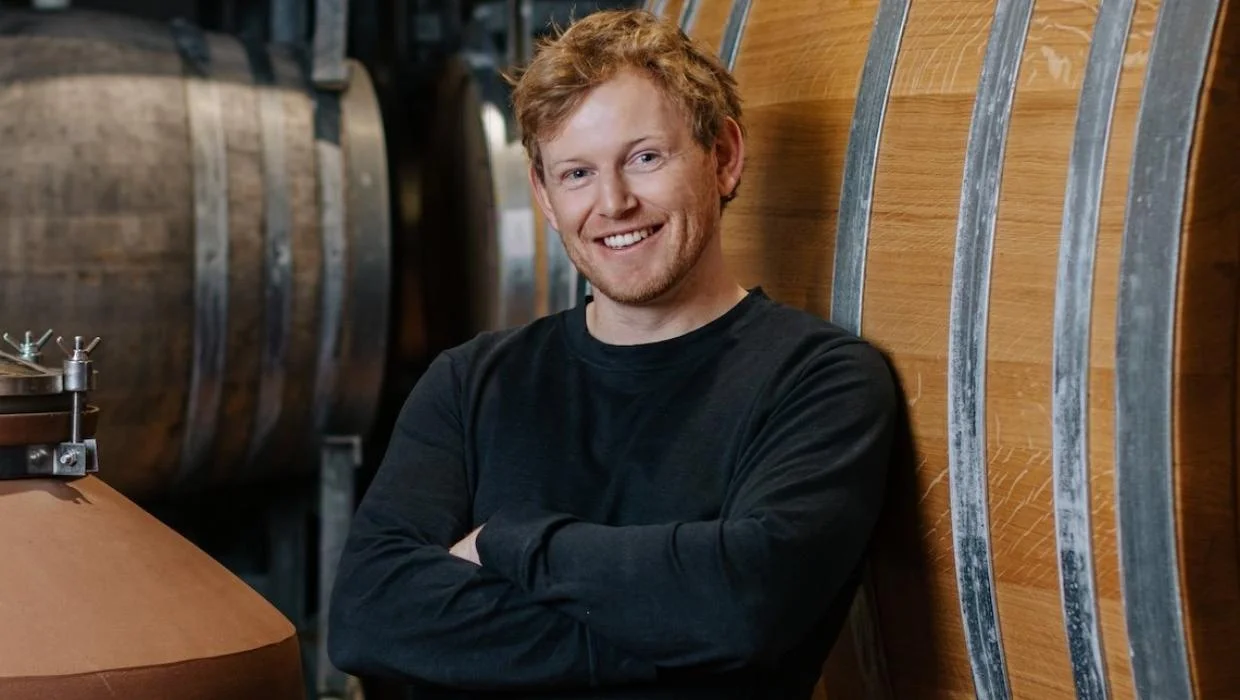
vineyard, Cambridge Road Vineyard, had been experimenting using 90-year-old Totara barrels with two of its wines. So, I contacted the Vigneron, Lance Redgwell to find out more as I was immediately alerted to a potential story, as my husband who writes about whisky, has discovered that a NZ distillery, Pokeno, uses newly made totara barrels for some of its production. These have won gold medals overseas in blind-taste competitions!
The casks in question, crafted in the 1930s, are a far cry from the standard oak barrels of today. Hewn from the forest that carpeted this country, they hark back to a time before Stainless steel and imported European woods. The coopers tradition travelled with the early winegrowers to New Zealand and with them the first wines from this country began to emerge in the late 1800’s.
Ranging from 2,100 to 2,900 litres, these large-format casks, foudre or botte are commonly found in northern Italy, Germany, Austria, and Alsace and often used for high-acid varietals like Nebbiolo, Riesling, and Grüner Veltliner. “They provide lower oxidation levels and a more neutral wood profile,” explains Lance. “But beyond that, they carry mana, history, and a spirit that transcends a mere flavour profile. This is about rekindling a connection to the past and the
early history of winemaking in New Zealand.”
Discovered in a mothballed winery in the far-north town of Kaikohe, these barrels were traced back to the Brajkovich family, best known for their work with Kumeu River Wines in West Auckland. To bring the wood back to life, their restoration comes with immense challenges.
“Like restoring a vintage timber boat, it requires traditional techniques. We’ve had to use draw saws, working with the grain as they would have in the 1920s.
The wood is brittle, and every step requires immense care. It’s an ongoing journey, and we’re not there yet, it will take time.” says Lance Redgwell.
While this is a long-term project, the scale will always be limited by the number of barrels available.
“My hope is that this effort will keep these barrels in use for another 95 years, inspiring future generations to take pride in New Zealand’s winemaking heritage,” says Lance. “And ultimately, my goal is to craft the most distinctly Kiwi wines on the planet— wine that speaks not just of place, but of history, tradition, and the land that nurtures it.”
Cambridge Road has two current wines released which employ Totara cask ageing:
2023 Crystal Veil – rediscovering NZ’s winemaking heritage – a Sauvignon Blanc born in Totara – Sauvignon Blanc Crystal Veil 2023 is both clean and complex. The Totara cask imparts subtle structure and texture, what Lance describes as “a phenolic gift,” giving the wine tension and finesse, along with a faint, lingering memory of fennel seed on the finish. Whole bunch pressed, wild fermented, and left on lees for nearly two years. With zero skin contact, low sulphites (23ppm), and an alcohol level of 12%.
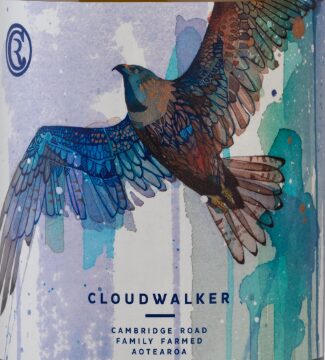
2023 Cloudwalker – this is an orange wine, with varietals of Pinot Gris, Riesling, Pinot Noir. This year’s Cloudwalker sees a more delicate extraction than typical, making it more flexible in terms of end use and food matching. Again, it’s a single vineyard expression looking into the stony, sandy, windswept fringes of the Dry River southwest of town. The Pinot Gris brings colour, spice and stone fruit dimensions, modest levels of Riesling engage further spice and citrus lift. Beyond this a subtle gift of Pinot Rose’ smooths the complexion ever so slightly. This is a wine to enjoy immediately or sometime in the next 5-6 years. Lean toward aromatic curries, brown butter, nuts and mandarin, green peppercorn, white fish & capers, that kind of direction for food matches.
View the extended list of The World’s 50 Best (actually 51st to 100th) Vineyards.
The list of The World’s 50 Best Vineyards 2025 will be revealed at a live awards ceremony in Margaret River, Western Australia, on 19 November.
From established names to rising stars, find out more about the storied estates ranked 51st to 100th in the global ranking, each of which dazzles with world-class terroir, immersive visitor experiences, and unforgettable hospitality.
The 51-100 New Zealand wineries in this prestigious list include:
No.100 Ata Rangi, Martinborough
Ata Rangi in Martinborough is a boutique, organic estate that has earned New Zealand Grand Cru status. It was founded by a dairy farmer who successfully turned his hand to grape growing (with the help of his wife and sister), hence its name, which translates to ‘new beginnings.’
No.100 Ata Rangi, Martinborough
No.98 Felton Road, Central Otago
Felton Road is a pioneer of natural wine and an artisan producer of pinot noir, chardonnay and riesling vintages in New Zealand’s Central Otago region. Surrounded by snow-capped mountains, African Boer goats roam the rugged landscape of these organic and biodynamic vineyards.
No.98 Felton Road, Central Otago
No.90 Kumeu River Wines, Auckland
Kumeu River Wines in Auckland features wines made by New Zealand’s first-ever Master of Wine, Michael Brajkovich. Covering 30 hectares of heavy clay soil over sandstone, the vineyard is known for producing world-class chardonnay.
No.90 Kumeu River Wines, Auckland
No.89 Greystone Winery, Waipara
Greystone Winery in Waipara, on New Zealand’s South Island, is an organic, regenerative wine estate that offers guests off-grid accommodation in a glass eco-cabin overlooking the vineyard.
No.89 Greystone Winery, Waipara
No.52 Wairau River Wines, Marlborough
Wairau River Wines was founded by viticulturalist Hamish Rose and his brother and winemaker, Sam Rose. This idyllic New Zealand vineyard is renowned for crafting award-winning sauvignon blanc.
The 2025 New Zealand wine harvest has been widely welcomed following 2024’s reduced yields. Across the regions, winemakers reported not only a normalisation of volumes but also excellent fruit quality – notable in a country where diverse geography often leads to variability.
A warm, dry spring set the season up well, though a cooler, wetter December and January period tested nerves before settling into a classic Indian summer. While perhaps not as straightforward as the outstanding 2024 vintage, 2025 looks set to produce wines of finesse and charm across the regions and varieties, with the first releases just months away.
Auckland
Michael Brajkovich MW of Kumeu River expressed relief at a ‘normal’ sized vintage after two seasons down by 35-40%. Auckland experienced the driest summer since 1958, with consistent warmth but no heat spikes.
‘The fruit ripened evenly and with gradual aroma and flavour development,’ Brajkovich said. Chardonnay was once again the star, arriving early and in pristine condition.
Gisborne
Described as a ‘magnificent vintage’ by Kirsten Searle of Matawhero, 2025 brought full physiological ripeness and a return to normal yields after two lighter years. Chardonnay excelled, providing excellent fruit for both table wines and sparkling bases.
Searle also highlighted the Gewürztraminer from Matawhero’s Riverpoint vineyard as particularly impressive – a fitting celebration for the winery’s 50th anniversary.
Hawke’s Bay
There is genuine excitement in Hawke’s Bay, with some suggesting that 2025 may rival the renowned 2013 vintage. Ben Tombs noted Craggy Range’s earliest-ever harvest, with Chardonnay off the Gimblett Gravels picked on 8 February.
Whites show ‘electric flavour profiles with moderate alcohol’ while Syrah, despite late-summer humidity challenges, enjoyed extended hang time without excessive sugar accumulation, promising finely structured, vibrant reds.
Wairarapa
After four small vintages, Martinborough celebrated a strong yield. A relatively calm spring and lighter winds led to strong shoot growth and abundant flowering. Intensive canopy management paid off with Pinot Noir showing a savoury, charming profile.
Tombs commented on lower acidity and softer tannins compared to the more firmly structured recent vintages at Craggy Range’s Te Muna vineyard.
Nelson
Todd Stevens of Neudorf reflected positively on the vintage: ‘It’s still early but the whites appear beautifully balanced, while the Pinots show poise and should present very well.’ Initial signs point to good consistency across this smaller but significant region.
Marlborough
Murray Cook of Dog Point summed up 2025 as ‘a season of patience’. ‘With generous yields, the fruit took some time to ripen fully. Thankfully, we were blessed with classic dry and warm conditions which kept fruit quality high over what was our longest harvest period (46 days) in 24 years,’ he added.
However, with global inventories still high amid flat consumption and geopolitical uncertainties, many producers opted to leave fruit on the vines. The upside: only the best fruit was picked and consumers can look forward to excellent quality from this key region.
North Canterbury
A rollercoaster year, with Greystone’s Dom Maxwell describing it as one that ‘challenged us, then offered a lot, then challenged us again, and finally delivered in the end’.
Pure fruit flavours and clean fermentations made it a worthwhile ride. ‘We’re excited about the quality we have in the winery,’ Maxwell added.
Central Otago / Waitaki
Valli’s Jen Parr described an unusually compressed harvest of around half the usual span. Despite spring frosts affecting yields, she was thrilled with the ‘tremendous concentration’ and ‘crazy colour’, particularly in Gibbston and Bendigo.
Small berries and clean fruit were common themes with Parr commenting that wines possess richness and an appealing ‘joyful’ quality that should drink well young but also reward a few years in bottle.
The Waitaki Valley – often marginal – had one of its best vintages in recent years, for both ripeness and volume.

 Date & Time: Wednesday, 10th June, 8pm
 Date & Time: Wednesday, 10th June, 8pm
 Loading...

 Reload document
  Open in new tab