Here’s a summary of the July 2026 newsletter for The Cellar Club Inc:
Club Mid-Year Dinner
Event: Mid-Year Dinner at The Johnsonville Club, Vista Cafe, Wellington.
Date/Time: Arrive at 6:30pm for dinner at 7pm.
Details: B.Y.O. event—members are encouraged to bring wine from their own cellars. The club is subsidizing the buffet cost (members pay $55) and providing bubbles on arrival. The venue is local due to the current fuel crisis.
Transport: Public transport options (train and bus) are available nearby. There are 50 parking spaces after 5pm, but carpooling or public transport is encouraged.
Recent Event Recap
Margrain Vineyard Tasting: Hosted by Kate Throp, featuring several Margrain wines. The event was well-attended (29 members) and included discounted wine sales.
Wines Tasted: Margrain La Michelle Methode Traditionelle, Pinot Gris, Riesling, Chenin Blanc, Chardonnay, Rivers Edge Pinot, and Home Block Pinot.
Upcoming Events
Margrain Cellar Dwellers Tastings: Special tastings of aged wines in August and September. No bookings required; $25–$30 per person.
August: Riverby, Marlborough tasting.
September: Likely a focus on wines of Argentina.
October: J K Wines.
Club Updates
Bottle Tops Collection: The club has stopped collecting bottle tops; members are encouraged to use supermarket recycling. The last collection raised $132.60 for The Kidney Kids organisation.
Membership Subscriptions: Now due for the year starting July 1 ($25 per person). Payment can be made via bank transfer or in cash to Wayne Kennedy.
Here’s a summary of the June 2026 newsletter from The Cellar Club Inc.
June Event: Margrain Vineyard Presentation
Date & Time: Wednesday, 10th June, 8pm
Presenter: Kate Throp, Margrain’s Cellar Door/Sales/Marketing/Admin lead
About Margrain: A family-owned vineyard in Martinborough, established in 1992, known for its commitment to quality and a complete vineyard experience (tastings, tours, accommodation, and dining).
Wines Featured: La Michelle Methode Traditionelle, Pinot Gris, Riesling, Chenin Blanc, Chardonnay, Rivers Edge Pinot, Home Block Pinot.
Extras: Cellar Door open daily, kitchen open Wed–Sun, vineyard tours, and accommodation available.
Club Updates
May AGM Recap:
All committee members remain for another year.
Subscriptions stay at $25 for 2026/27.
Wayne Kennedy was unanimously made a Life Member.
Financial and President’s reports are on the club website.
Screwcaps Collection:
The club will stop collecting screwcaps after the AGM.
Members can bring any remaining screwcaps to the June meeting for donation to Kidney Kids NZ.
For recycling locations, visit recyclemap.co.nz.
Looking Ahead
July: Proposed Mid-Winter Dinner at The Johnsonville Club; members’ attendance feedback requested.
August: Margrain, Wairarapa event.
September: To be confirmed.
Wine News
Bell Hill (Canterbury) Named NZ Winery of the Year 2026 by The Real Review.
Recognized for consistency and excellence.
Other top wineries: Felton Road (runner-up), Prophet’s Rock, Quartz Reef, Bilancia.
Special awards for Cloudy Bay, Neudorf, Burn Cottage, Chateau Garage, Greywacke.
Rising Stars: Jascha Oldham-Selak and Sanne Witteveen.
‘After our first vintage, my Italian viticulture professor came over with tears in his eyes’
The founder of Cloudy Bay wine, David Hohnen, has teamed up with entrepreneur Rupert Clevely — of Geronimo Inns fame — and the Marlborough Grape Growers Cooperative to launch Marlborough Heartland, a Sauvignon Blanc which captures the essence of a remarkable landscape.
Hohnen doesn’t just move through the wine world, he tears through it on a motorbike. Literally. In 1969, aged 20, he rode from Adelaide to Sydney, loaded his bike onto a P&O liner, and crossed the Pacific to California, petrol still sloshing in the tank. He landed in Fresno, a dusty, agricultural outpost in the Central Valley, where the local university offered five-acre student vineyards and a neglected teaching winery which hadn’t produced a drinkable drop in years. That changed when Hohnen got the keys.
“They gave me five acres of Carignan and told me to get on with it,” he says. “The winery was a mess. I spent three months scrubbing tanks. After our first vintage, my Italian viticulture professor — a good man called Vince Petrucci — came over with tears in his eyes and said, ‘Thank you, this is the first wine I’ve been able to drink from this place.”’ Hohnen was hooked.
Back in Western Australia by 1970, Hohnen helped plant the early vines which became Cape Mentelle. There was no blueprint, just instinct, energy and the conviction that wine ought to express something beyond itself. “In ‘74 we had our first real vintage. ‘78 was terrific — critic James Halliday gave us a great write-up. We were in a shed, crude kit, but the wines had promise.”
Then, in 1983, he was ambushed by a grape. A few bottles left by visiting Kiwi winemakers turned everything. He says: “It wasn’t just good – it was electrifying.”
Armed with curiosity and air miles donated by his brother Mark, Hohnen zigzagged across New Zealand in search of the right spot for Sauvignon Blanc. Gisborne was too lush. Hawke’s Bay, too humid. Then came Marlborough. “It was brown. Dry. Sunlit. I thought, “Gotcha!”’
From trout to triumph
By 1985, Cloudy Bay was born; funded by a brutal million-dollar loan at 23.5 per cent interest. The decision was sealed after Hohnen’s brother’s business partner, Simon Fraser (of the Loch Ness Frasers), caught a trophy trout on a fishing trip in the area. “I always said Cloudy Bay owes it to a fish.”
They built the winery at speed, introduced a tilt-up slab technique that had never been used in New Zealand, and sent grapes north to Kevin Judd, the pioneering winemaker Hohnen had met at a wine show in Auckland. The 1985 vintage was blended with a little Riesling and Semillon, allowing it to age gracefully. “It worked,” says Hohnen says. “People still remember their first glass.”
Cloudy Bay wasn’t launched. It bolted onto the scene: “People thought we contrived the allocation. We didn’t. It was a runaway horse. I just sat firm in the saddle, held the reins, and tried to steer.” Demand constantly outpaced supply. “Probably never caught up in my time.”
Veuve Clicquot came calling. Under the stewardship of Joseph Henriot, and later Cécile Bonnefond, Cloudy Bay thrived. “They were smart. Understood wine. Understood brand. Let us get on with it.”
By 2000, Hohnen found himself Chairman and MD of both Cape Mentelle and Cloudy Bay. “Not my choice of title. For a country hick, it sat heavy. I decided to leave. Should’ve gone straight away. Instead, I stuck around for the handover — the worst mistake I ever made.”
He drifted, gloriously. Raised free-range pigs with real care, railing against their status as “the four-legged chooks of the world.” Then came the charcuterie, but done properly: low intervention, slow drying, clean, honest flavours.
The return
In 2022, Cloudy Bay called him back. They’d rebuilt the original winery as a visitor centre and named it the Founder’s Centre. “It was emotional. We’d parted well, and we’re friends again now.”
He had one last idea: enter Marlborough Heartland – a new label, made in collaboration with Rupert Clevely (of Geronimo Inns) and the Marlborough Grape Growers Cooperative, a formidable alliance of 80 growers who usually make bulk wine.
“They do 16 million litres a year,” Hohnen says. “I said, let’s make something special. We picked eight vineyards on deep pebble soils in the central Wairau Valley – the black country. That’s where the best Sauvignon comes from. Ripe, not green. No tomato leaf. Just bright fruit, full palate, lovely tingle. For just over a tenner, it speaks.”
His daughter, Freya — top of her class, a seasoned winemaker, and mother of two — is on the blending bench. “She does the high notes. I do the low. You’ve got to have both.”
A sense of place
What’s in the name? Like Cape Mentelle or Cloudy Bay, it’s geographical. “Some said ‘Cloudy’ sounded like cloudy wine. They were wrong. Place matters. It grounds you.”
Today, the second vintage of Marlborough Heartland is sailing towards England. Sainsbury’s has backed it. The supermarket’s wine agency partner, Watermill Wines, helped secure the listing. “They’ve got the buyers. We’ve got the story.”
And what a story. Cloudy Bay went on to become the world’s best-known white wine. No fuss, no spin, just magnetic Marlborough Sauvignon bottled by a man who listened when the land spoke.
Says Hohnen: “I’ve never had anything from New Zealand. But that’s because I’m Australian. Not sure they like to admit an Aussie created their most famous wine. Doesn’t matter. I’m just happy to be back.”
What’s next? “I don’t look back. I’ve made mistakes, sure. But winemaking is a privilege. You meet good people — real people — farmers whose wealth comes from the earth. Not suits.”
If he could share a bottle with anyone? “It’d be family. Always family. Someone once said, “Without family, you’d have to fight with strangers!” We’ve done pretty well.”
So ends this chapter, with the vines back under his feet and the Marlborough sun on his face. David Hohnen, still steering the horse. Still making the wine speak…
Wayne, with Michael and Murray presenting to the Club
What a brilliant evening! Organised by Wayne, who purchased the winning wines in a timely manner so he could secure every one that he wanted, and part hosted by Wayne, with Michael and Murray added to the panel presenting to the Club members.
We had 36 members turn up for the tasting, so the reputation of this evening from last year has grown!
Wayne had tasting notes for each wine to refer to, and club members were asked what they tasted, liked and towards the end of the evening there was a vote on the best wine of the evening – it was a fairly close call on that point!
The below wines were what we tasted on the night, and may available from New World, The Good Wine Company, and other NZ locations.
2024 Leftfield Pinot Gris, Marlborough
2024 Wairau River Estate Sauvignon Blanc, Marlborough
2024 Sileni Advocate Grand Reserve Albarino, Hawkes Bay
2023 Bladen Eight Rows Riesling, Marlborough
2022 Kirrihill Regional Series Clare Valley Shiraz, South Australia
2021 Church Road McDonald Series Merlot, Hawkes Bay
Cellar Door Bladen Wines – 83 Conders Bend Road, Renwick, Marlborough
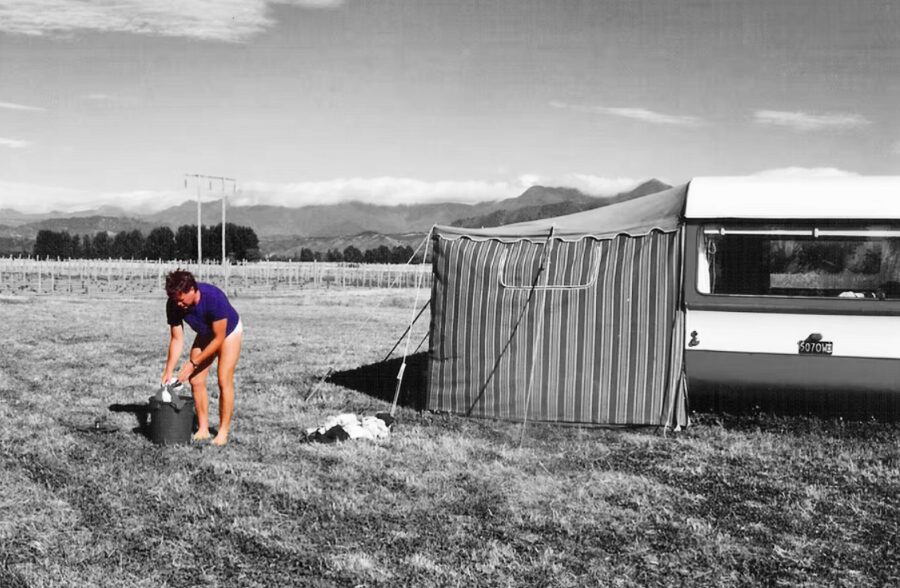
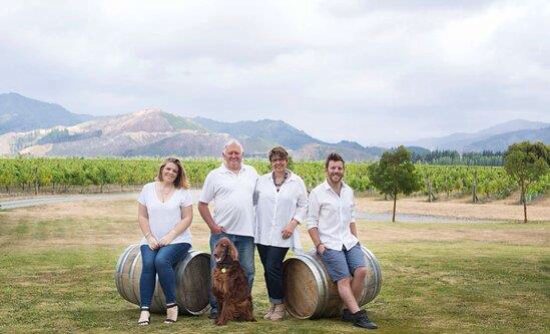
In 1989, Christine and Dave Macdonald left their city lives behind to realise their dream of establishing a vineyard and winery. With caravan in tow the family embarked on a national tour to find the ideal winegrowing region and vineyard location.
Settling in Marlborough, they planted their vineyard by hand, initially growing grapes for local wineries before creating their own wines under the Bladen name. Chris and Dave quickly developed a reputation for making exceptional cool climate wines.
The Bladen name refers to Chris and Dave’s children – Blair and Deni – who were toddlers when the vineyard was developed.
Chris and Dave Macdonald are proud to be amongst the pioneers of the Marlborough winegrowing region. There were only eight wineries in the Marlborough district in 1989 when they established their vineyard.
Blair will be presenting the following wines at our tasting:
2023 Pinot Noir Rosé
2023 Pinot Gris
2023 Sauvignon Blanc ‘Five Barrels’
2024 Riesling ‘Eight Rows’
2023 The Sum of Us (Gertz, Pinot Gris and Riesling)
2024 Gewurztraminer ‘Tilly Vineyard’
2019 Pinot Noir
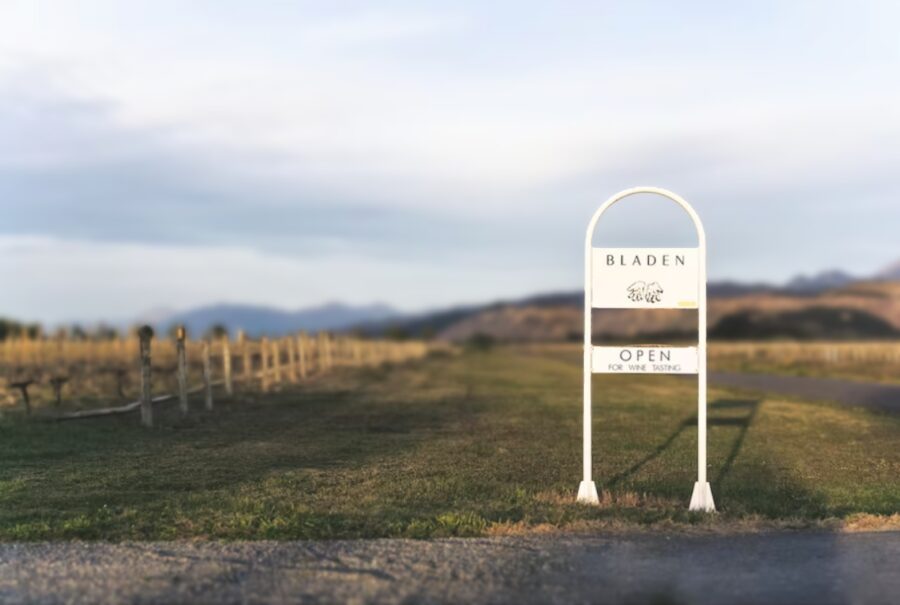
Bladen is currently closed for the Winter, reopening on 25th October 2025.
What a brilliant evening, presented by the owner’s son, who is someone who is involved in all aspects of the vineyard and grew up helping with the set-up and expansion of the same.
We had 34 club members attend, with a good number of orders.
The wines are made in the Alsatian style, rather than French or Italian style, which makes them on the slightly drier side, and entirely enjoyable!
It was nice to hear the pitfalls that the owners have gone through with the set-up involving the terroir and the different varieties they wanted to grow, the solutions that were presented to them that they accepted and the way the business has grown with that vision intact.
The wines we tasted during the evening were:
2023 Pinot Noir Rosé
2023 Pinot Gris
2023 Sauvignon Blanc ‘Five Barrels’
2024 Riesling ‘Eight Rows’
2023 The Sum of Us (Gertz, Pinot Gris and Riesling)
2024 Gewurztraminer ‘Tilly Vineyard’
2019 Pinot Noir
As a reminder to members: Bladen is now closed for tastings for the Winter; reopening 25th October 2025, at 83 Conders Bend Road, Renwick.
Please note some of this information is from Cambridge Road’s website.
At the Luna evening in August, the presenter Joel Watson mentioned that a fellow local
vineyard, Cambridge Road Vineyard, had been experimenting using 90-year-old Totara barrels with two of its wines. So, I contacted the Vigneron, Lance Redgwell to find out more as I was immediately alerted to a potential story, as my husband who writes about whisky, has discovered that a NZ distillery, Pokeno, uses newly made totara barrels for some of its production. These have won gold medals overseas in blind-taste competitions!
The casks in question, crafted in the 1930s, are a far cry from the standard oak barrels of today. Hewn from the forest that carpeted this country, they hark back to a time before Stainless steel and imported European woods. The coopers tradition travelled with the early winegrowers to New Zealand and with them the first wines from this country began to emerge in the late 1800’s.
Ranging from 2,100 to 2,900 litres, these large-format casks, foudre or botte are commonly found in northern Italy, Germany, Austria, and Alsace and often used for high-acid varietals like Nebbiolo, Riesling, and Grüner Veltliner. “They provide lower oxidation levels and a more neutral wood profile,” explains Lance. “But beyond that, they carry mana, history, and a spirit that transcends a mere flavour profile. This is about rekindling a connection to the past and the
early history of winemaking in New Zealand.”
Discovered in a mothballed winery in the far-north town of Kaikohe, these barrels were traced back to the Brajkovich family, best known for their work with Kumeu River Wines in West Auckland. To bring the wood back to life, their restoration comes with immense challenges.
“Like restoring a vintage timber boat, it requires traditional techniques. We’ve had to use draw saws, working with the grain as they would have in the 1920s.
The wood is brittle, and every step requires immense care. It’s an ongoing journey, and we’re not there yet, it will take time.” says Lance Redgwell.
While this is a long-term project, the scale will always be limited by the number of barrels available.
“My hope is that this effort will keep these barrels in use for another 95 years, inspiring future generations to take pride in New Zealand’s winemaking heritage,” says Lance. “And ultimately, my goal is to craft the most distinctly Kiwi wines on the planet— wine that speaks not just of place, but of history, tradition, and the land that nurtures it.”
Cambridge Road has two current wines released which employ Totara cask ageing:
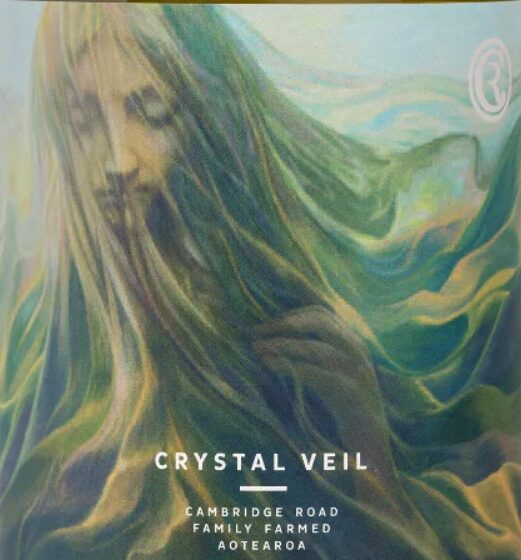
2023 Crystal Veil – rediscovering NZ’s winemaking heritage – a Sauvignon Blanc born in Totara – Sauvignon Blanc Crystal Veil 2023 is both clean and complex. The Totara cask imparts subtle structure and texture, what Lance describes as “a phenolic gift,” giving the wine tension and finesse, along with a faint, lingering memory of fennel seed on the finish. Whole bunch pressed, wild fermented, and left on lees for nearly two years. With zero skin contact, low sulphites (23ppm), and an alcohol level of 12%.
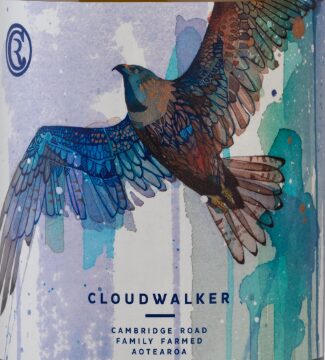
2023 Cloudwalker – this is an orange wine, with varietals of Pinot Gris, Riesling, Pinot Noir. This year’s Cloudwalker sees a more delicate extraction than typical, making it more flexible in terms of end use and food matching. Again, it’s a single vineyard expression looking into the stony, sandy, windswept fringes of the Dry River southwest of town. The Pinot Gris brings colour, spice and stone fruit dimensions, modest levels of Riesling engage further spice and citrus lift. Beyond this a subtle gift of Pinot Rose’ smooths the complexion ever so slightly. This is a wine to enjoy immediately or sometime in the next 5-6 years. Lean toward aromatic curries, brown butter, nuts and mandarin, green peppercorn, white fish & capers, that kind of direction for food matches.
For our November we are returning to Hawkes Bay and trying some wines not previously tasted by us. We’ve described the evening as a Summer Festive Tasting as we are looking to taste some bubbles, compare two Rosés, as well as looking at two great reds that you might want to enjoy at a summer BBQ. We are finishing with a sticky that we know will appeal to many of our members.
That said, there is also plenty of quality in this tasting as it includes two wines from the Jewelstone range, Mission’s premier range, as well as two of their reserve wines. And the other good news is these wines have been heavily subsidised which is why the door price is so attractive.
Here’s what’s on our tasting list for the evening, in no particular order at this time.
Mission Fete Brut Cuvee
Stables Rosé
Jewelstone Rosé [noting the 2024 has recently been released and is now called Blanc De Noir]
Jewelstone Chardonnay
Mission Reserve Syrah
Mission Reserve Malbec
Mission Estate Late Harvest Riesling
And finishing our last formal tasting for the year, there will be a Christmas morsel to go with the last wine. What a great way to finish!
This is going to be a fun evening, and we look forward to seeing you all there.
View the extended list of The World’s 50 Best (actually 51st to 100th) Vineyards.
The list of The World’s 50 Best Vineyards 2025 will be revealed at a live awards ceremony in Margaret River, Western Australia, on 19 November.
From established names to rising stars, find out more about the storied estates ranked 51st to 100th in the global ranking, each of which dazzles with world-class terroir, immersive visitor experiences, and unforgettable hospitality.
The 51-100 New Zealand wineries in this prestigious list include:
No.100 Ata Rangi, Martinborough
Ata Rangi in Martinborough is a boutique, organic estate that has earned New Zealand Grand Cru status. It was founded by a dairy farmer who successfully turned his hand to grape growing (with the help of his wife and sister), hence its name, which translates to ‘new beginnings.’
No.100 Ata Rangi, Martinborough
No.98 Felton Road, Central Otago
Felton Road is a pioneer of natural wine and an artisan producer of pinot noir, chardonnay and riesling vintages in New Zealand’s Central Otago region. Surrounded by snow-capped mountains, African Boer goats roam the rugged landscape of these organic and biodynamic vineyards.
No.98 Felton Road, Central Otago
No.90 Kumeu River Wines, Auckland
Kumeu River Wines in Auckland features wines made by New Zealand’s first-ever Master of Wine, Michael Brajkovich. Covering 30 hectares of heavy clay soil over sandstone, the vineyard is known for producing world-class chardonnay.
No.90 Kumeu River Wines, Auckland
No.89 Greystone Winery, Waipara
Greystone Winery in Waipara, on New Zealand’s South Island, is an organic, regenerative wine estate that offers guests off-grid accommodation in a glass eco-cabin overlooking the vineyard.
No.89 Greystone Winery, Waipara
No.52 Wairau River Wines, Marlborough
Wairau River Wines was founded by viticulturalist Hamish Rose and his brother and winemaker, Sam Rose. This idyllic New Zealand vineyard is renowned for crafting award-winning sauvignon blanc.
This was a fun, festive evening, hosted by Tammy, Mission’s Rep, who
along with Wayne, chose the wines for our evening.
We were fortunate to have two of their premier Jewelstone range, to
savour, along with a Rose’ from Stables to compare with a Jewelstone
Rose, plus Mission’s Brut Cuvee bubbles, made in the champagne way.
Tammy updated us with the news that the CEO for the last 30 years was departing for other pastures. So they now have at Mission a new CE, new-ish vintner and new web page with new motto – ‘History in the Making’! Exciting times!
This evening has left everyone with some thoughtfully selected wines to source for Christmas celebrations. As a reminder of what to put on your shopping list, the wines we tasted were:
Mission Fete Brut Cuvee – Pinot Gris from Mission’s Home Block at Taradale, zesty with delicate pear and apple and fine mousse.
2025 Stables Rose – made from a mix of grapes, to be used as an aperitif, cheap and cheerful
Jewelstone Rose [noting that 2024 has recently been released and is now called Blanc De Noir], This will cellar well for another five years if you want to. Handpicked whole bunch pressed organic Merlot grapes from Mere Rd in the Gimblett Gravels.
2022 Jewelstone Chardonnay – these grapes were from their Green Meadows site in Taradale, made up of two clones, hand harvested and gently pressed, the firstly placed in French oak before spending time in neutral barrels.
Mission Reserve Syrah – Gimblett Gravels grapes, a nice light-ish wine, from a single vineyard. Can be kept for up to five years.
Mission Reserve Malbec – light, dry and on oak for 12 months, this can be cellared for five more years if you wish.
Mission Estate Late Harvest Riesling – this was a nice light-ish desert wine, and as well as going well with our Xmas fare provided by Wayne, it would pair nicely with lemon meringue pie.
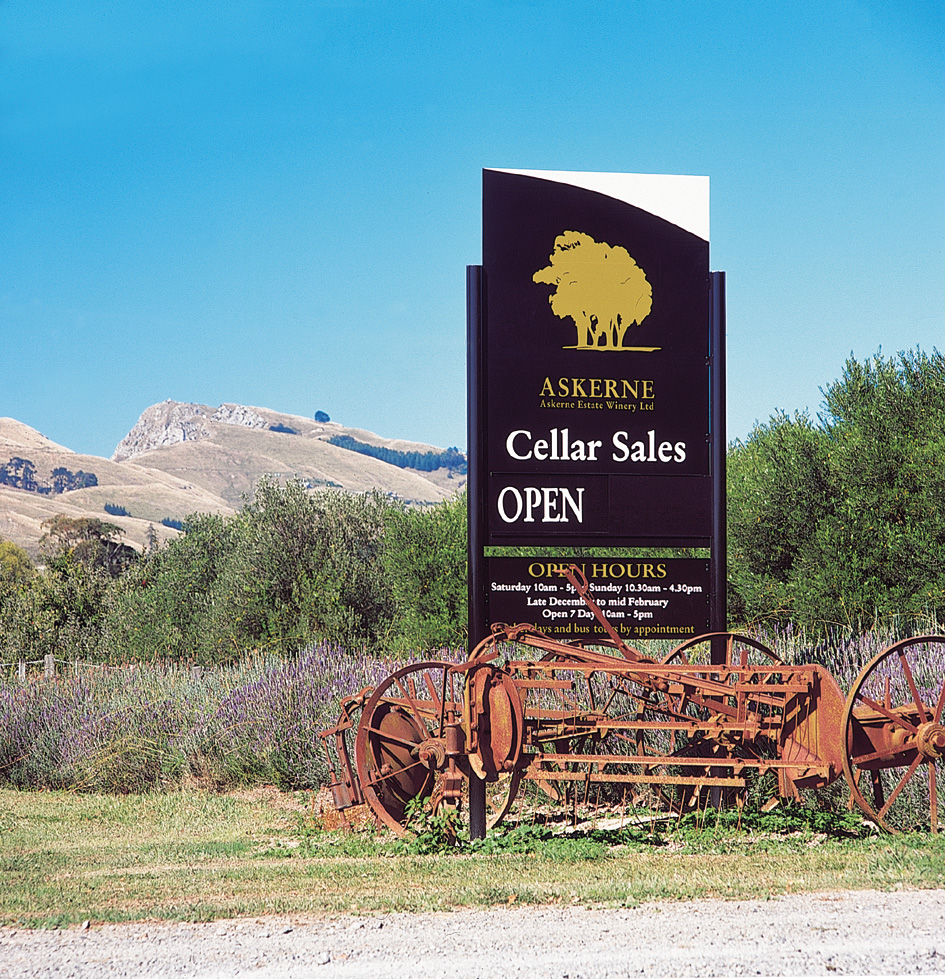
Askerne Hawkes Bay
267 Te Mata Mangateretere Rd, Havelock North
Presenter – John Loughlin, Co-Founder and Director
Wednesday 11th February 8 pm start
Door Price: to be advised later
Askerne Estate winery commenced in April 1993 when wine lovers John and Kathryn Loughlin purchased the original 11.6 hectares site in Te Mata Mangateretere Road. John and Kathryn had studied winemaking and viticulture in the previous years with Kathryn, as the more diligent student, achieving the higher grades.
They called the property Askerne, being the olde English name of Kathryn’s birthplace, Askern in Yorkshire, England.
Sauvignon Blanc vines were planted in late 1993, Semillon and Riesling in 1994, Chardonnay in 1995 and Gewürztraminer in 1996. The first wines were made at the Waimarama Estate Winery (then owned by Dr John Loughlin, John’s father) in 1996.
In February 1997, the Askerne cellar door was opened to the public, and it also sold Waimarama Estate’s red wines, including the then famous Waimarama Dessert Cabernet.
The 1997 vintage produced very fine wines from Sauvignon Blanc, and Chardonnay which confirmed the potential of the site. Askerne commenced exporting with wines from the 1997 vintage. It was a complete surprise to us when our Sauvignon Blanc won an award in The Netherlands as the best match with a cigar. It was not something we thought of in making the wine, nor have subsequently aspired to.
In 1998 Dr John Loughlin sold Waimarama Estate Winery and from the 1999 vintage, Askerne’s wines were made on site. The cellar door building was expanded to accommodate winemaking activities. The first red wine grapes were planted. Also, in 1999 the first Botrytis Semillon wine was made, and the first componentry was created for the Noble Noir wine which was first released in 2013.
In the significantly frost-affected 2001 the first red grapes were harvested, and a Cabernet Merlot Franc blend and Dessert Cabernet were made. Both these red wine styles were encouraging examples of the desired styles. A Chardonnay from the 2001 vintage won Askerne’s first gold medal.
In 2004 a new purpose-built winery was completed, only hours before it was used for vintage. The 2005 vintage saw the first multi-awarded wine with our Gewürztraminer winning double golds. The 2006 vintage saw the first trophy which was taken by our Noble Semillon. The 2007 vintage saw Askerne produce a Gewürztraminer that won 5 gold medals and a trophy.
Large vintages in 2008, 2009 and 2010 coincided with the global financial crisis and a downturn in business as customers changed and downsized and the market moved to cheaper price points. Export channels also dried up for Askerne. They launched their first white and gold label Rouge and Blanc blends as lower tier responses and sold them directly to consumers. Most of the fruit from the 2011 and 2012 vintages were sold as we sought to rebalance inventories with demand.
In 2014 Askerne commenced an exporting relationship in China with Beijing Touch World International Trading Company.
The 2018 vintage proved to be a great one and saw the launch of two of the planned new wine styles being a Sauvignon Blanc / Sauvignon Gris / Semillon blend and the first of the Icon series of wines in “The Archer” Chardonnay.
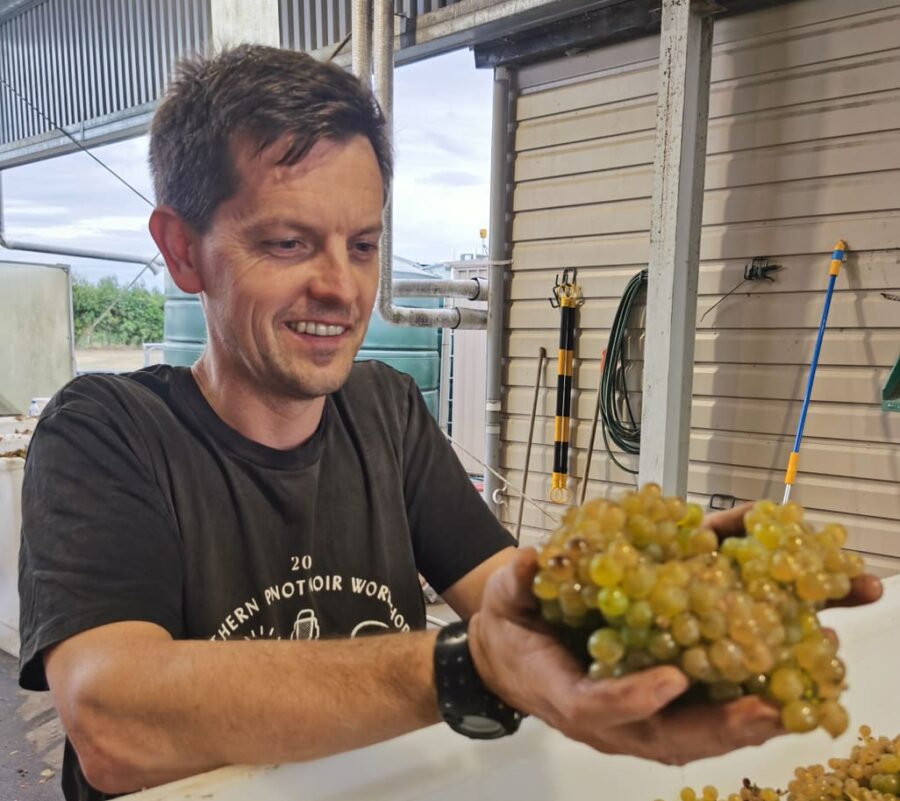
Cairn Coghill
2018 also saw the 25th anniversary of the Askerne venture and was a time to think about the past and present The 2019 vintage was another excellent one which saw a second Icon wine produced in a Syrah called “Tere” which speaks of our site on Te Mata Mangateretere Road, adjoining the Tuki Tuki River.
The 2020 vintage was spectacular in terms of climate and quality. It was also unusual in terms of vintage operations which coincided with the covid-19 global pandemic, but Askerne was able to operate as an essential business.
From the 2020 vintage we added a new product to our range, being the first Sérieux rosé which was made from a blend of Carménère and Mourvèdre.
In January 2021 Cairn Coghill joined the Askerne team as winemaker.

 Riverby Estate Tasting Night
 Johnsonville Dinner

 Loading...

 Reload document
  Open in new tab