‘After our first vintage, my Italian viticulture professor came over with tears in his eyes’
The founder of Cloudy Bay wine, David Hohnen, has teamed up with entrepreneur Rupert Clevely — of Geronimo Inns fame — and the Marlborough Grape Growers Cooperative to launch Marlborough Heartland, a Sauvignon Blanc which captures the essence of a remarkable landscape.
Hohnen doesn’t just move through the wine world, he tears through it on a motorbike. Literally. In 1969, aged 20, he rode from Adelaide to Sydney, loaded his bike onto a P&O liner, and crossed the Pacific to California, petrol still sloshing in the tank. He landed in Fresno, a dusty, agricultural outpost in the Central Valley, where the local university offered five-acre student vineyards and a neglected teaching winery which hadn’t produced a drinkable drop in years. That changed when Hohnen got the keys.
“They gave me five acres of Carignan and told me to get on with it,” he says. “The winery was a mess. I spent three months scrubbing tanks. After our first vintage, my Italian viticulture professor — a good man called Vince Petrucci — came over with tears in his eyes and said, ‘Thank you, this is the first wine I’ve been able to drink from this place.”’ Hohnen was hooked.
Back in Western Australia by 1970, Hohnen helped plant the early vines which became Cape Mentelle. There was no blueprint, just instinct, energy and the conviction that wine ought to express something beyond itself. “In ‘74 we had our first real vintage. ‘78 was terrific — critic James Halliday gave us a great write-up. We were in a shed, crude kit, but the wines had promise.”
Then, in 1983, he was ambushed by a grape. A few bottles left by visiting Kiwi winemakers turned everything. He says: “It wasn’t just good – it was electrifying.”
Armed with curiosity and air miles donated by his brother Mark, Hohnen zigzagged across New Zealand in search of the right spot for Sauvignon Blanc. Gisborne was too lush. Hawke’s Bay, too humid. Then came Marlborough. “It was brown. Dry. Sunlit. I thought, “Gotcha!”’
From trout to triumph
By 1985, Cloudy Bay was born; funded by a brutal million-dollar loan at 23.5 per cent interest. The decision was sealed after Hohnen’s brother’s business partner, Simon Fraser (of the Loch Ness Frasers), caught a trophy trout on a fishing trip in the area. “I always said Cloudy Bay owes it to a fish.”
They built the winery at speed, introduced a tilt-up slab technique that had never been used in New Zealand, and sent grapes north to Kevin Judd, the pioneering winemaker Hohnen had met at a wine show in Auckland. The 1985 vintage was blended with a little Riesling and Semillon, allowing it to age gracefully. “It worked,” says Hohnen says. “People still remember their first glass.”
Cloudy Bay wasn’t launched. It bolted onto the scene: “People thought we contrived the allocation. We didn’t. It was a runaway horse. I just sat firm in the saddle, held the reins, and tried to steer.” Demand constantly outpaced supply. “Probably never caught up in my time.”
Veuve Clicquot came calling. Under the stewardship of Joseph Henriot, and later Cécile Bonnefond, Cloudy Bay thrived. “They were smart. Understood wine. Understood brand. Let us get on with it.”
By 2000, Hohnen found himself Chairman and MD of both Cape Mentelle and Cloudy Bay. “Not my choice of title. For a country hick, it sat heavy. I decided to leave. Should’ve gone straight away. Instead, I stuck around for the handover — the worst mistake I ever made.”
He drifted, gloriously. Raised free-range pigs with real care, railing against their status as “the four-legged chooks of the world.” Then came the charcuterie, but done properly: low intervention, slow drying, clean, honest flavours.
The return
In 2022, Cloudy Bay called him back. They’d rebuilt the original winery as a visitor centre and named it the Founder’s Centre. “It was emotional. We’d parted well, and we’re friends again now.”
He had one last idea: enter Marlborough Heartland – a new label, made in collaboration with Rupert Clevely (of Geronimo Inns) and the Marlborough Grape Growers Cooperative, a formidable alliance of 80 growers who usually make bulk wine.
“They do 16 million litres a year,” Hohnen says. “I said, let’s make something special. We picked eight vineyards on deep pebble soils in the central Wairau Valley – the black country. That’s where the best Sauvignon comes from. Ripe, not green. No tomato leaf. Just bright fruit, full palate, lovely tingle. For just over a tenner, it speaks.”
His daughter, Freya — top of her class, a seasoned winemaker, and mother of two — is on the blending bench. “She does the high notes. I do the low. You’ve got to have both.”
A sense of place
What’s in the name? Like Cape Mentelle or Cloudy Bay, it’s geographical. “Some said ‘Cloudy’ sounded like cloudy wine. They were wrong. Place matters. It grounds you.”
Today, the second vintage of Marlborough Heartland is sailing towards England. Sainsbury’s has backed it. The supermarket’s wine agency partner, Watermill Wines, helped secure the listing. “They’ve got the buyers. We’ve got the story.”
And what a story. Cloudy Bay went on to become the world’s best-known white wine. No fuss, no spin, just magnetic Marlborough Sauvignon bottled by a man who listened when the land spoke.
Says Hohnen: “I’ve never had anything from New Zealand. But that’s because I’m Australian. Not sure they like to admit an Aussie created their most famous wine. Doesn’t matter. I’m just happy to be back.”
What’s next? “I don’t look back. I’ve made mistakes, sure. But winemaking is a privilege. You meet good people — real people — farmers whose wealth comes from the earth. Not suits.”
If he could share a bottle with anyone? “It’d be family. Always family. Someone once said, “Without family, you’d have to fight with strangers!” We’ve done pretty well.”
So ends this chapter, with the vines back under his feet and the Marlborough sun on his face. David Hohnen, still steering the horse. Still making the wine speak…
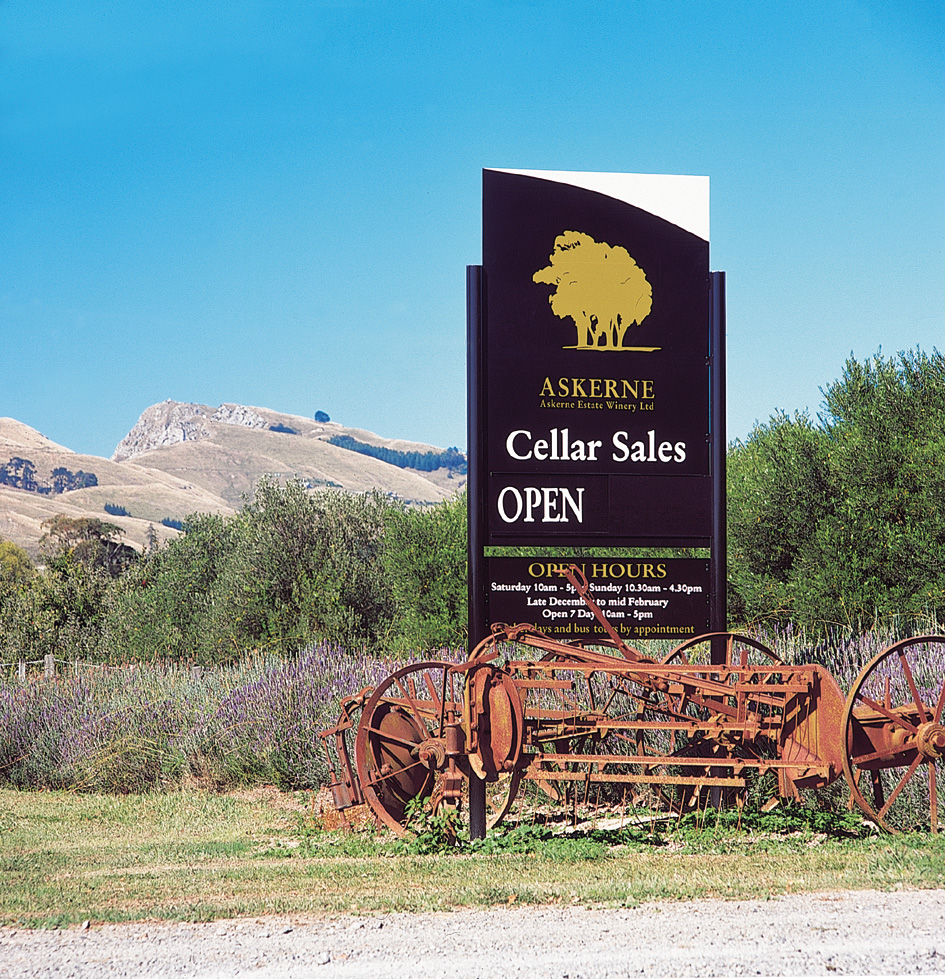
Askerne Hawkes Bay
267 Te Mata Mangateretere Rd, Havelock North
Presenter – John Loughlin, Co-Founder and Director
Wednesday 11th February 8 pm start
Door Price: to be advised later
Askerne Estate winery commenced in April 1993 when wine lovers John and Kathryn Loughlin purchased the original 11.6 hectares site in Te Mata Mangateretere Road. John and Kathryn had studied winemaking and viticulture in the previous years with Kathryn, as the more diligent student, achieving the higher grades.
They called the property Askerne, being the olde English name of Kathryn’s birthplace, Askern in Yorkshire, England.
Sauvignon Blanc vines were planted in late 1993, Semillon and Riesling in 1994, Chardonnay in 1995 and Gewürztraminer in 1996. The first wines were made at the Waimarama Estate Winery (then owned by Dr John Loughlin, John’s father) in 1996.
In February 1997, the Askerne cellar door was opened to the public, and it also sold Waimarama Estate’s red wines, including the then famous Waimarama Dessert Cabernet.
The 1997 vintage produced very fine wines from Sauvignon Blanc, and Chardonnay which confirmed the potential of the site. Askerne commenced exporting with wines from the 1997 vintage. It was a complete surprise to us when our Sauvignon Blanc won an award in The Netherlands as the best match with a cigar. It was not something we thought of in making the wine, nor have subsequently aspired to.
In 1998 Dr John Loughlin sold Waimarama Estate Winery and from the 1999 vintage, Askerne’s wines were made on site. The cellar door building was expanded to accommodate winemaking activities. The first red wine grapes were planted. Also, in 1999 the first Botrytis Semillon wine was made, and the first componentry was created for the Noble Noir wine which was first released in 2013.
In the significantly frost-affected 2001 the first red grapes were harvested, and a Cabernet Merlot Franc blend and Dessert Cabernet were made. Both these red wine styles were encouraging examples of the desired styles. A Chardonnay from the 2001 vintage won Askerne’s first gold medal.
In 2004 a new purpose-built winery was completed, only hours before it was used for vintage. The 2005 vintage saw the first multi-awarded wine with our Gewürztraminer winning double golds. The 2006 vintage saw the first trophy which was taken by our Noble Semillon. The 2007 vintage saw Askerne produce a Gewürztraminer that won 5 gold medals and a trophy.
Large vintages in 2008, 2009 and 2010 coincided with the global financial crisis and a downturn in business as customers changed and downsized and the market moved to cheaper price points. Export channels also dried up for Askerne. They launched their first white and gold label Rouge and Blanc blends as lower tier responses and sold them directly to consumers. Most of the fruit from the 2011 and 2012 vintages were sold as we sought to rebalance inventories with demand.
In 2014 Askerne commenced an exporting relationship in China with Beijing Touch World International Trading Company.
The 2018 vintage proved to be a great one and saw the launch of two of the planned new wine styles being a Sauvignon Blanc / Sauvignon Gris / Semillon blend and the first of the Icon series of wines in “The Archer” Chardonnay.
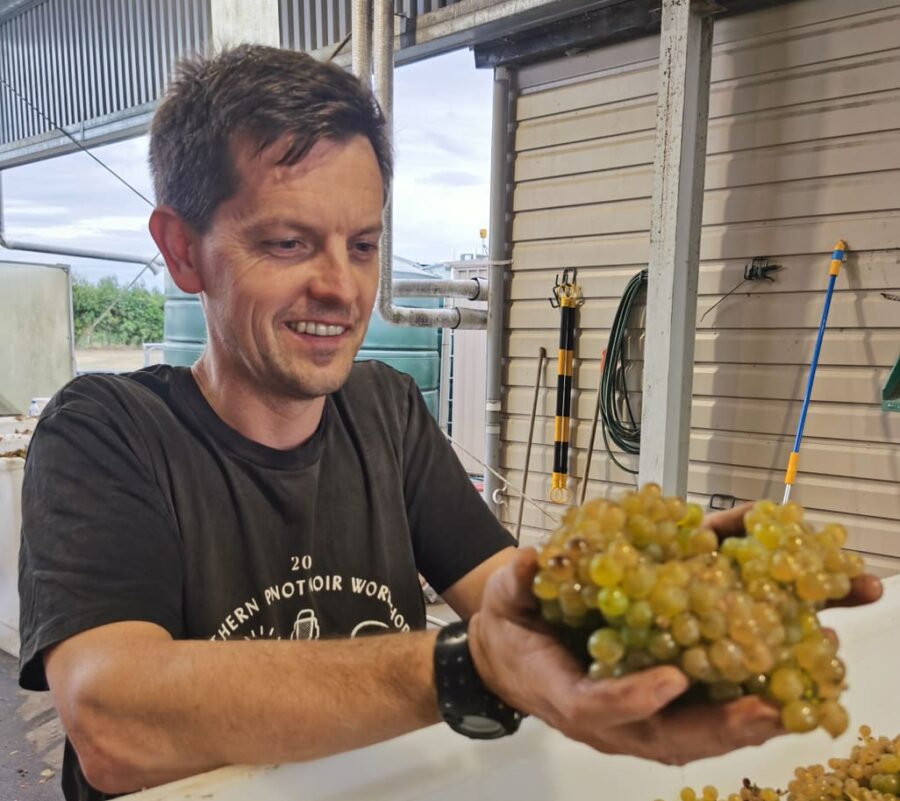
Cairn Coghill
2018 also saw the 25th anniversary of the Askerne venture and was a time to think about the past and present The 2019 vintage was another excellent one which saw a second Icon wine produced in a Syrah called “Tere” which speaks of our site on Te Mata Mangateretere Road, adjoining the Tuki Tuki River.
The 2020 vintage was spectacular in terms of climate and quality. It was also unusual in terms of vintage operations which coincided with the covid-19 global pandemic, but Askerne was able to operate as an essential business.
From the 2020 vintage we added a new product to our range, being the first Sérieux rosé which was made from a blend of Carménère and Mourvèdre.
In January 2021 Cairn Coghill joined the Askerne team as winemaker.


 Riverby Estate Tasting Night
 Johnsonville Dinner

 Loading...

 Reload document
  Open in new tab