Pinot noir is a beloved wine variety in NZ, favoured for its elegantly balanced fruit, florals and lithe profile. It’s an elegant wine so is easy to love – but hard to grow, hence being nicknamed the ‘heartbreak grape’. Its thin-skinned and susceptible to disease, so it took brave wine-making visionaries to attempt to grow pinot here in NZ. Early champions of the wine were told that they were mad.
Luckily for pinot lovers, one such ‘madman’ didn’t listen. Irishman Alan Brady came to Central Otago and planted pinot on a small plot in Gibbston Valley, despite people telling him repeatedly it would had produced the first modern commercial pinot noir in 1973 from Canterbury-grown grapes).
There was no looking back and pinot planting in the region surged from less than 150ha in 1990 to 2000ha by the year 2000. Alan is respected as the godfather of NZ pinot noir and at almost 90 was present at the recent Pinot Noir Conference in Christchurch still with a thirst for knowledge and the desire to share what he has learned along the way.
The three-day event was an opportunity to be inspired by the NZ pinot noir journey and to plan the future for this exciting wine variety.
Today, NZ’s pinot plantings exceed 5700ha. Pinot noir grapevines like a cool climate and thrive in all wine regions from the Wairarapa south as well as in higher altitude regions of Hawke’s Bay. The largest concentration of plantings is in Marlborough.
There is no question that pinot noir is NZ’s most important red grape, so making this wine well represents a level of skill in growing and wine-making that not all wine regions are capable of, regardless of climate. It truly is a reflection of just how special NZ wine is and we want the world to know.
This year’s list showcases 141 producers at the top of their game in Aotearoa New Zealand. We also see several new entrants to the list, including some newer producers who are making waves with different varieties and styles.
What we hope this list will do is introduce you to the true breadth and diversity which is possible in New Zealand wine.
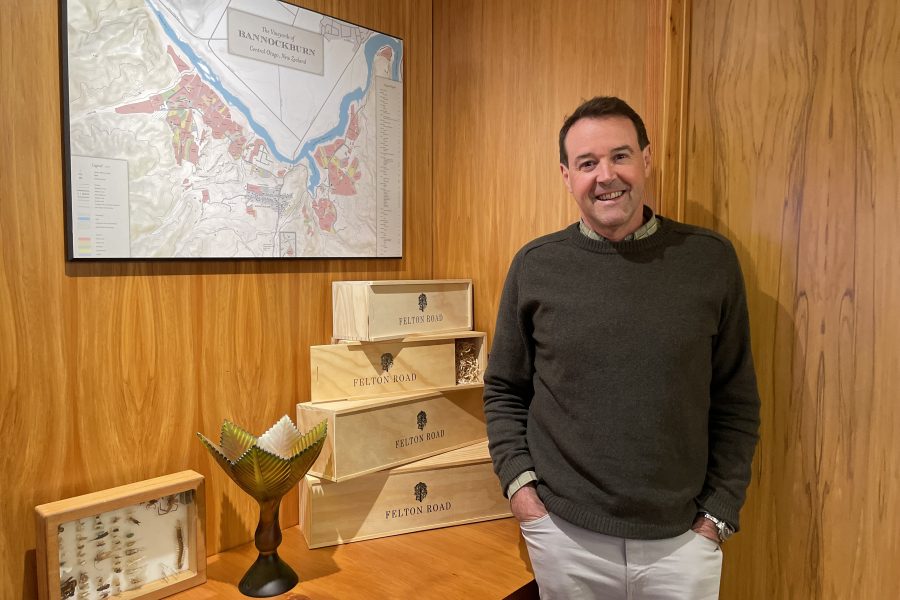
Felton Road winemaker Blair Walter TRR
However, it’s not all change and certainly not for change’s sake! After running The Real Review’s algorithm across all of the tasting notes for the past two years, when the dust settled, Felton Road re-emerged as the Winery of the Year, with Destiny Bay also retaining its position at number two. I cover the reasons for Felton Road retaining their top spot in a separate article published later this week. In third spot is Te Whare Ra from Marlborough.
Significant gains were made by South Island producers who had a less challenging vintage in 2023 than their cousins in the north. This was mostly at the expense of Hawke’s Bay producers who bore the brunt of Cyclone Gabrielle that year, destroying vineyards, buildings and vines.
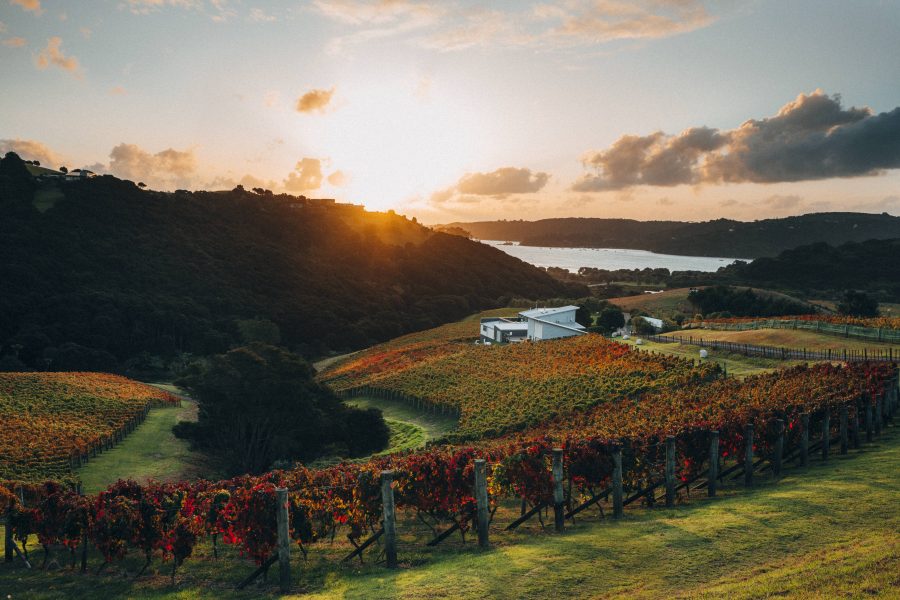
Destiny Bay Wines on Waiheke Island
Despite the challenges, there were some beautiful wines snatched from the jaws of defeat, as amply demonstrated by Te Mata Estate rising to seventh place. I also cover the specific effects of this vintage disparity between north and south in a separate piece.
Looking at the most visible changes to the rankings, Central Otago continues to strengthen its position on the list. Last year, the region stood out for claiming 23% of the list. This year, it is represented by 42 producers (who are either wholly or partly in the region as some own vineyards in multiple regions). This translates to 29.7% which is a reflection of a seemingly unbroken run of good vintages for the region, increased uptake of organic and regenerative farming, investment from both existing and new interests.
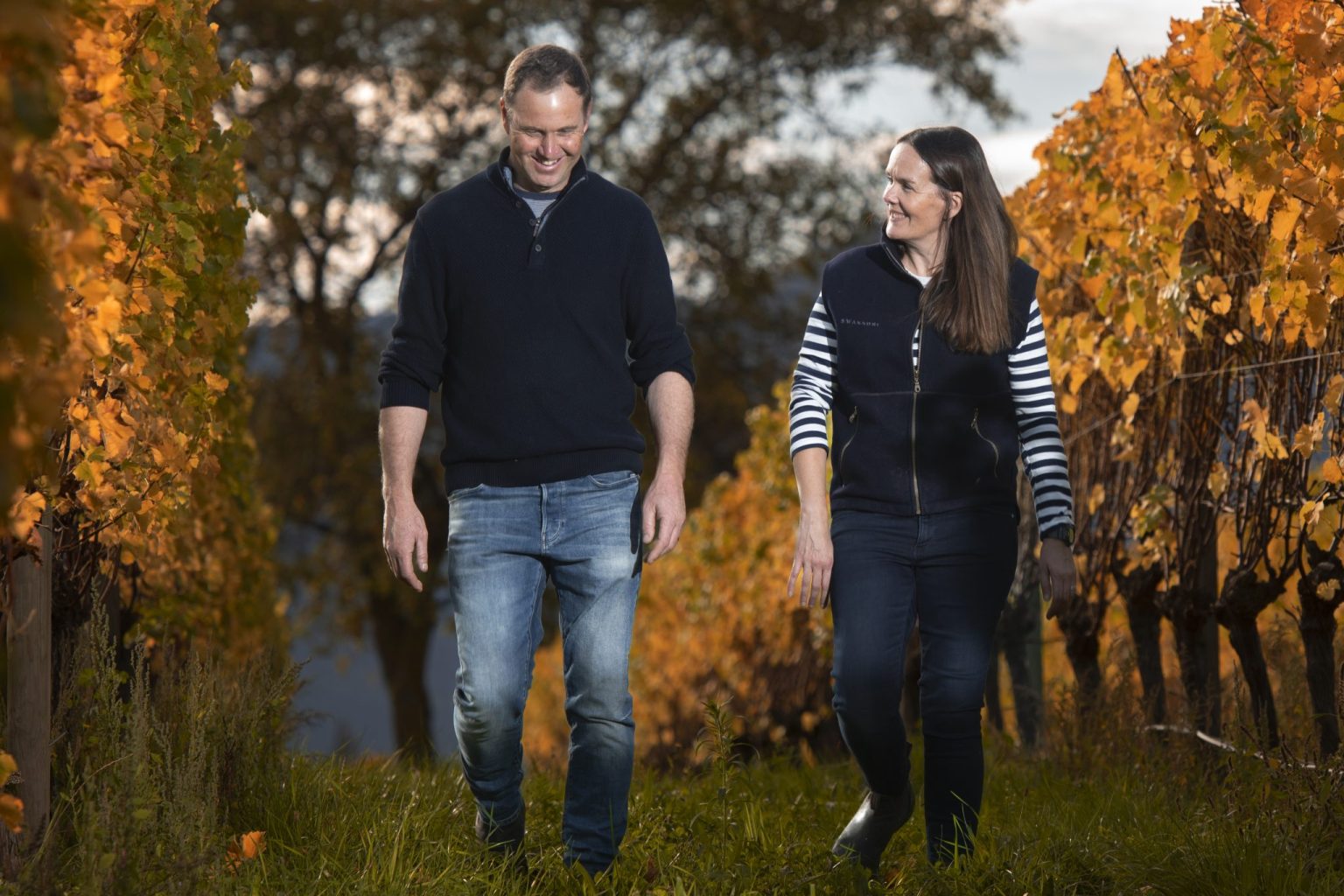
Jason and Anna Flowerday of Te Whare Ra Wines.
Another region which is punching above its weight is North Canterbury, which now claims 10 wineries on the list, or 7.1% of the total (up from 5.7% a year ago). For comparison, it represents 3% of the country’s total vineyard planted area. Despite the difficulties of 2023, the Wairarapa (which also has 3% of the national vineyard) held its ground, with 14 producers representing 10% of the total list. Those holding down the fort will be looking forward to the 2024s entering the market, with all signs pointing to it being a spectacular vintage for the region.
The other region to note in all of this is Marlborough, whose story is hidden in the details. Despite having the lion’s share of the list (admittedly, they do have the overwhelming majority of the country’s planted area), the wineries which have climbed into the top ranks are not all known for their sauvignon blanc. In fact, a few of them don’t even release one at all, and several of those who do make sauvignon do not make it in the typical style of the region’s calling card.
This is not to deride New Zealand’s most identifiable and commercially successful style of wine but rather to point out that the behemoth of Marlborough is more diverse and detailed than many think. The wineries who have made into the top echelons of the list are as committed to making excellent pinot noir, outstanding chardonnay, arresting aromatics and effusive sparkling wines on top of their benchmark sauvignons.
Over the past few weeks, we have also introduced you to the finalists for our new awards categories; Vigneron of the Year, Rising Star of the Year, and five Wines of the Year in different styles. We are delighted to announce the winners for all eight of these awards at the end of this article. And to address the elephant in the room, yes, all of the winners are producers in Central Otago or Marlborough (A Thousand Gods have their winery in Canterbury but their wines are all from the Churton Vineyard in the Southern Valleys of Marlborough).
This was not a deliberate statement or an intended result; however, we judged each category on their own against their peers and in each case the panel selected the wine or producer they felt best embodied the spirit and substance of the award. It is perhaps a testament to the great work being done in these two regions that they have claimed all the awards between them, but it should not be overlooked that great wine and good work is being made throughout the country—as can be clearly seen in the wider diversity in the list of finalists.
What we hope the Top Wineries list will do is introduce you to the true breadth and diversity which is possible in New Zealand wine, and invite you to celebrate the wonderful wealth of great wine made in Aotearoa. Happy reading!
Wow! What an enjoyable evening. Most people would have known or visited this local vineyard, although it’s now, thanks to Transmission Gully, simply a short drive north of Wellington.
We had 30 people turn up for the evening and we were entertained and informed by the vineyards CE, Donna and Jo Scully. They opened with a Karakia which was a change from the norm for our evenings, then went on to explain that their winemaker was Jayne Cooper, a well known winemaker
and wine judge.
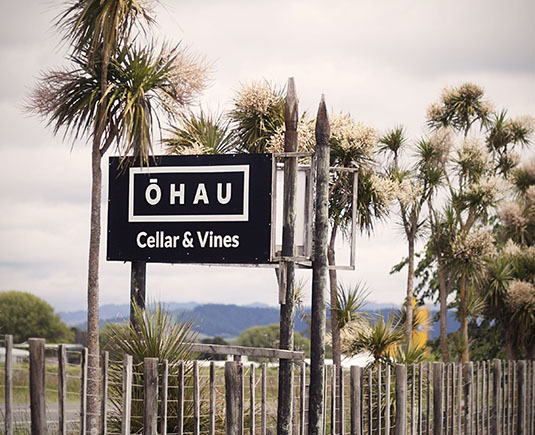
Visit Ohau wines
They had got up to 4ha of grapes at one stage but were now down to 25ha as a business decision and better knowledge of their grape varieties and the land they grow on. One side of their land used to be used to farm horses, the other as a produce farm, so they are blessed with highly fertile growing soils with a high amount of organic content.
Their wines have been vegan since 2020, but this doesn’t hold them back at all!
As all their wines are ‘made’ in the Wairarapa, they truck their grapes over the hill for production.
This leaves extra barrel time for the grapes to be in contact with their skins, so the wine can have different expression at the end of its journey, when compared to similar varietals grown by other wineries.
As a reminder the wines we tasted on the evening:
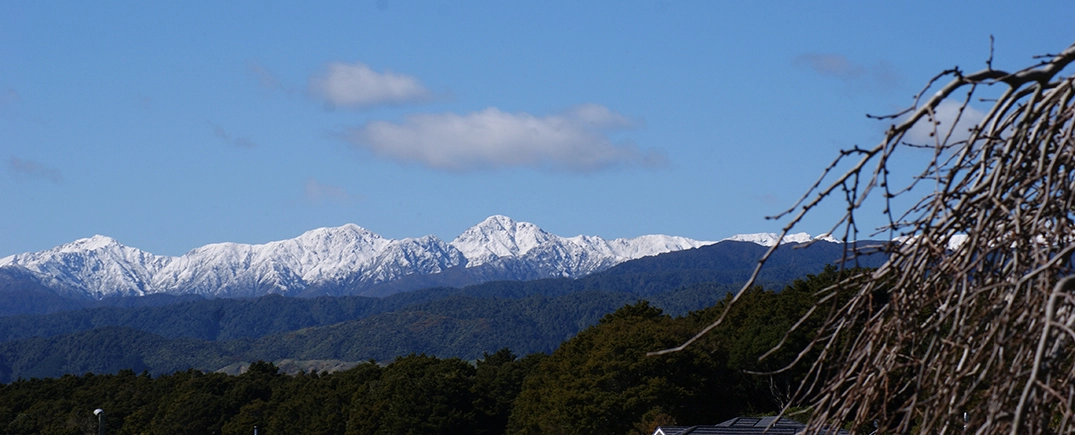
View toward Tararua Forest Park
Not the Norm Rose 2020 – opening wine – a lovely drop, liked by all that is substantially Pinot Gris with a small amount of Pinot Noir for colour. This is their second vintage.
Ohau Gravels Pinot Gris 2023 – fruit forward and aromatic; they leave the grapes on the vines longer before harvesting this batch to bring out fuller flavours.
Ohau Gravels Chardonnay 2024 – they plant their Chardonnay on either side of SH2, as the tarmac provides a natural heat source for these vines and the traffic keeps the flow circulating!
Selected Vines Sauvignon Blanc 2012 – made using more than one clone of Sauvignon, this is fully oaked with wild ferment but no added yeast – the French have been ‘oaking’ Sauvignon for yonks! A nice change to the usual taste of Sauvignon for non-white drinkers.
Not the Norm Sauvignon Black 2021 – this is made with a mix of skins cold-pressed; stainless steel barrel and oak barrel with wild ferment. Sauvignon drinkers will like this!
Ohau Gravels Pinot Noir 2024 – 80% stainless steel / 20% oak cask, this was a light but flavoursome drop.
Not the Norm Te Tihi – this is in effect a fortified Pinot Noir. A drop that came about because of COVID lockdown and a cancelled export order of their WovenStone Pinot Noir. The staff thought laterally and took this batch of red to the Brewtown people, asked them to add a white spirit and whala! They have their version of a lighter sweet red – well worth the taste experience, and one of our members of taking it around the country to family this Christmas!
Well worth a visit, their cellar door is open from Tuesday-Saturday.
The 2025 New Zealand wine harvest has been widely welcomed following 2024’s reduced yields. Across the regions, winemakers reported not only a normalisation of volumes but also excellent fruit quality – notable in a country where diverse geography often leads to variability.
A warm, dry spring set the season up well, though a cooler, wetter December and January period tested nerves before settling into a classic Indian summer. While perhaps not as straightforward as the outstanding 2024 vintage, 2025 looks set to produce wines of finesse and charm across the regions and varieties, with the first releases just months away.
Auckland
Michael Brajkovich MW of Kumeu River expressed relief at a ‘normal’ sized vintage after two seasons down by 35-40%. Auckland experienced the driest summer since 1958, with consistent warmth but no heat spikes.
‘The fruit ripened evenly and with gradual aroma and flavour development,’ Brajkovich said. Chardonnay was once again the star, arriving early and in pristine condition.
Gisborne
Described as a ‘magnificent vintage’ by Kirsten Searle of Matawhero, 2025 brought full physiological ripeness and a return to normal yields after two lighter years. Chardonnay excelled, providing excellent fruit for both table wines and sparkling bases.
Searle also highlighted the Gewürztraminer from Matawhero’s Riverpoint vineyard as particularly impressive – a fitting celebration for the winery’s 50th anniversary.
Hawke’s Bay
There is genuine excitement in Hawke’s Bay, with some suggesting that 2025 may rival the renowned 2013 vintage. Ben Tombs noted Craggy Range’s earliest-ever harvest, with Chardonnay off the Gimblett Gravels picked on 8 February.
Whites show ‘electric flavour profiles with moderate alcohol’ while Syrah, despite late-summer humidity challenges, enjoyed extended hang time without excessive sugar accumulation, promising finely structured, vibrant reds.
Wairarapa
After four small vintages, Martinborough celebrated a strong yield. A relatively calm spring and lighter winds led to strong shoot growth and abundant flowering. Intensive canopy management paid off with Pinot Noir showing a savoury, charming profile.
Tombs commented on lower acidity and softer tannins compared to the more firmly structured recent vintages at Craggy Range’s Te Muna vineyard.
Nelson
Todd Stevens of Neudorf reflected positively on the vintage: ‘It’s still early but the whites appear beautifully balanced, while the Pinots show poise and should present very well.’ Initial signs point to good consistency across this smaller but significant region.
Marlborough
Murray Cook of Dog Point summed up 2025 as ‘a season of patience’. ‘With generous yields, the fruit took some time to ripen fully. Thankfully, we were blessed with classic dry and warm conditions which kept fruit quality high over what was our longest harvest period (46 days) in 24 years,’ he added.
However, with global inventories still high amid flat consumption and geopolitical uncertainties, many producers opted to leave fruit on the vines. The upside: only the best fruit was picked and consumers can look forward to excellent quality from this key region.
North Canterbury
A rollercoaster year, with Greystone’s Dom Maxwell describing it as one that ‘challenged us, then offered a lot, then challenged us again, and finally delivered in the end’.
Pure fruit flavours and clean fermentations made it a worthwhile ride. ‘We’re excited about the quality we have in the winery,’ Maxwell added.
Central Otago / Waitaki
Valli’s Jen Parr described an unusually compressed harvest of around half the usual span. Despite spring frosts affecting yields, she was thrilled with the ‘tremendous concentration’ and ‘crazy colour’, particularly in Gibbston and Bendigo.
Small berries and clean fruit were common themes with Parr commenting that wines possess richness and an appealing ‘joyful’ quality that should drink well young but also reward a few years in bottle.
The Waitaki Valley – often marginal – had one of its best vintages in recent years, for both ripeness and volume.