Some of your committee attended, by invitation, a Wine Fair at The Wellington Club on Tuesday 24th June. The evening showcased the rich diversity of NZ’s wines and their distinctive winemakers from boutique producers across the country. And introduced most of us to a number of the smaller vineyards from Central to Matakana.
If you would like to Google some of the vineyards or hear more about them, these were the vineyards at the evening:
Schubert, Martinborough- est. in 1998
Hans Herzog, Blenheim – planted in 1996
Te Motu, Waiheke Island – est. in 1999 – the oldest family-owned vineyard on the island
Puriri Hills, Auckland – set up in 1996 – they make red wines in the French style
Rock Ferry, Blenheim – set up in 2005 – organic new world wines [10 varieties]
Valli, Central Otago – est. in 1993
Dragon Bones, Waitaki Valley, North Otago off-grid – est. 2005
Organised Chaos, Clive, Hawkes Bay
Mon Cheval, Waipara
Zenkuro Sake, Central – est. 2015 – rice and yeast are imported from Japan, they want to change the public perception of how to drink this
Corofin, Blenheim
Gillman, Matakana – est. 1998 – they make unapologetically only red wines
Julz – Collaboration Wines, Hawkes Bay – est. 2010
The evening was an interesting sampling from some great vineyards, with above average priced wines that were discounted for the evening. It was nice to be able to talk with the growers/wine makers about how they produce the product and about their differing views on terroir etc.
Wednesday 13th August, 8 pm start
Door Price: Members $12 / Guests $15
Sustainably farmed, gently handcrafted
“We look after our land and soil, employing regenerative and organic farming principles and practices across both of our vineyards.
Sustainable, organic principles drive our farming processes, and in the winery, we let the fruit do all the talking.
Properties are at:
Blue Rock Venue/Vineyard – 284 Dry River Rd, Martinborough
Luna Estate Cellar Door & Eclipse Restaurant – 133 Puruatanga Rd, Martinborough
“We are proud growers and wine producers, turning all we grow into delicious produce using our own winery. This is truly what it means to be an Estate.
90% of winemaking happens on the land. Our careful practice in the cellar ensures that the unique character of our vineyards shines in your glass.
Skillfully grown fruit, minimal handling and patience are the three main ingredients in our wines. No animal products used.
Our people are our greatest asset. Call in to our cellar door and restaurant, visit our winery or vineyard, or chat to our admin team and you’ll find a diverse group of passionate individuals who love what they do. At different times of the year, you might find admin staff in the restaurant, winemakers in the Cellar door, or hospitality staff out in the vineyard.
Whatever needs doing, we’re there supporting each other to make sure that our guests enjoy the very best of what we have to offer.
We won’t lie, it’s a lot of hard work, but we make sure to find time for fun and enjoy regular team get-togethers. Supporting our employees to live rich and fulfilling lives outside of work is just as important, and we ensure our staff have a good balance between work and play.
Call in and see us one day – we’d love to see you”
This new-ish French market was easy to get to and was pleasant when everyone arrived. We were seated upstairs as a group and the bubbles was swiftly handed around by the staff, who were personable and efficient.
It was well organised in a totally full restaurant, and the three courses rolled out in a timely fashion.
The entrée and dessert were well received, but unfortunately some of the mains were not so well received.
Please give the restaurant a go to experience it for yourselves, as most of your committee will be returning.
Craggy Range in Martinborough won a Best in Show for its pinot noir. Craggy Range
A Martinborough vineyard is toasting its success after being awarded a prestigious ‘Best in Show’ honour at this year’s Decanter World Wine Awards.
Craggy Range’s 2024 pinot noir was the only wine from New Zealand to get the top honour.
More than 200 judges tasted thousands of wines from 57 countries and only the top 50 get a Best in Show award. That amounts to just 0.3% of all wines tasted.
Craggy Range chief winemaker Ben Tombs called it a “fantastic” achievement.
“It is the most influential wine awards in the world,” he told Stuff Travel.
“It’s an awesome accolade to have. It goes towards our ambition … to stand along the great wine estates of the world. So it gives you a lot of confidence.”
The judges hailed the pinot noir as “an uncompromisingly dark wine that plays to New Zealand’s strengths in terms of purity and vivacity of fruit: raspberry, cherry and plum come streaming from the glass, and the fine meshing of fruit and oak in this wine adds to its lustre and appeal”.
Craggy Range chief winemaker Ben Tombs called it a “fantastic” achievement. Craggy Range
“In the mouth, the wine is both long and broad but not in any way clumsy, and the fruit flavours (raspberry to the fore again) are hypnotic.“
Tombs said the 2024 vintage in Martinborough is “really strong and unique”: “It was quite a warm and dry summer period, and you had these really small berries that gave heaps of concentration.”
He added the vintage was “pretty iconic” and “it just translated all the way through to wine … into the glass”.
Tombs said the award is a big boost for the area.
“It’s special for Martinborough as well. We’re a tiny little region. It’s only 500 hectares of actual pinot noir that’s planted, which is minuscule in the scheme of it.
“So to have that award for Martinborough is incredible.”
Globally, New Zealand finished 11th with a total of 303 medals when all the Best in Show, platinum, gold, silver and bronze awards are handed out by Decanter. France, Italy and Spain were the top three countries.
But where Aotearoa comes into its own is when the results were broken down by the number of medals earned relative to a country’s vineyard area and wine production volume.
It’s similar to the Olympics when a country’s medal tally is rated by population rather than the total number of podium places.
Decanter’s two key indicators are:
Medals per 1000 hectares of vineyard (kha) – showcasing quality output relative to land.
Medals per million hectolitres of wine (mhl) – indicating how much of a country’s production reaches an award-winning standard.
Here, New Zealand finished second in the world, with 2.94 medals/kha and 84.2 medals/mhl.
Judges wrote: “Despite its modest size, the country achieved 303 medals from just 3.6 million hectolitres of wine – an extraordinary concentration of quality.”
Greece finished top of this metric.
As for who will win next year, Tombs is expecting something special from both Craggy Range vineyards in Martinborough and Hawke’s Bay.
“2025 is shaping up to be quite, quite different, but really strong again. It’s a different flavour profile. It was actually quite overcast throughout summer, so we’ve actually got some really more savoury pinot this year.
Many winemakers have been facing a ‘catastrophic’ economic situation with rising costs and full cellars, industry leaders warned as they met France’s agriculture minister this month.
French vineyards, Credit: wilatlak villette / Moment via Getty Images
French wine is in a crisis that constitutes ‘one of the most serious in its history’, with both structural and cyclical challenges, industry bodies warned this week as they met with the country’s agriculture minister, Annie Genevard.
Winemakers currently face a ‘catastrophic’ economic situation, said the groups, including the Association Générale de la Production Viticole (AGPV), and Jeunes Agriculteurs, which represents young vintners.
Consumer markets are saturated, many cellars are ‘full to bursting’ ahead of the 2025 harvest and costs are rising, they said.
Producers are also dealing with repeated climatic hazards and international trade issues.
Calling for more urgent measures to help ‘save our wine sector’, they warned the industry is at a turning point and the choice is to either support it or witness its collapse.
France’s government has already offered to compensate growers to rip out vines to reduce supply. In late 2024, growers applied to grub up around 27,00 hectares in total, using around €109m of the €120m budget.
Most of the money left over will be used to create an emergency fund for young winemakers, the trade bodies said following their meeting with the agriculture minister this week.
Other measures were also discussed, such as protecting farmers’ income and the possibility of grubbing-up more vines. The trade bodies praised the minister for listening to their concerns.
French wineries aren’t the only ones facing difficulties. At the EU level, the European Commission recently proposed reforms to help make the bloc’s wine sector more competitive.
Proposals include efforts to promote wine but also to allow member states to pay producers for ‘green harvesting’, to cut supply.
Funds have previously been released for crisis distillation of excess wine, and this policy has made a return in some EU countries in recent years.
Several vineyard regions worldwide have also been grappling with oversupply, from parts of California to some areas of Australia.
Global wine consumption fell to its lowest level since 1961 last year, albeit this still constituted 214 million hectolitres (mhl), said the International Organisation of Vine & Wine recently.
Thanks again to everyone who helps with the tables and chairs at the start of our evenings and taking the same down after the meeting. Also taking the tables contents: spittoons/water jugs/cracker plates back to the kitchen.

Looking ahead:
October – Rockburn, Central Otago
November – Tbc
December – Christmas Dinner, 10th December, at La Cloche Kaiwharawhara. Note your diaries now.
There are more than 150 wineries in Barossa and about 90
cellar doors. Newstalk ZB host Roman Travers heads to one
for an afternoon of leisure and learning.
Being told to stand still, draw in a deep, diaphragmatic breath, and to allow your senses to fully take in where you are, sounds like an instruction given at a yoga retreat. But here I am, standing in the Barossa Valley, only 50 minutes from the city centre of Adelaide, and my senses are exploding with that warm, fragrant, tranquillity that only rural Australia can give you. Why aren’t more of the world’s soaps and scented candles based on the mindfully cleansing aroma of eucalyptus trees?
Barossa Valley is where good taste meets great company. Photo / NZ Herald
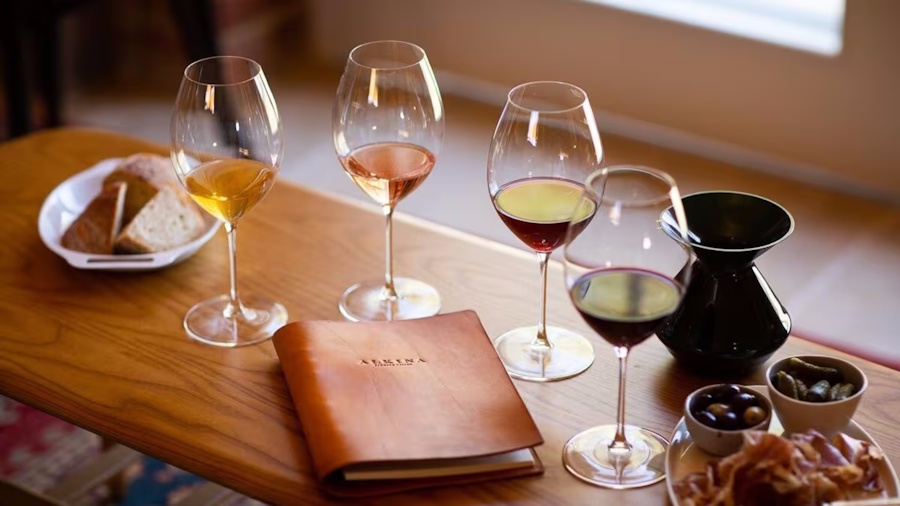
I’ve arrived at Alkina Wines, on the cusp of Greenock. The wee village is so close, a popped cork from a bottle of bubbles may well hit it from their cellar door, if the wind was right. The courtyard setting is stunning and peaceful. Permeated occasionally by the arrival of new groups of people excited to be sharing each other’s company with good food and excellent wine. There’s a very relaxed atmosphere here that instantly makes me feel welcome, with the staff warmly encouraging you to rearrange the chairs around the courtyard in order to form the tables you need. A group of six women have just arrived and as they laugh and cackle away like early-morning magpies, I listen and watch with interest as they decide upon their lunch selections. My waiter, Sarah Castle, casually leaves photo albums and books about the owner on my table as she goes about describing the wine and food to me.
Some cellar doors, like Alkina, let you form your own group tables for a social experience
I’m happy to be led by her recommendations, which are just divine. Sarah moonlights as a food stager and photographer and she’s genuinely engaged with me as a customer and the products that she lovingly presents and serves. I watch the easy way she floats from table to table, checking preferences, topping up glasses, taking food orders and introducing the next varietal. Sarah works like a happy octopus, with bottles, platters and plates flowing easily along with her light laughter. When you come to somewhere as delicious as Alkina, be happy to be inspired and led by those who love their work and the products they create.
I’ve noticed no one is here to push you into buying wine. Instead, they want you to come back and recommend their vineyard and cellar door to everyone back home. And you will, once you’re made to feel adequate with your inadequate wine knowledge. Some cellar doors take the price of the tasting off when you do buy their product. I ’m very much learning on the hoof and I’m not keen on spitting my wine into the large spittoon, adorning every table. “Just sip a smaller amount of wine, then tip what you don’t want to drink into the spittoon” Sarah tells me as she returns to the table with a lunch that would be fitting in any Mediterranean climate. They’ve had no substantial rain here since November.
I’ve claimed a large table under a covered area with an open fire and a pizza oven, perfect for any season. Slowly, I work my way from bubbles to rose, crisp, light whites to delicate, then robust kick-you-in-the-toolbox reds. At one point, a woman wanders past my table to study some antique French cheeseboards stacked next to the woodfired pizza oven. “You might fit one or two in your handbag,” I remark, and she reveals she is from the south coast of South Australia, visiting with her friend and their husbands. The two couples have spent the past 15 years having annual holidays in Wānaka. We got chatting about why I’m here and the gorgeous accommodation that I’m staying in – The Old Homestead.
“Would you like to come and see the villa?” I ask. Within seconds, they’re all up and ready to march the short distance across the limestone gravel courtyard to the huge two double bedroom homestead that’s mine for the next two nights. This is the kind of accommodation you dream of having when you’re away on holiday. A huge kitchen, an enormous lounge with a log fire, and copious amounts of tinder-dry gum, split and set to go. There are also two double bedrooms with enormous ensuites. I feel like a real estate agent, showing off a home for sale that isn’t mine, just like any real estate agent.
“You’ll need a bigger handbag,” I tell Sharon as they eye up all the exquisite pieces of furniture that make Alkina’s Old Homestead feel like a proper home. I’ve only been here for a few hours and already I’ve met locals and other tourists like me, all as happy as a flock of Galahs to share their expertise and stories.
Making the most of a tasting – Slowing down and learning how to live in the moment and enjoy everything can take some time, so give yourself plenty of it. If you love a good yarn and you’re willing to ask questions, you only need to plan a day with two or three cellar door visits. Talk to those in the trade and to those who organise wine tours. They all want you to enjoy your time here, and too often they speak to tourists determined to have four-six tastings in a day. The cellar doors don’t swing open until 11 am and that first one might be your first meal as well.
The people of Barossa love what they do, and they love the product you’re heading up their vineyard driveway to see. Whether it’s a random drive with you at the wheel or a strategically planned expedition, there’s every chance that you’ll meet sommeliers, vintners and a cast of Barossa people who are warm, authentic and filled to the top of the glass with great stories. If you’re not on a well-thought-out mission, talk to the staff where you are. Ask them what they’d recommend next.
Towards the end of the tasting, they’ll have a great sense of what you like and therefore, where to send you to next in your dusty rental car.
I know it’s an added cost, but I recommend having transport booked. Whether that’s Barossa Taxis or ‘Door to Door’ in a chauffeur-driven Land Rover, Mercedes or Jaguar, you won’t have that fear rolling around in the back of your mind of “have I swallowed more than I’ve spat?”
On receiving an email from FAWC [Food and Wine Classic] that this Hawkes Bay-wide festival was cancelled for 2025-2026, those of us who usually take in events with such pleasure were a little aghast!
But on reading to the bottom of that same email we were greatly relieved to find some new alternatives were featured. One of these was a dinner organized by Hastings’ Cellar 495 more than just a wine bar.
“Cellar 495 combines warmth and hospitality with world-class wine expertise. It blends wine bar, bistro, tasting room and wine shop – all led by the world’s 495th Master of Wine, Michael Henley.
Our wine selection represents the finest from around the globe, served alongside seasonal cuisine from Head Chef Carlita Campbell that captures the spirit of New Zealand.”
Cellar 495 partnered with a local farm business, Matangi, who are a boutique family-owned farming business producing premium 100% grass-fed Angus beef and chicory-finished lamb with a sole focus on eating quality and no comprises along the way. They have a Butchery and Showroom at 308 Heretaunga Street East, Hastings, or to find out more visit them at www.matangi.co.nz
MATANGI BEEF & BORDEAUX DINNER EXPERIENCE
This excellent evening was a collaboration between two Hastings businesses and was excellent exposure for the people who attended.
Both for Matangi Beef and Cellar 495 – the small seating restaurant the meal was held at.
French wines were matched with each course with everyone in attendance was exposed to different cuts of meat than usually consumed, rounded off by excellent cooking and presentation from the Chef.
As a bonus, everyone got to meet and talk with both the café owner and the Matangi Beef owners.
Matangi talked about their philosophy on their farming style, animal selection and why, and their seasonal butcher shop over the road from the restaurant Cellar 495.
The evening’s menu:
Steak Tartare, Sous Vide Egg, Pecorino – rump with herbs [tarragon and chives]
MATCHED WITH: 2022 Chateau de Seuil Graves – a white burgundy
Beef Shin Croquette, Horseradish Potato Cream
MATCHED WITH: 2020 Domaine de La Solitude – from the same sub-region as the above wine, owned by Nuns! This is a Merlot/Cab Sauvignon blend
Blanc Slow Braised Beef Chuck, Celeriac Remoulade
MATCHED WITH: 2015 Le Petit Vauthier Saint-Emillion Grand Cru – Merlot/Cab Franc
Then we finished with a lovely dessert wine: 2015 Bordeaux Saturn – smooth on the palate but not too sweet, golden kiwifruit/pear notes
Our table’s pick of the night for the wines was the 2019 Famille J.M. Cazes Saint-Estephe, smooth in the mouth, red fruit on the nose and well balanced with the meal.
The pleasant surprise of the night for those of us whose only exposure to steak tartare via the Mr Bean sketch from years ago, was the steak tartare – a delightful starter for the evening, well balanced and tasty.
We would recommend giving Cellar 495 a try if you’re in the Hawkes Bay, they’re at 319 Heretaunga Street East, Hastings; phone (06) 870 6308; email: enquiries@cellar495.co.nz
Wednesday 8 October, 8 pm
Door Price: Members $18 / Guests $22
A pure expression of Central Otago
Alex comes from a background in hospitality and tourism back in Canada.
Moving to Aotearoa last year to pursue opportunities in the heart of Pinot Noir territory, Central Otago, she found her place at Rockburn. Alex has held positions from the cellar door to marketing but loves getting to chat about wines and finding the best fit for every individual palette-there’s a wine out there for everyone! When not at the winery, she spends her time in the
mountains skiing and hiking or diving deep into vintage jazz tracks and dances.
Gibbston Valley Back Road Vineyard reflects the unique terroir.
Rockburn is a wine producer in the Central Otago region on the South Island of New Zealand. The estate makes a range of wines but is perhaps best-known for its award-winning Pinot Noirs – the flagship variety of region.
The winery was founded in 1991 by pioneering heart surgeon Dr. Richard (Dick) Bunton, who planted some of the first vines near Lake Hayes. Over the years, Rockburn expanded its vineyard holdings, with significant sites in Gibbston and Parkburn/Pisa on the shores of Lake Dunstan. In 2002, the brand name changed from Hayes Lake to Rockburn, reflecting the rugged, schist-laden terrain and the region’s distinctive character.
Today, Rockburn remains proudly independent, with the James and Halford families as key stakeholders. Longstanding winemaker Malcolm Rees-Francis, who joined the team in 2005, continues to lead the winemaking, focusing on minimal intervention and precision to express site and season. A new winery opened in 2016, designed around Rees-Francis’ winemaking approach. This year marks his 20th vintage at Rockburn.
Rockburn’s signature varietals are crafted to highlight the vibrant purity and cool-climate elegance of Central Otago.
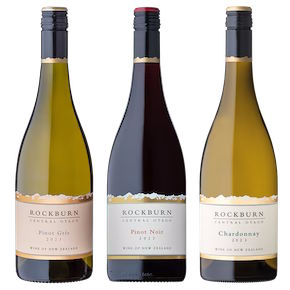
Rockburn produces a diverse portfolio of wines, including Pinot Noir, Chardonnay, Pinot Gris, Riesling, and the Stolen Kiss Rosé, alongside other labels such as Crimson Peak and Devil’s Staircase. All wines are made at the Cromwell winery, with fruit sourced from premium vineyards across Gibbston and Parkburn/Pisa.
Wines for the night are:
2025 Stolen Kiss Rose’
2024 Pinot Gris
2024 Fume’ Blanc
2023 Chardonnay
2023 Crimson Peak
2023 Pinot Noir
2022 The Art Pinot Noir
To help members have an easy payment method on the evening, there will be an EFTPOS machine to process orders.
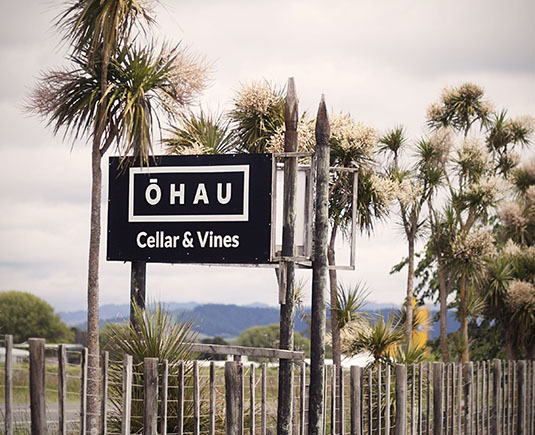
Wow! What an enjoyable evening. Most people would have known or visited this local vineyard, although it’s now, thanks to Transmission Gully, simply a short drive north of Wellington.
We had 30 people turn up for the evening and we were entertained and informed by the vineyards CE, Donna and Jo Scully. They opened with a Karakia which was a change from the norm for our evenings, then went on to explain that their winemaker was Jayne Cooper, a well known winemaker
and wine judge.
Visit Ohau wines
They had got up to 4ha of grapes at one stage but were now down to 25ha as a business decision and better knowledge of their grape varieties and the land they grow on. One side of their land used to be used to farm horses, the other as a produce farm, so they are blessed with highly fertile growing soils with a high amount of organic content.
Their wines have been vegan since 2020, but this doesn’t hold them back at all!
As all their wines are ‘made’ in the Wairarapa, they truck their grapes over the hill for production.
This leaves extra barrel time for the grapes to be in contact with their skins, so the wine can have different expression at the end of its journey, when compared to similar varietals grown by other wineries.
As a reminder the wines we tasted on the evening:
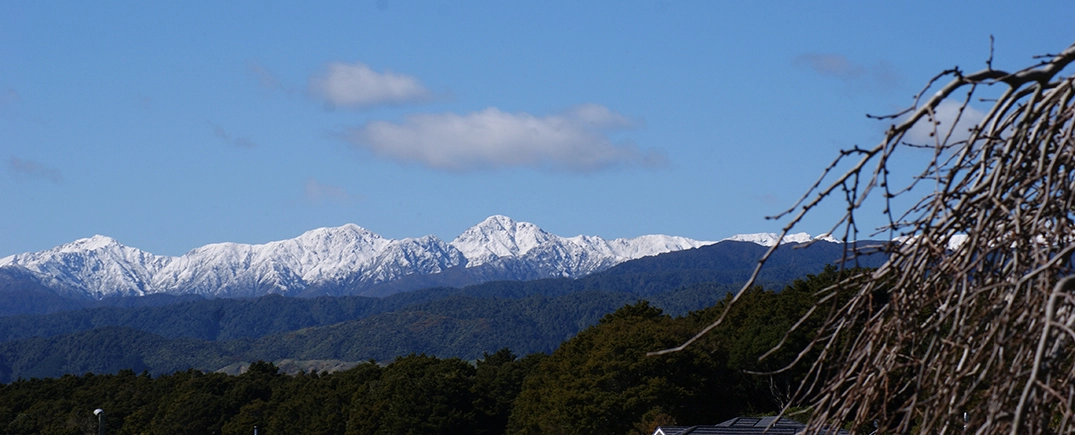
View toward Tararua Forest Park
Not the Norm Rose 2020 – opening wine – a lovely drop, liked by all that is substantially Pinot Gris with a small amount of Pinot Noir for colour. This is their second vintage.
Ohau Gravels Pinot Gris 2023 – fruit forward and aromatic; they leave the grapes on the vines longer before harvesting this batch to bring out fuller flavours.
Ohau Gravels Chardonnay 2024 – they plant their Chardonnay on either side of SH2, as the tarmac provides a natural heat source for these vines and the traffic keeps the flow circulating!
Selected Vines Sauvignon Blanc 2012 – made using more than one clone of Sauvignon, this is fully oaked with wild ferment but no added yeast – the French have been ‘oaking’ Sauvignon for yonks! A nice change to the usual taste of Sauvignon for non-white drinkers.
Not the Norm Sauvignon Black 2021 – this is made with a mix of skins cold-pressed; stainless steel barrel and oak barrel with wild ferment. Sauvignon drinkers will like this!
Ohau Gravels Pinot Noir 2024 – 80% stainless steel / 20% oak cask, this was a light but flavoursome drop.
Not the Norm Te Tihi – this is in effect a fortified Pinot Noir. A drop that came about because of COVID lockdown and a cancelled export order of their WovenStone Pinot Noir. The staff thought laterally and took this batch of red to the Brewtown people, asked them to add a white spirit and whala! They have their version of a lighter sweet red – well worth the taste experience, and one of our members of taking it around the country to family this Christmas!
Well worth a visit, their cellar door is open from Tuesday-Saturday.
For our November we are returning to Hawkes Bay and trying some wines not previously tasted by us. We’ve described the evening as a Summer Festive Tasting as we are looking to taste some bubbles, compare two Rosés, as well as looking at two great reds that you might want to enjoy at a summer BBQ. We are finishing with a sticky that we know will appeal to many of our members.
That said, there is also plenty of quality in this tasting as it includes two wines from the Jewelstone range, Mission’s premier range, as well as two of their reserve wines. And the other good news is these wines have been heavily subsidised which is why the door price is so attractive.
Here’s what’s on our tasting list for the evening, in no particular order at this time.
Mission Fete Brut Cuvee
Stables Rosé
Jewelstone Rosé [noting the 2024 has recently been released and is now called Blanc De Noir]
Jewelstone Chardonnay
Mission Reserve Syrah
Mission Reserve Malbec
Mission Estate Late Harvest Riesling
And finishing our last formal tasting for the year, there will be a Christmas morsel to go with the last wine. What a great way to finish!
This is going to be a fun evening, and we look forward to seeing you all there.
Although our numbers were down a little with 27 attending, the evening went with well Rockburn’s Canadian Cellar Door Manager, Alex Crone being both informative and engaging.
The wines produced were a little different to what we are used to, which was exciting for a taste test, with a Fume’ Blanc on the menu for the evening! This was a blend that had been in old oak barrels and was advised as best being served just chilled a little bit. It could also be cellared for up to 10 years.
Their Pinot Gris had a lovely colour, due to half of the wine content having skin contact before being barrelled with the other half of the harvest. A nice touch that added to the taste experience.
Their chardonnay was in a Chablis style, with 60% being barrelled in neutral oak, so the wine didn’t have the normal oaky chardonnay taste we are more used to, none the less a taste experience.
We had the privilege of having a taste of their first vintage of Rockburn Crimson Peak Pinot Noir [2023] – a tasty drop, along with their ‘star wine’ the 2023 Rockburn Pinot Noir.
A reminder of the wines we tasted during the evening:
Welcome Wine – 2025 Stolen Kiss Rose’
2024 Pinot Gris
2024 Fume’ Blanc
2023 Chardonnay
2023 Crimson Peak
2023 Pinot Noir
2022 The Art Pinot Noir
They no longer do a Reisling! But Alex advised that if you could pick up one of these from wine suppliers around Wellington, it was worth a try.