Sales of New Zealand wine have increased in the US – “a bright spot in an otherwise declining import sector”, the New Zealand Winegrowers industry body says.
The increase, for 2024, marks the sixteenth year in a row that retail sales of New Zealand wines within the US have gone up, the new report from alcohol sales analysts Impact Databank. And it comes on the heels of threats from US president Donald Trump to impose a 200 percent tariff on alcohol imported from European Union countries, amid unfolding international trade tensions.
New Zealand Winegrowers director Fabian Yukich told Morning Report it was promising news, amidst otherwise challenging conditions.
“That publication goes out to a lot of people who make decisions about buying New Zealand wine, so it’s pretty important … that we’re getting all this good news from the US right now, where things are otherwise a bit gloomy in other parts of the industry … people see it and they say, well we better order some more New Zealand wine,” Yukich said.
New Zealand is particularly known for the “flavours and aromas” of our sauvignon blank, he said.
“If you look at it from a global perspective, we are less than 2 percent of the world’s production – the trend at the moment is moving away from red wines and towards white wines, and it’s moving towards those more aromatic fresh white wines, so the trend is all in New Zealand’s favour.”
“So the wine’s that we make they are also very sustainably made, and we do take a lot of time to promote that around the world, and that is also in our favour because people do like to buy wines that are sustainably produced.”
Yukich said despite retail sales in the US increasing, retailers were being slow to restock New Zealand wine on their shelves, “and we are feeling that a little bit in New Zealand.”
“They’re unstocking – so that means less sales in the short term … less imports from New Zealand at the moment … but the outlook in the long term is good. Just about every other country’s sales at retail level are reducing, and wine in general is reducing – against that backdrop New Zealand wine is increasing … the long term picture is good.”
Picking has just begun for this season’s sauvignon blanc, but in the face of declining consumption in New Zealand and international, some growers in Marlborough have recently been advised to leave some of their crop unpicked.
“In the last three years we’ve had three massive crops, that Mother Nature has delivered – and this year’s no different to 2022 and 2023, where the vines are delivering a lot of grapes,” Yukich said.
“And the wine companies are saying ‘well look, we need to temper that against what is actually being exported out of the country’.
“It’s not great news for our growers… but the long term outlook is good.”
From experiential marketing to bright whites, 2025 is set to see trends prioritising wellness, innovation and sustainability, according to a report by AF&CO.
As we look ahead to wine in 2025, the industry is undergoing a transformation driven by shifting consumer preferences, climate challenges, and generational tastes. From low-alcohol wines to experiential offerings, here are the trends that will define the year ahead, based on insights from the AF&CO + Carbonate Trends Report 2025.
Chenin Blanc leads the charge in bright whites
White wines are poised for continued growth in 2025, outpacing reds globally. Beyond mainstays like Sauvignon Blanc and Pinot Grigio, under-the-radar varieties are gaining attention. Chenin Blanc is emerging as a standout, combining the crispness of Sauvignon Blanc with Chardonnay’s complexity, making it both versatile and age-worthy.
In the Loire Valley, where Chenin Blanc thrives, producers predict its plantings will surpass Sauvignon Blanc, thanks to its resilience in a warming climate. Bourgueil, traditionally a red wine appellation, has begun lobbying for a high-quality designation for its Chenin Blanc wines, signalling the grape’s resurgence. Across the Atlantic, California winemakers and Washington’s Chateau Ste. Michelle are spearheading a revival of Chenin Blanc in the United States, further broadening its appeal.
Innovative whites such as White Malbec from Argentina and White Pinot Noir from Oregon are also reshaping the category, offering fresh, unexpected options for adventurous drinkers.
Low-alcohol wines for wellness-conscious consumers
Health and wellness trends continue to influence the wine industry, with low-alcohol wines gaining momentum. Brands such as Duckhorn, Kendall Jackson, and Kim Crawford have introduced reduced-alcohol ranges to appeal to health-conscious consumers seeking moderation without sacrificing flavour.
Similarly, Chilean wine brand Casillero del Diablo, owned by Concha y Toro, has launched its first alcohol-free wine in the UK market with the introduction of a de-alcoholised sparkling wine.
The trend aligns with the broader movement towards mindful drinking, as consumers increasingly look for wines that complement their lifestyles.
Alternative formats and sweet wines
Cans, magnums, and other packaging formats are resonating with younger consumers prioritising convenience and sustainability. Additionally, sweeter wines with lower alcohol are successfully drawing in new drinkers. Inspired by global flavour trends, these approachable wines tap into the popularity of sweet and spicy combinations, broadening wine’s appeal to diverse audiences.
Experience-driven consumption
Wineries are moving beyond traditional tastings to create immersive, memorable experiences. Younger generations, particularly Gen Z and Millennials, are drawn to events where wine is part of a larger narrative. From art installations to retro-inspired social hours, wineries like Bella Union in Napa Valley are aiming to engage younger consumers through unique on site tasting spaces, and features like outdoors after hours bars.
Sustainability and adaptation
Sustainability remains a critical focus as climate change impacts vineyard management and consumer priorities. The shift towards resilient grape varieties, such as Chenin Blanc, reflects efforts to adapt to changing growing conditions. At the same time, eco-friendly packaging and practices are increasingly integral to marketing strategies aimed at environmentally conscious consumers.
‘After our first vintage, my Italian viticulture professor came over with tears in his eyes’
The founder of Cloudy Bay wine, David Hohnen, has teamed up with entrepreneur Rupert Clevely — of Geronimo Inns fame — and the Marlborough Grape Growers Cooperative to launch Marlborough Heartland, a Sauvignon Blanc which captures the essence of a remarkable landscape.
Hohnen doesn’t just move through the wine world, he tears through it on a motorbike. Literally. In 1969, aged 20, he rode from Adelaide to Sydney, loaded his bike onto a P&O liner, and crossed the Pacific to California, petrol still sloshing in the tank. He landed in Fresno, a dusty, agricultural outpost in the Central Valley, where the local university offered five-acre student vineyards and a neglected teaching winery which hadn’t produced a drinkable drop in years. That changed when Hohnen got the keys.
“They gave me five acres of Carignan and told me to get on with it,” he says. “The winery was a mess. I spent three months scrubbing tanks. After our first vintage, my Italian viticulture professor — a good man called Vince Petrucci — came over with tears in his eyes and said, ‘Thank you, this is the first wine I’ve been able to drink from this place.”’ Hohnen was hooked.
Back in Western Australia by 1970, Hohnen helped plant the early vines which became Cape Mentelle. There was no blueprint, just instinct, energy and the conviction that wine ought to express something beyond itself. “In ‘74 we had our first real vintage. ‘78 was terrific — critic James Halliday gave us a great write-up. We were in a shed, crude kit, but the wines had promise.”
Then, in 1983, he was ambushed by a grape. A few bottles left by visiting Kiwi winemakers turned everything. He says: “It wasn’t just good – it was electrifying.”
Armed with curiosity and air miles donated by his brother Mark, Hohnen zigzagged across New Zealand in search of the right spot for Sauvignon Blanc. Gisborne was too lush. Hawke’s Bay, too humid. Then came Marlborough. “It was brown. Dry. Sunlit. I thought, “Gotcha!”’
From trout to triumph
By 1985, Cloudy Bay was born; funded by a brutal million-dollar loan at 23.5 per cent interest. The decision was sealed after Hohnen’s brother’s business partner, Simon Fraser (of the Loch Ness Frasers), caught a trophy trout on a fishing trip in the area. “I always said Cloudy Bay owes it to a fish.”
They built the winery at speed, introduced a tilt-up slab technique that had never been used in New Zealand, and sent grapes north to Kevin Judd, the pioneering winemaker Hohnen had met at a wine show in Auckland. The 1985 vintage was blended with a little Riesling and Semillon, allowing it to age gracefully. “It worked,” says Hohnen says. “People still remember their first glass.”
Cloudy Bay wasn’t launched. It bolted onto the scene: “People thought we contrived the allocation. We didn’t. It was a runaway horse. I just sat firm in the saddle, held the reins, and tried to steer.” Demand constantly outpaced supply. “Probably never caught up in my time.”
Veuve Clicquot came calling. Under the stewardship of Joseph Henriot, and later Cécile Bonnefond, Cloudy Bay thrived. “They were smart. Understood wine. Understood brand. Let us get on with it.”
By 2000, Hohnen found himself Chairman and MD of both Cape Mentelle and Cloudy Bay. “Not my choice of title. For a country hick, it sat heavy. I decided to leave. Should’ve gone straight away. Instead, I stuck around for the handover — the worst mistake I ever made.”
He drifted, gloriously. Raised free-range pigs with real care, railing against their status as “the four-legged chooks of the world.” Then came the charcuterie, but done properly: low intervention, slow drying, clean, honest flavours.
The return
In 2022, Cloudy Bay called him back. They’d rebuilt the original winery as a visitor centre and named it the Founder’s Centre. “It was emotional. We’d parted well, and we’re friends again now.”
He had one last idea: enter Marlborough Heartland – a new label, made in collaboration with Rupert Clevely (of Geronimo Inns) and the Marlborough Grape Growers Cooperative, a formidable alliance of 80 growers who usually make bulk wine.
“They do 16 million litres a year,” Hohnen says. “I said, let’s make something special. We picked eight vineyards on deep pebble soils in the central Wairau Valley – the black country. That’s where the best Sauvignon comes from. Ripe, not green. No tomato leaf. Just bright fruit, full palate, lovely tingle. For just over a tenner, it speaks.”
His daughter, Freya — top of her class, a seasoned winemaker, and mother of two — is on the blending bench. “She does the high notes. I do the low. You’ve got to have both.”
A sense of place
What’s in the name? Like Cape Mentelle or Cloudy Bay, it’s geographical. “Some said ‘Cloudy’ sounded like cloudy wine. They were wrong. Place matters. It grounds you.”
Today, the second vintage of Marlborough Heartland is sailing towards England. Sainsbury’s has backed it. The supermarket’s wine agency partner, Watermill Wines, helped secure the listing. “They’ve got the buyers. We’ve got the story.”
And what a story. Cloudy Bay went on to become the world’s best-known white wine. No fuss, no spin, just magnetic Marlborough Sauvignon bottled by a man who listened when the land spoke.
Says Hohnen: “I’ve never had anything from New Zealand. But that’s because I’m Australian. Not sure they like to admit an Aussie created their most famous wine. Doesn’t matter. I’m just happy to be back.”
What’s next? “I don’t look back. I’ve made mistakes, sure. But winemaking is a privilege. You meet good people — real people — farmers whose wealth comes from the earth. Not suits.”
If he could share a bottle with anyone? “It’d be family. Always family. Someone once said, “Without family, you’d have to fight with strangers!” We’ve done pretty well.”
So ends this chapter, with the vines back under his feet and the Marlborough sun on his face. David Hohnen, still steering the horse. Still making the wine speak…
Wayne, with Michael and Murray presenting to the Club
What a brilliant evening! Organised by Wayne, who purchased the winning wines in a timely manner so he could secure every one that he wanted, and part hosted by Wayne, with Michael and Murray added to the panel presenting to the Club members.
We had 36 members turn up for the tasting, so the reputation of this evening from last year has grown!
Wayne had tasting notes for each wine to refer to, and club members were asked what they tasted, liked and towards the end of the evening there was a vote on the best wine of the evening – it was a fairly close call on that point!
The below wines were what we tasted on the night, and may available from New World, The Good Wine Company, and other NZ locations.
2024 Leftfield Pinot Gris, Marlborough
2024 Wairau River Estate Sauvignon Blanc, Marlborough
2024 Sileni Advocate Grand Reserve Albarino, Hawkes Bay
2023 Bladen Eight Rows Riesling, Marlborough
2022 Kirrihill Regional Series Clare Valley Shiraz, South Australia
2021 Church Road McDonald Series Merlot, Hawkes Bay
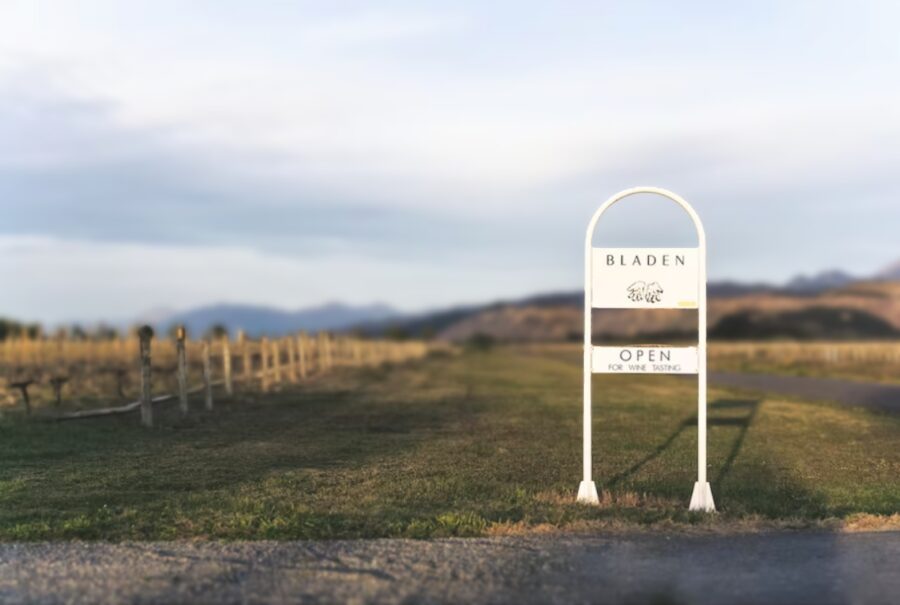
Cellar Door Bladen Wines – 83 Conders Bend Road, Renwick, Marlborough
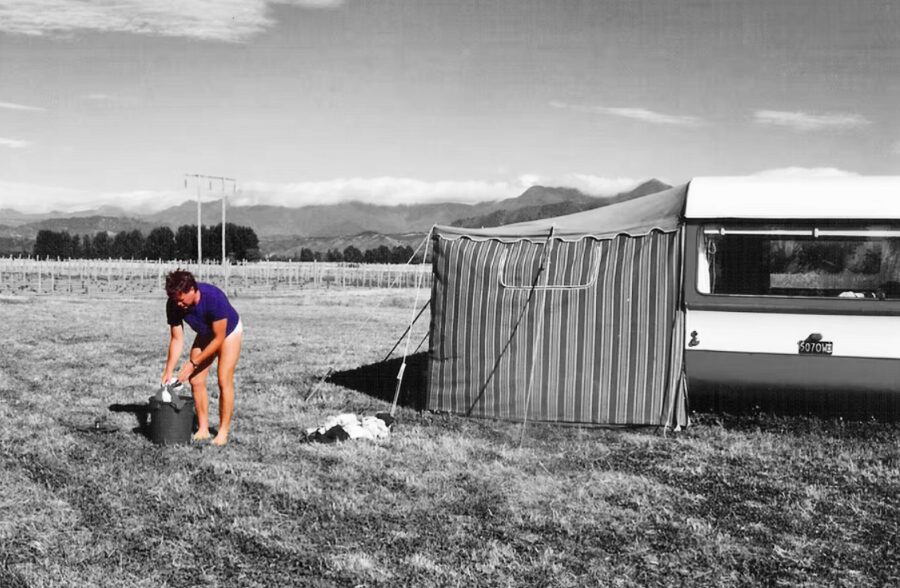
In 1989, Christine and Dave Macdonald left their city lives behind to realise their dream of establishing a vineyard and winery. With caravan in tow the family embarked on a national tour to find the ideal winegrowing region and vineyard location.
Settling in Marlborough, they planted their vineyard by hand, initially growing grapes for local wineries before creating their own wines under the Bladen name. Chris and Dave quickly developed a reputation for making exceptional cool climate wines.
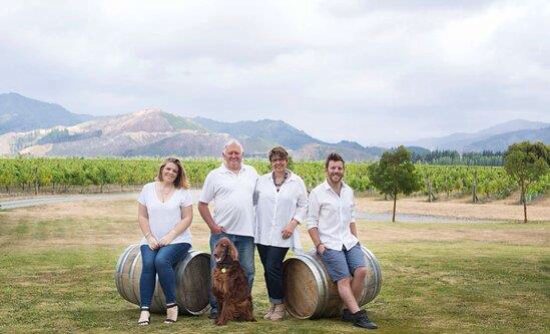
The Bladen name refers to Chris and Dave’s children – Blair and Deni – who were toddlers when the vineyard was developed.
Chris and Dave Macdonald are proud to be amongst the pioneers of the Marlborough winegrowing region. There were only eight wineries in the Marlborough district in 1989 when they established their vineyard.
Blair will be presenting the following wines at our tasting:
2023 Pinot Noir Rosé
2023 Pinot Gris
2023 Sauvignon Blanc ‘Five Barrels’
2024 Riesling ‘Eight Rows’
2023 The Sum of Us (Gertz, Pinot Gris and Riesling)
2024 Gewurztraminer ‘Tilly Vineyard’
2019 Pinot Noir
Bladen is currently closed for the Winter, reopening on 25th October 2025.
What a brilliant evening, presented by the owner’s son, who is someone who is involved in all aspects of the vineyard and grew up helping with the set-up and expansion of the same.
We had 34 club members attend, with a good number of orders.
The wines are made in the Alsatian style, rather than French or Italian style, which makes them on the slightly drier side, and entirely enjoyable!
It was nice to hear the pitfalls that the owners have gone through with the set-up involving the terroir and the different varieties they wanted to grow, the solutions that were presented to them that they accepted and the way the business has grown with that vision intact.
The wines we tasted during the evening were:
2023 Pinot Noir Rosé
2023 Pinot Gris
2023 Sauvignon Blanc ‘Five Barrels’
2024 Riesling ‘Eight Rows’
2023 The Sum of Us (Gertz, Pinot Gris and Riesling)
2024 Gewurztraminer ‘Tilly Vineyard’
2019 Pinot Noir
As a reminder to members: Bladen is now closed for tastings for the Winter; reopening 25th October 2025, at 83 Conders Bend Road, Renwick.
Wednesday 13th August, 8 pm start
Door Price: Members $12 / Guests $15
Sustainably farmed, gently handcrafted
“We look after our land and soil, employing regenerative and organic farming principles and practices across both of our vineyards.
Sustainable, organic principles drive our farming processes, and in the winery, we let the fruit do all the talking.
Properties are at:
Blue Rock Venue/Vineyard – 284 Dry River Rd, Martinborough
Luna Estate Cellar Door & Eclipse Restaurant – 133 Puruatanga Rd, Martinborough
“We are proud growers and wine producers, turning all we grow into delicious produce using our own winery. This is truly what it means to be an Estate.
90% of winemaking happens on the land. Our careful practice in the cellar ensures that the unique character of our vineyards shines in your glass.
Skillfully grown fruit, minimal handling and patience are the three main ingredients in our wines. No animal products used.
Our people are our greatest asset. Call in to our cellar door and restaurant, visit our winery or vineyard, or chat to our admin team and you’ll find a diverse group of passionate individuals who love what they do. At different times of the year, you might find admin staff in the restaurant, winemakers in the Cellar door, or hospitality staff out in the vineyard.
Whatever needs doing, we’re there supporting each other to make sure that our guests enjoy the very best of what we have to offer.
We won’t lie, it’s a lot of hard work, but we make sure to find time for fun and enjoy regular team get-togethers. Supporting our employees to live rich and fulfilling lives outside of work is just as important, and we ensure our staff have a good balance between work and play.
Call in and see us one day – we’d love to see you”
A weaker grape price, capped yields and higher operating costs have squeezed grower profitability, and concerns are mounting for further pressure next season
In Marlborough, which produced 81.5 per cent of the national harvest this season, most of it sauvignon blanc, an estimated 15-20 per cent of the tonnage was unharvested. Photo: Getty Images
Grape growers produced a bumper crop this season, but an unprecedented amount of fruit never made it to a winery, and was left to wither on the vine or rot on the ground as winemakers grappled with oversupply after declining global demand.
Ideal growing conditions bolstered the 2025 harvest to 519,000 tonnes, the second largest on record (the largest harvest, 532,000 tonnes, was in 2022).
But an extra 75,000 to 100,000 tonnes of fruit have remained unharvested this season after wineries capped grape volumes, according to Mike Insley, a 30-year industry veteran based in the country’s biggest wine region, Marlborough.
“I can’t remember a year like it for unharvested fruit,” said Insley, a viticulture consultant at Grape Sense who was chief operating officer at Yealands Wine Group and national viticulture manager at Pernod Ricard NZ.
“Companies picked what they were required to pick, and left the rest behind.”
The bumper vintage comes as domestic storage is close to capacity after falling global demand, the Ministry for Primary Industries noted in its latest Situation and Outlook report in June.
Wineries’ inventories of sauvignon blanc, the country’s flagship wine, were at 10-year highs before this year’s harvest, the ministry noted in December.
In Marlborough, which produced 81.5 percent of the national harvest this season, most of it sauvignon blanc, Insley estimates 15-20 percent of the tonnage was unharvested.
Wednesday 10th September, 8 pm start
Door Price: Members $14 / Guests $18
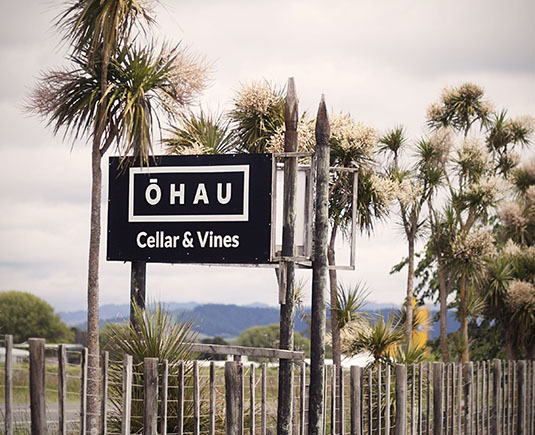
Authentic wines with a unique aromatic expression, making award-winning wines since 2009. Ohau is a relatively new wine sub-region, situated to the south of Levin. Since their first harvest in 2009, they have been growing exceptional aromatic varietals and producing award-winning, authentic wines that reflect the unexpected, unique regional conditions.
Wines for the evening are:
2020 Not the Norm Rose – opening wine
2023 Ohau Gravels Pinot Gris
2021 Not the Norm Sauvignon Black
2012 Selected Vines Sauvignon Blanc
2024 Ohau Gravels Chardonnay
2024 Ohau Gravels Pinot Noir
2022 Not the Norm Te Tihi
This promises to be a special tasting with two interesting surprises for club members.
The first wine of special interest is the 2012 Selected Vines Sauvignon Blanc! No, that isn’t a typo. This wine has been made especially with aging in mind, and so it will be very interesting to compare it with the 2021 vintage that we will also be tasting.
The second wine of special interest will be our last, the 2022 Not the Norm Te Tihi. This is a fortified Pinot Noir and, at 20% alcohol, is probably more akin to a port. The tasting notes talk of an aroma that is a complex bouquet of dried fruit, fragrant toasted spices, hints of roasted almonds, and a subtle note of sweet toffee. I’m really looking forward to finding out if this really is Christmas cake in a glass.
Sustainable, restorative farming, letting the fruit do all the talking
What a fabulous evening for everyone who attended. With an entertaining presenter and wines made in the Alsatian style that were different, for our tasting pleasure.
While the wines were above our normal price range, people enjoyed the different wine styles and orders were healthy. This is encouraging to your committee. Their cost to members was offset by a generous discount and the waiving of the delivery fee. Thank you Luna Estate for your support and
great tasting.
A reminder of the wines we tried on the night:
Luna Brut Rose a delightful welcoming wine for the evening
Luna Estate Sauvignon Blanc 2023 a blend of two very different blocks from Bue Rock Vineyard
Luna Estate Pinot Gris 2023
Luna Estate Pinot Meunier Rose 2024
Luna Estate Eclipse Chardonnay 2023 mature vine fruit used for this drop
Luna Estate Blue Rock Pinot Noir 2021 a blend from both of their vineyards
Wow! What an enjoyable evening. Most people would have known or visited this local vineyard, although it’s now, thanks to Transmission Gully, simply a short drive north of Wellington.
We had 30 people turn up for the evening and we were entertained and informed by the vineyards CE, Donna and Jo Scully. They opened with a Karakia which was a change from the norm for our evenings, then went on to explain that their winemaker was Jayne Cooper, a well known winemaker
and wine judge.
Visit Ohau wines
They had got up to 4ha of grapes at one stage but were now down to 25ha as a business decision and better knowledge of their grape varieties and the land they grow on. One side of their land used to be used to farm horses, the other as a produce farm, so they are blessed with highly fertile growing soils with a high amount of organic content.
Their wines have been vegan since 2020, but this doesn’t hold them back at all!
As all their wines are ‘made’ in the Wairarapa, they truck their grapes over the hill for production.
This leaves extra barrel time for the grapes to be in contact with their skins, so the wine can have different expression at the end of its journey, when compared to similar varietals grown by other wineries.
As a reminder the wines we tasted on the evening:
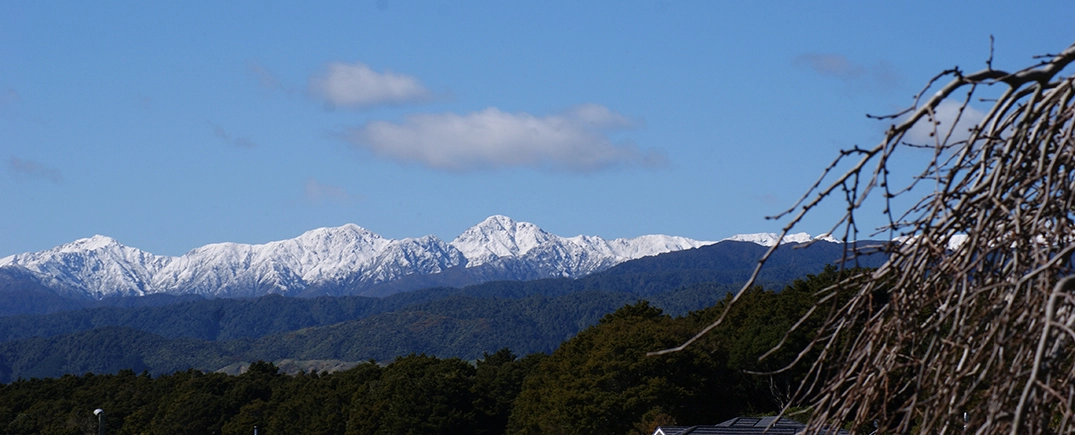
View toward Tararua Forest Park
Not the Norm Rose 2020 – opening wine – a lovely drop, liked by all that is substantially Pinot Gris with a small amount of Pinot Noir for colour. This is their second vintage.
Ohau Gravels Pinot Gris 2023 – fruit forward and aromatic; they leave the grapes on the vines longer before harvesting this batch to bring out fuller flavours.
Ohau Gravels Chardonnay 2024 – they plant their Chardonnay on either side of SH2, as the tarmac provides a natural heat source for these vines and the traffic keeps the flow circulating!
Selected Vines Sauvignon Blanc 2012 – made using more than one clone of Sauvignon, this is fully oaked with wild ferment but no added yeast – the French have been ‘oaking’ Sauvignon for yonks! A nice change to the usual taste of Sauvignon for non-white drinkers.
Not the Norm Sauvignon Black 2021 – this is made with a mix of skins cold-pressed; stainless steel barrel and oak barrel with wild ferment. Sauvignon drinkers will like this!
Ohau Gravels Pinot Noir 2024 – 80% stainless steel / 20% oak cask, this was a light but flavoursome drop.
Not the Norm Te Tihi – this is in effect a fortified Pinot Noir. A drop that came about because of COVID lockdown and a cancelled export order of their WovenStone Pinot Noir. The staff thought laterally and took this batch of red to the Brewtown people, asked them to add a white spirit and whala! They have their version of a lighter sweet red – well worth the taste experience, and one of our members of taking it around the country to family this Christmas!
Well worth a visit, their cellar door is open from Tuesday-Saturday.

 Riverby Estate Tasting Night
 Johnsonville Dinner

 Loading...

 Reload document
  Open in new tab
  Sales of New Zealand wine have increased in the US – “a bright spot in an otherwise declining import sector”, the New Zealand Winegrowers industry body says.