Wine News – From NZ House and Garden, Imbibe Section:
Swift WINES
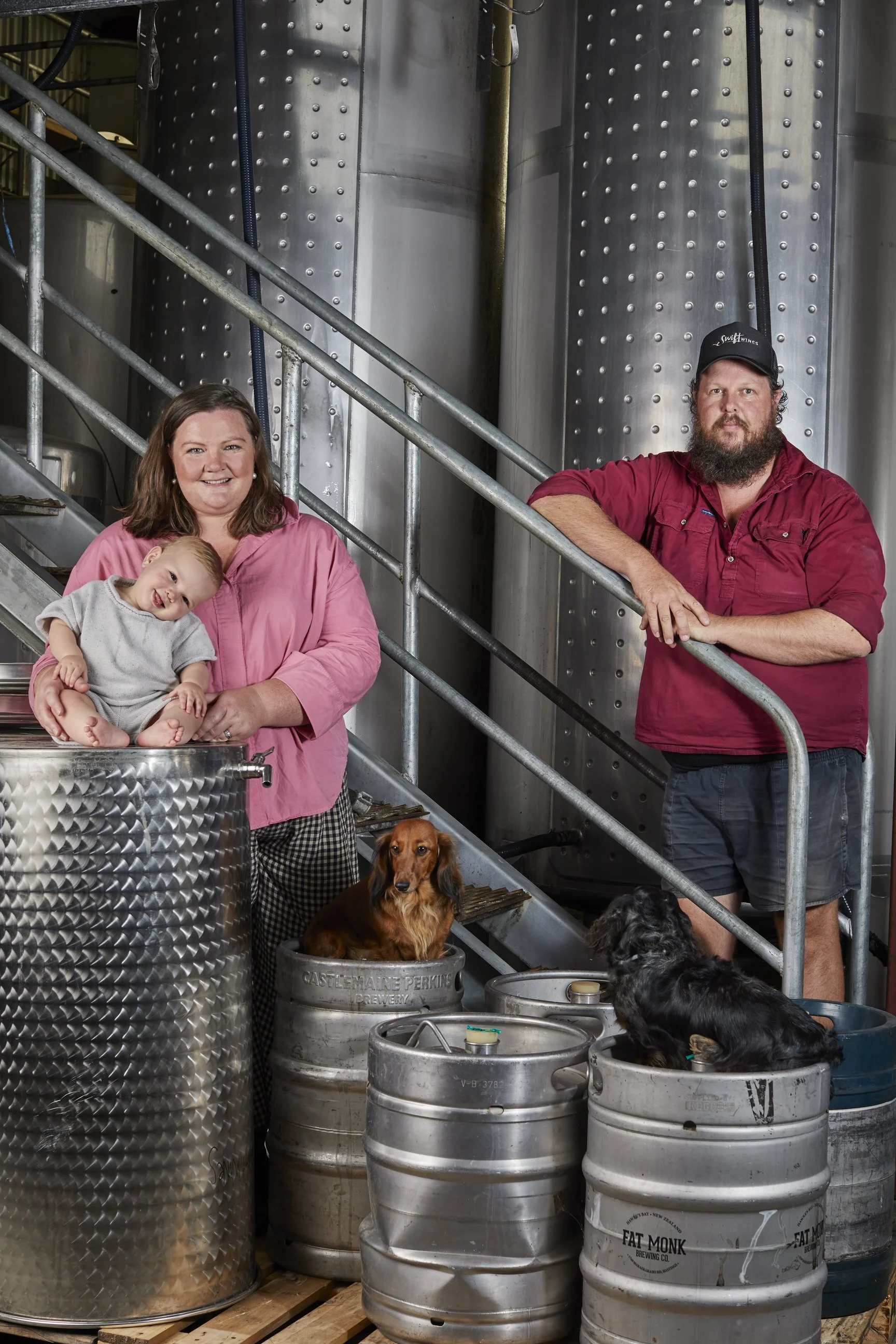
A colourful new stop: Hawke’s Bay has a new cellar door, with Swift Wines opening a bright, playful space on Mere Rd, Fernhill. Visitors can build a platter from the fridge selection and taste six wines. Pipi, a limited sparkling albarino, is also pouring, with only 1500 bottles produced. The venue, run by winemaker Lauren Swift and Henry Williams, is open six days a week through Summer. Visit Fun Hawke’s Bay Wines for Everyday Celebrations | Swift Wines ‘Thoughtful, dangerously drinkable and thought-provoking. No boring wines (or boring wine labels) here!’
Background
Meet Lauren & Henry – Husband & wife / business partners / drinking buddies / founders of Swift Wines in Hawke’s Bay.
Crowned the inaugural ‘NZ’s Young Winemaker of the Year’ at just 25, Lauren Swift has spent the majority of her life obsessing over grapes in their various forms. Growing up on an orchard in Marlborough, her first job was learning the fundamentals of grape growing (and picking — there was lots of picking) on a neighbouring vineyard.
A post-school European gap year was the push she needed to get her winemaking career off the ground, returning home to Marlborough for a role at Clos Henri Vineyard (owned by the illustrious Bourgeois family from Sancerre). A Bachelor of Wine Science at Hawke’s Bay’s EIT later, Lauren joined the Ash Ridge team and found herself heading up their brand new winery.
Throw in some more travel, including vintages in California & the Rhone Valley, and the time was finally right to go out on her own.
Lauren persuaded husband Henry to join the team, and together they officially popped the cork on Swift Wines in 2016.
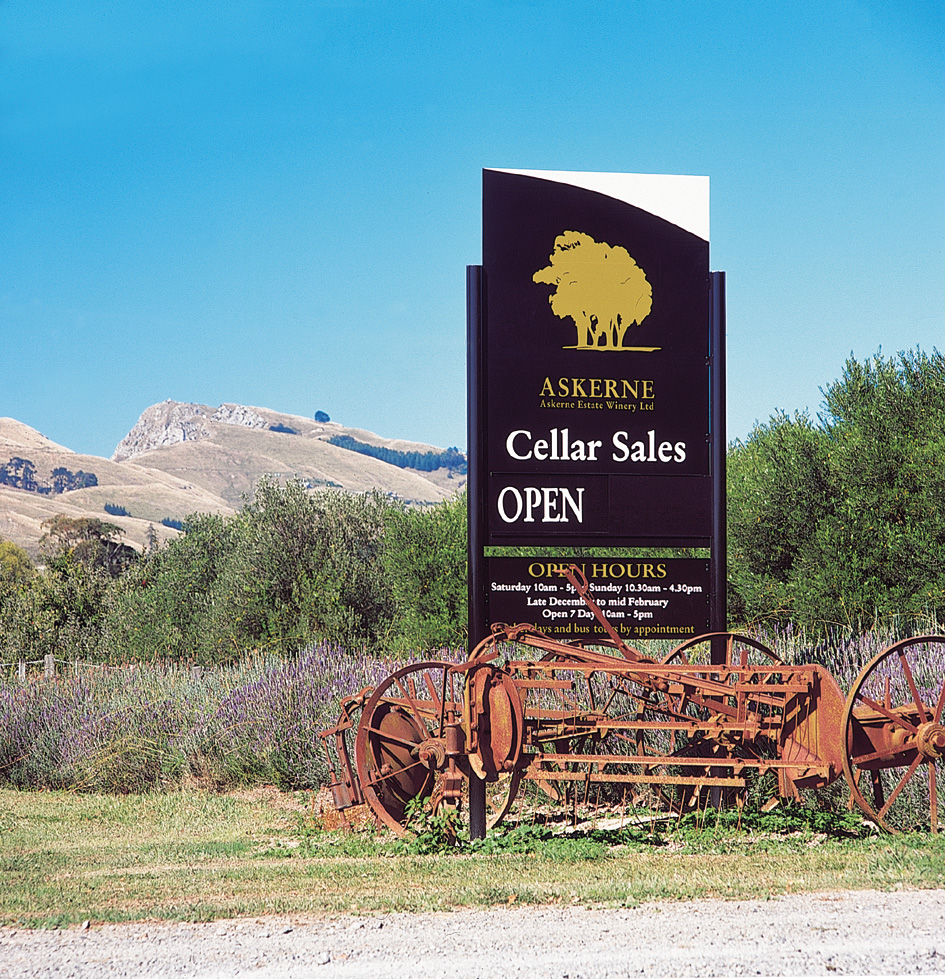
Askerne Hawkes Bay
267 Te Mata Mangateretere Rd, Havelock North
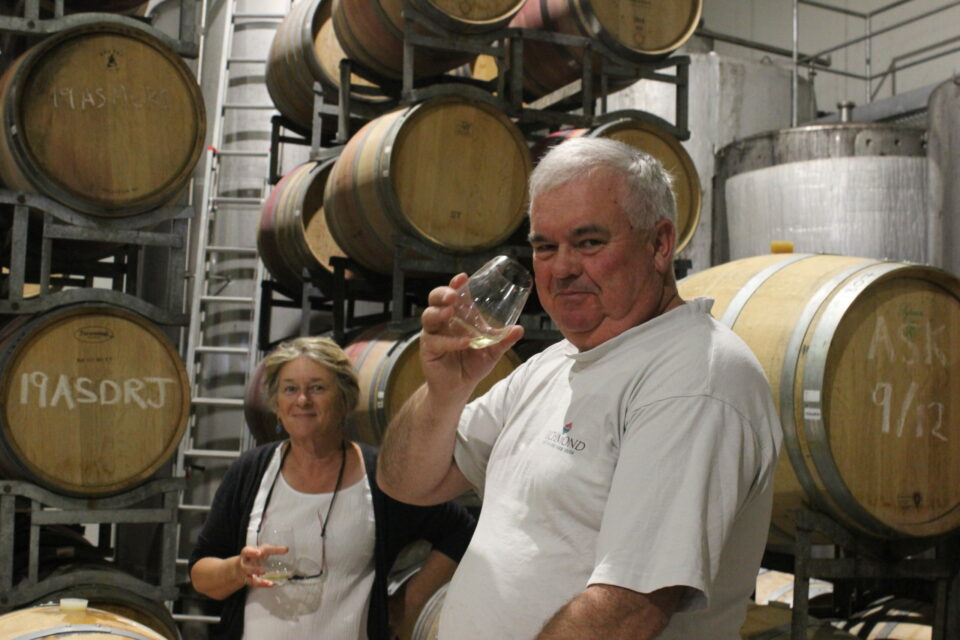
Presenter – John Loughlin, Co-Founder and Director
Wednesday 11th February 8 pm start
Door Price: to be advised later
Askerne Estate winery commenced in April 1993 when wine lovers John and Kathryn Loughlin purchased the original 11.6 hectares site in Te Mata Mangateretere Road. John and Kathryn had studied winemaking and viticulture in the previous years with Kathryn, as the more diligent student, achieving the higher grades.
They called the property Askerne, being the olde English name of Kathryn’s birthplace, Askern in Yorkshire, England.
Sauvignon Blanc vines were planted in late 1993, Semillon and Riesling in 1994, Chardonnay in 1995 and Gewürztraminer in 1996. The first wines were made at the Waimarama Estate Winery (then owned by Dr John Loughlin, John’s father) in 1996.
In February 1997, the Askerne cellar door was opened to the public, and it also sold Waimarama Estate’s red wines, including the then famous Waimarama Dessert Cabernet.
The 1997 vintage produced very fine wines from Sauvignon Blanc, and Chardonnay which confirmed the potential of the site. Askerne commenced exporting with wines from the 1997 vintage. It was a complete surprise to us when our Sauvignon Blanc won an award in The Netherlands as the best match with a cigar. It was not something we thought of in making the wine, nor have subsequently aspired to.
In 1998 Dr John Loughlin sold Waimarama Estate Winery and from the 1999 vintage, Askerne’s wines were made on site. The cellar door building was expanded to accommodate winemaking activities. The first red wine grapes were planted. Also, in 1999 the first Botrytis Semillon wine was made, and the first componentry was created for the Noble Noir wine which was first released in 2013.
In the significantly frost-affected 2001 the first red grapes were harvested, and a Cabernet Merlot Franc blend and Dessert Cabernet were made. Both these red wine styles were encouraging examples of the desired styles. A Chardonnay from the 2001 vintage won Askerne’s first gold medal.
In 2004 a new purpose-built winery was completed, only hours before it was used for vintage. The 2005 vintage saw the first multi-awarded wine with our Gewürztraminer winning double golds. The 2006 vintage saw the first trophy which was taken by our Noble Semillon. The 2007 vintage saw Askerne produce a Gewürztraminer that won 5 gold medals and a trophy.
Large vintages in 2008, 2009 and 2010 coincided with the global financial crisis and a downturn in business as customers changed and downsized and the market moved to cheaper price points. Export channels also dried up for Askerne. They launched their first white and gold label Rouge and Blanc blends as lower tier responses and sold them directly to consumers. Most of the fruit from the 2011 and 2012 vintages were sold as we sought to rebalance inventories with demand.
In 2014 Askerne commenced an exporting relationship in China with Beijing Touch World International Trading Company.
The 2018 vintage proved to be a great one and saw the launch of two of the planned new wine styles being a Sauvignon Blanc / Sauvignon Gris / Semillon blend and the first of the Icon series of wines in “The Archer” Chardonnay.
Cairn Coghill
2018 also saw the 25th anniversary of the Askerne venture and was a time to think about the past and present The 2019 vintage was another excellent one which saw a second Icon wine produced in a Syrah called “Tere” which speaks of our site on Te Mata Mangateretere Road, adjoining the Tuki Tuki River.
The 2020 vintage was spectacular in terms of climate and quality. It was also unusual in terms of vintage operations which coincided with the covid-19 global pandemic, but Askerne was able to operate as an essential business.
From the 2020 vintage we added a new product to our range, being the first Sérieux rosé which was made from a blend of Carménère and Mourvèdre.
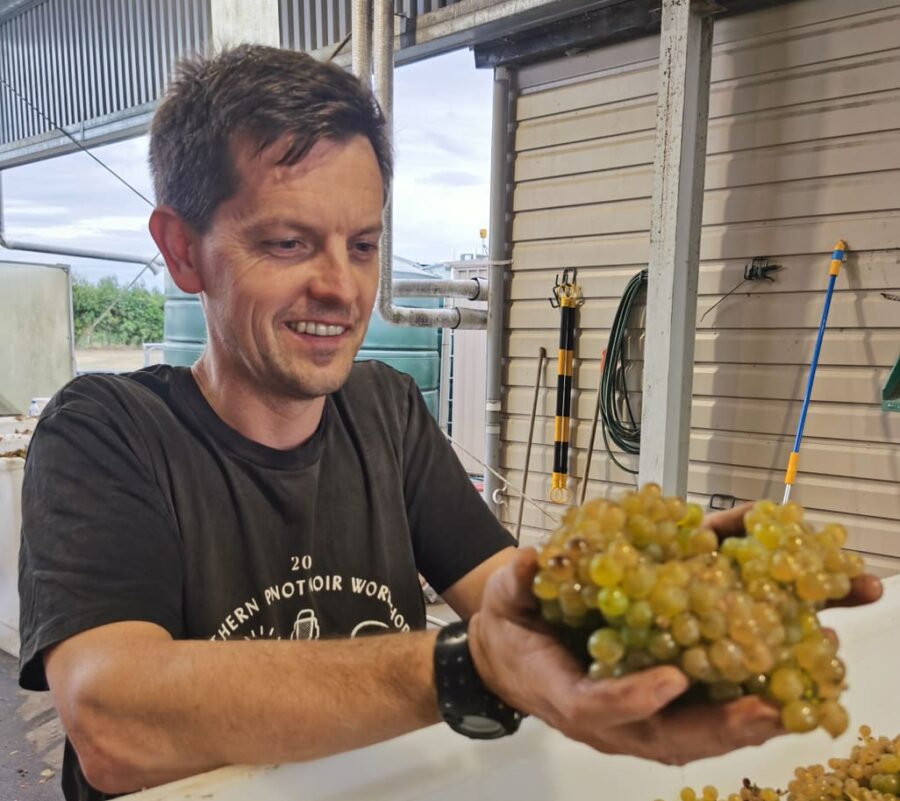
In January 2021 Cairn Coghill joined the Askerne team as winemaker.
The 2025 New Zealand wine harvest has been widely welcomed following 2024’s reduced yields. Across the regions, winemakers reported not only a normalisation of volumes but also excellent fruit quality – notable in a country where diverse geography often leads to variability.
A warm, dry spring set the season up well, though a cooler, wetter December and January period tested nerves before settling into a classic Indian summer. While perhaps not as straightforward as the outstanding 2024 vintage, 2025 looks set to produce wines of finesse and charm across the regions and varieties, with the first releases just months away.
Auckland
Michael Brajkovich MW of Kumeu River expressed relief at a ‘normal’ sized vintage after two seasons down by 35-40%. Auckland experienced the driest summer since 1958, with consistent warmth but no heat spikes.
‘The fruit ripened evenly and with gradual aroma and flavour development,’ Brajkovich said. Chardonnay was once again the star, arriving early and in pristine condition.
Gisborne
Described as a ‘magnificent vintage’ by Kirsten Searle of Matawhero, 2025 brought full physiological ripeness and a return to normal yields after two lighter years. Chardonnay excelled, providing excellent fruit for both table wines and sparkling bases.
Searle also highlighted the Gewürztraminer from Matawhero’s Riverpoint vineyard as particularly impressive – a fitting celebration for the winery’s 50th anniversary.
Hawke’s Bay
There is genuine excitement in Hawke’s Bay, with some suggesting that 2025 may rival the renowned 2013 vintage. Ben Tombs noted Craggy Range’s earliest-ever harvest, with Chardonnay off the Gimblett Gravels picked on 8 February.
Whites show ‘electric flavour profiles with moderate alcohol’ while Syrah, despite late-summer humidity challenges, enjoyed extended hang time without excessive sugar accumulation, promising finely structured, vibrant reds.
Wairarapa
After four small vintages, Martinborough celebrated a strong yield. A relatively calm spring and lighter winds led to strong shoot growth and abundant flowering. Intensive canopy management paid off with Pinot Noir showing a savoury, charming profile.
Tombs commented on lower acidity and softer tannins compared to the more firmly structured recent vintages at Craggy Range’s Te Muna vineyard.
Nelson
Todd Stevens of Neudorf reflected positively on the vintage: ‘It’s still early but the whites appear beautifully balanced, while the Pinots show poise and should present very well.’ Initial signs point to good consistency across this smaller but significant region.
Marlborough
Murray Cook of Dog Point summed up 2025 as ‘a season of patience’. ‘With generous yields, the fruit took some time to ripen fully. Thankfully, we were blessed with classic dry and warm conditions which kept fruit quality high over what was our longest harvest period (46 days) in 24 years,’ he added.
However, with global inventories still high amid flat consumption and geopolitical uncertainties, many producers opted to leave fruit on the vines. The upside: only the best fruit was picked and consumers can look forward to excellent quality from this key region.
North Canterbury
A rollercoaster year, with Greystone’s Dom Maxwell describing it as one that ‘challenged us, then offered a lot, then challenged us again, and finally delivered in the end’.
Pure fruit flavours and clean fermentations made it a worthwhile ride. ‘We’re excited about the quality we have in the winery,’ Maxwell added.
Central Otago / Waitaki
Valli’s Jen Parr described an unusually compressed harvest of around half the usual span. Despite spring frosts affecting yields, she was thrilled with the ‘tremendous concentration’ and ‘crazy colour’, particularly in Gibbston and Bendigo.
Small berries and clean fruit were common themes with Parr commenting that wines possess richness and an appealing ‘joyful’ quality that should drink well young but also reward a few years in bottle.
The Waitaki Valley – often marginal – had one of its best vintages in recent years, for both ripeness and volume.
For our November we are returning to Hawkes Bay and trying some wines not previously tasted by us. We’ve described the evening as a Summer Festive Tasting as we are looking to taste some bubbles, compare two Rosés, as well as looking at two great reds that you might want to enjoy at a summer BBQ. We are finishing with a sticky that we know will appeal to many of our members.
That said, there is also plenty of quality in this tasting as it includes two wines from the Jewelstone range, Mission’s premier range, as well as two of their reserve wines. And the other good news is these wines have been heavily subsidised which is why the door price is so attractive.
Here’s what’s on our tasting list for the evening, in no particular order at this time.
Mission Fete Brut Cuvee
Stables Rosé
Jewelstone Rosé [noting the 2024 has recently been released and is now called Blanc De Noir]
Jewelstone Chardonnay
Mission Reserve Syrah
Mission Reserve Malbec
Mission Estate Late Harvest Riesling
And finishing our last formal tasting for the year, there will be a Christmas morsel to go with the last wine. What a great way to finish!
This is going to be a fun evening, and we look forward to seeing you all there.
On receiving an email from FAWC [Food and Wine Classic] that this Hawkes Bay-wide festival was cancelled for 2025-2026, those of us who usually take in events with such pleasure were a little aghast!
But on reading to the bottom of that same email we were greatly relieved to find some new alternatives were featured. One of these was a dinner organized by Hastings’ Cellar 495 more than just a wine bar.
“Cellar 495 combines warmth and hospitality with world-class wine expertise. It blends wine bar, bistro, tasting room and wine shop – all led by the world’s 495th Master of Wine, Michael Henley.
Our wine selection represents the finest from around the globe, served alongside seasonal cuisine from Head Chef Carlita Campbell that captures the spirit of New Zealand.”
Cellar 495 partnered with a local farm business, Matangi, who are a boutique family-owned farming business producing premium 100% grass-fed Angus beef and chicory-finished lamb with a sole focus on eating quality and no comprises along the way. They have a Butchery and Showroom at 308 Heretaunga Street East, Hastings, or to find out more visit them at www.matangi.co.nz
MATANGI BEEF & BORDEAUX DINNER EXPERIENCE
This excellent evening was a collaboration between two Hastings businesses and was excellent exposure for the people who attended.
Both for Matangi Beef and Cellar 495 – the small seating restaurant the meal was held at.
French wines were matched with each course with everyone in attendance was exposed to different cuts of meat than usually consumed, rounded off by excellent cooking and presentation from the Chef.
As a bonus, everyone got to meet and talk with both the café owner and the Matangi Beef owners.
Matangi talked about their philosophy on their farming style, animal selection and why, and their seasonal butcher shop over the road from the restaurant Cellar 495.
The evening’s menu:
Steak Tartare, Sous Vide Egg, Pecorino – rump with herbs [tarragon and chives]
MATCHED WITH: 2022 Chateau de Seuil Graves – a white burgundy
Beef Shin Croquette, Horseradish Potato Cream
MATCHED WITH: 2020 Domaine de La Solitude – from the same sub-region as the above wine, owned by Nuns! This is a Merlot/Cab Sauvignon blend
Blanc Slow Braised Beef Chuck, Celeriac Remoulade
MATCHED WITH: 2015 Le Petit Vauthier Saint-Emillion Grand Cru – Merlot/Cab Franc
Then we finished with a lovely dessert wine: 2015 Bordeaux Saturn – smooth on the palate but not too sweet, golden kiwifruit/pear notes
Our table’s pick of the night for the wines was the 2019 Famille J.M. Cazes Saint-Estephe, smooth in the mouth, red fruit on the nose and well balanced with the meal.
The pleasant surprise of the night for those of us whose only exposure to steak tartare via the Mr Bean sketch from years ago, was the steak tartare – a delightful starter for the evening, well balanced and tasty.
We would recommend giving Cellar 495 a try if you’re in the Hawkes Bay, they’re at 319 Heretaunga Street East, Hastings; phone (06) 870 6308; email: enquiries@cellar495.co.nz
Some of your committee attended, by invitation, a Wine Fair at The Wellington Club on Tuesday 24th June. The evening showcased the rich diversity of NZ’s wines and their distinctive winemakers from boutique producers across the country. And introduced most of us to a number of the smaller vineyards from Central to Matakana.
If you would like to Google some of the vineyards or hear more about them, these were the vineyards at the evening:
Schubert, Martinborough- est. in 1998
Hans Herzog, Blenheim – planted in 1996
Te Motu, Waiheke Island – est. in 1999 – the oldest family-owned vineyard on the island
Puriri Hills, Auckland – set up in 1996 – they make red wines in the French style
Rock Ferry, Blenheim – set up in 2005 – organic new world wines [10 varieties]
Valli, Central Otago – est. in 1993
Dragon Bones, Waitaki Valley, North Otago off-grid – est. 2005
Organised Chaos, Clive, Hawkes Bay
Mon Cheval, Waipara
Zenkuro Sake, Central – est. 2015 – rice and yeast are imported from Japan, they want to change the public perception of how to drink this
Corofin, Blenheim
Gillman, Matakana – est. 1998 – they make unapologetically only red wines
Julz – Collaboration Wines, Hawkes Bay – est. 2010
The evening was an interesting sampling from some great vineyards, with above average priced wines that were discounted for the evening. It was nice to be able to talk with the growers/wine makers about how they produce the product and about their differing views on terroir etc.
This year’s list showcases 141 producers at the top of their game in Aotearoa New Zealand. We also see several new entrants to the list, including some newer producers who are making waves with different varieties and styles.
What we hope this list will do is introduce you to the true breadth and diversity which is possible in New Zealand wine.
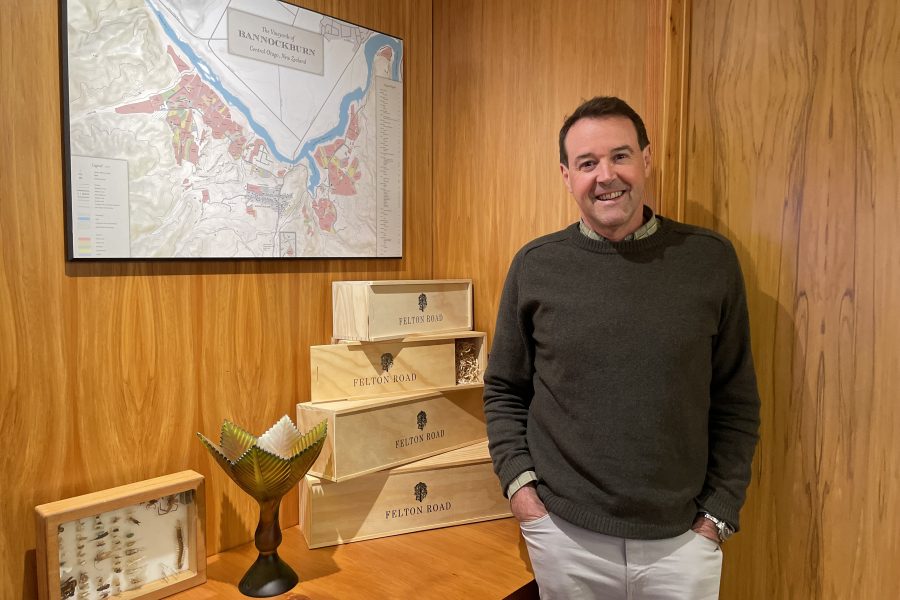
Felton Road winemaker Blair Walter TRR
However, it’s not all change and certainly not for change’s sake! After running The Real Review’s algorithm across all of the tasting notes for the past two years, when the dust settled, Felton Road re-emerged as the Winery of the Year, with Destiny Bay also retaining its position at number two. I cover the reasons for Felton Road retaining their top spot in a separate article published later this week. In third spot is Te Whare Ra from Marlborough.
Significant gains were made by South Island producers who had a less challenging vintage in 2023 than their cousins in the north. This was mostly at the expense of Hawke’s Bay producers who bore the brunt of Cyclone Gabrielle that year, destroying vineyards, buildings and vines.
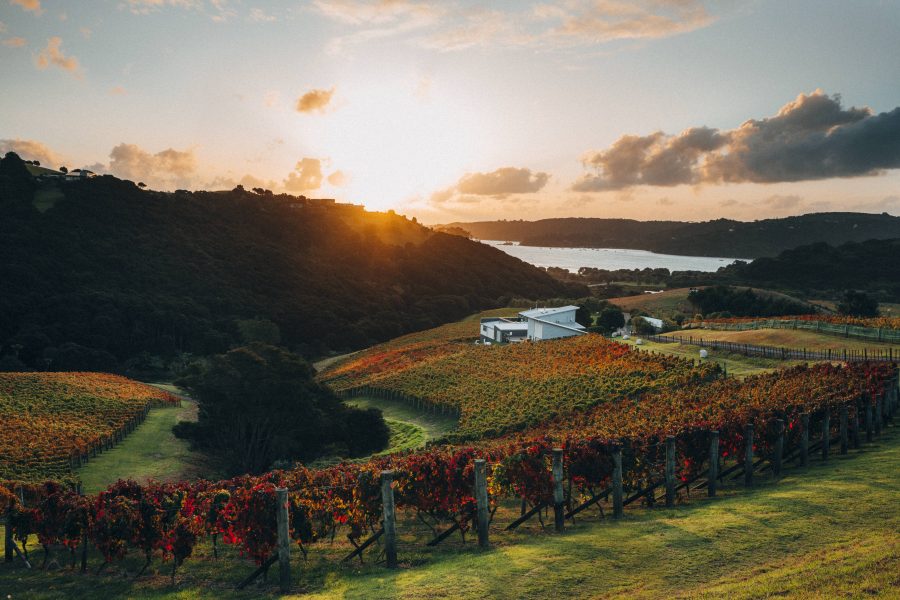
Destiny Bay Wines on Waiheke Island
Despite the challenges, there were some beautiful wines snatched from the jaws of defeat, as amply demonstrated by Te Mata Estate rising to seventh place. I also cover the specific effects of this vintage disparity between north and south in a separate piece.
Looking at the most visible changes to the rankings, Central Otago continues to strengthen its position on the list. Last year, the region stood out for claiming 23% of the list. This year, it is represented by 42 producers (who are either wholly or partly in the region as some own vineyards in multiple regions). This translates to 29.7% which is a reflection of a seemingly unbroken run of good vintages for the region, increased uptake of organic and regenerative farming, investment from both existing and new interests.
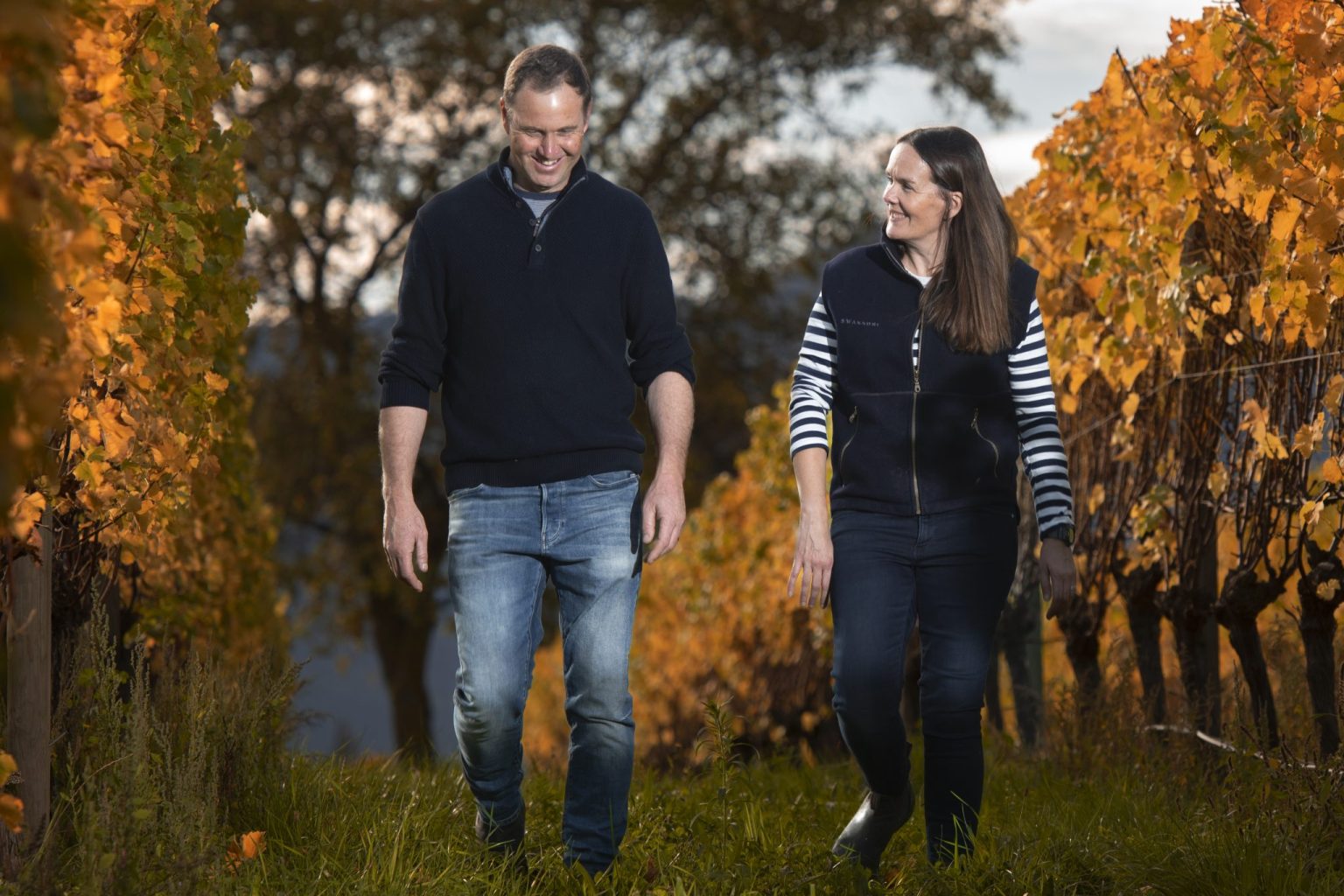
Jason and Anna Flowerday of Te Whare Ra Wines.
Another region which is punching above its weight is North Canterbury, which now claims 10 wineries on the list, or 7.1% of the total (up from 5.7% a year ago). For comparison, it represents 3% of the country’s total vineyard planted area. Despite the difficulties of 2023, the Wairarapa (which also has 3% of the national vineyard) held its ground, with 14 producers representing 10% of the total list. Those holding down the fort will be looking forward to the 2024s entering the market, with all signs pointing to it being a spectacular vintage for the region.
The other region to note in all of this is Marlborough, whose story is hidden in the details. Despite having the lion’s share of the list (admittedly, they do have the overwhelming majority of the country’s planted area), the wineries which have climbed into the top ranks are not all known for their sauvignon blanc. In fact, a few of them don’t even release one at all, and several of those who do make sauvignon do not make it in the typical style of the region’s calling card.
This is not to deride New Zealand’s most identifiable and commercially successful style of wine but rather to point out that the behemoth of Marlborough is more diverse and detailed than many think. The wineries who have made into the top echelons of the list are as committed to making excellent pinot noir, outstanding chardonnay, arresting aromatics and effusive sparkling wines on top of their benchmark sauvignons.
Over the past few weeks, we have also introduced you to the finalists for our new awards categories; Vigneron of the Year, Rising Star of the Year, and five Wines of the Year in different styles. We are delighted to announce the winners for all eight of these awards at the end of this article. And to address the elephant in the room, yes, all of the winners are producers in Central Otago or Marlborough (A Thousand Gods have their winery in Canterbury but their wines are all from the Churton Vineyard in the Southern Valleys of Marlborough).
This was not a deliberate statement or an intended result; however, we judged each category on their own against their peers and in each case the panel selected the wine or producer they felt best embodied the spirit and substance of the award. It is perhaps a testament to the great work being done in these two regions that they have claimed all the awards between them, but it should not be overlooked that great wine and good work is being made throughout the country—as can be clearly seen in the wider diversity in the list of finalists.
What we hope the Top Wineries list will do is introduce you to the true breadth and diversity which is possible in New Zealand wine, and invite you to celebrate the wonderful wealth of great wine made in Aotearoa. Happy reading!
Pinot noir is a beloved wine variety in NZ, favoured for its elegantly balanced fruit, florals and lithe profile. It’s an elegant wine so is easy to love – but hard to grow, hence being nicknamed the ‘heartbreak grape’. Its thin-skinned and susceptible to disease, so it took brave wine-making visionaries to attempt to grow pinot here in NZ. Early champions of the wine were told that they were mad.
Luckily for pinot lovers, one such ‘madman’ didn’t listen. Irishman Alan Brady came to Central Otago and planted pinot on a small plot in Gibbston Valley, despite people telling him repeatedly it would had produced the first modern commercial pinot noir in 1973 from Canterbury-grown grapes).
There was no looking back and pinot planting in the region surged from less than 150ha in 1990 to 2000ha by the year 2000. Alan is respected as the godfather of NZ pinot noir and at almost 90 was present at the recent Pinot Noir Conference in Christchurch still with a thirst for knowledge and the desire to share what he has learned along the way.
The three-day event was an opportunity to be inspired by the NZ pinot noir journey and to plan the future for this exciting wine variety.
Today, NZ’s pinot plantings exceed 5700ha. Pinot noir grapevines like a cool climate and thrive in all wine regions from the Wairarapa south as well as in higher altitude regions of Hawke’s Bay. The largest concentration of plantings is in Marlborough.
There is no question that pinot noir is NZ’s most important red grape, so making this wine well represents a level of skill in growing and wine-making that not all wine regions are capable of, regardless of climate. It truly is a reflection of just how special NZ wine is and we want the world to know.
Wayne, with Michael and Murray presenting to the Club
What a brilliant evening! Organised by Wayne, who purchased the winning wines in a timely manner so he could secure every one that he wanted, and part hosted by Wayne, with Michael and Murray added to the panel presenting to the Club members.
We had 36 members turn up for the tasting, so the reputation of this evening from last year has grown!
Wayne had tasting notes for each wine to refer to, and club members were asked what they tasted, liked and towards the end of the evening there was a vote on the best wine of the evening – it was a fairly close call on that point!
The below wines were what we tasted on the night, and may available from New World, The Good Wine Company, and other NZ locations.
2024 Leftfield Pinot Gris, Marlborough
2024 Wairau River Estate Sauvignon Blanc, Marlborough
2024 Sileni Advocate Grand Reserve Albarino, Hawkes Bay
2023 Bladen Eight Rows Riesling, Marlborough
2022 Kirrihill Regional Series Clare Valley Shiraz, South Australia
2021 Church Road McDonald Series Merlot, Hawkes Bay
‘After our first vintage, my Italian viticulture professor came over with tears in his eyes’
The founder of Cloudy Bay wine, David Hohnen, has teamed up with entrepreneur Rupert Clevely — of Geronimo Inns fame — and the Marlborough Grape Growers Cooperative to launch Marlborough Heartland, a Sauvignon Blanc which captures the essence of a remarkable landscape.
Hohnen doesn’t just move through the wine world, he tears through it on a motorbike. Literally. In 1969, aged 20, he rode from Adelaide to Sydney, loaded his bike onto a P&O liner, and crossed the Pacific to California, petrol still sloshing in the tank. He landed in Fresno, a dusty, agricultural outpost in the Central Valley, where the local university offered five-acre student vineyards and a neglected teaching winery which hadn’t produced a drinkable drop in years. That changed when Hohnen got the keys.
“They gave me five acres of Carignan and told me to get on with it,” he says. “The winery was a mess. I spent three months scrubbing tanks. After our first vintage, my Italian viticulture professor — a good man called Vince Petrucci — came over with tears in his eyes and said, ‘Thank you, this is the first wine I’ve been able to drink from this place.”’ Hohnen was hooked.
Back in Western Australia by 1970, Hohnen helped plant the early vines which became Cape Mentelle. There was no blueprint, just instinct, energy and the conviction that wine ought to express something beyond itself. “In ‘74 we had our first real vintage. ‘78 was terrific — critic James Halliday gave us a great write-up. We were in a shed, crude kit, but the wines had promise.”
Then, in 1983, he was ambushed by a grape. A few bottles left by visiting Kiwi winemakers turned everything. He says: “It wasn’t just good – it was electrifying.”
Armed with curiosity and air miles donated by his brother Mark, Hohnen zigzagged across New Zealand in search of the right spot for Sauvignon Blanc. Gisborne was too lush. Hawke’s Bay, too humid. Then came Marlborough. “It was brown. Dry. Sunlit. I thought, “Gotcha!”’
From trout to triumph
By 1985, Cloudy Bay was born; funded by a brutal million-dollar loan at 23.5 per cent interest. The decision was sealed after Hohnen’s brother’s business partner, Simon Fraser (of the Loch Ness Frasers), caught a trophy trout on a fishing trip in the area. “I always said Cloudy Bay owes it to a fish.”
They built the winery at speed, introduced a tilt-up slab technique that had never been used in New Zealand, and sent grapes north to Kevin Judd, the pioneering winemaker Hohnen had met at a wine show in Auckland. The 1985 vintage was blended with a little Riesling and Semillon, allowing it to age gracefully. “It worked,” says Hohnen says. “People still remember their first glass.”
Cloudy Bay wasn’t launched. It bolted onto the scene: “People thought we contrived the allocation. We didn’t. It was a runaway horse. I just sat firm in the saddle, held the reins, and tried to steer.” Demand constantly outpaced supply. “Probably never caught up in my time.”
Veuve Clicquot came calling. Under the stewardship of Joseph Henriot, and later Cécile Bonnefond, Cloudy Bay thrived. “They were smart. Understood wine. Understood brand. Let us get on with it.”
By 2000, Hohnen found himself Chairman and MD of both Cape Mentelle and Cloudy Bay. “Not my choice of title. For a country hick, it sat heavy. I decided to leave. Should’ve gone straight away. Instead, I stuck around for the handover — the worst mistake I ever made.”
He drifted, gloriously. Raised free-range pigs with real care, railing against their status as “the four-legged chooks of the world.” Then came the charcuterie, but done properly: low intervention, slow drying, clean, honest flavours.
The return
In 2022, Cloudy Bay called him back. They’d rebuilt the original winery as a visitor centre and named it the Founder’s Centre. “It was emotional. We’d parted well, and we’re friends again now.”
He had one last idea: enter Marlborough Heartland – a new label, made in collaboration with Rupert Clevely (of Geronimo Inns) and the Marlborough Grape Growers Cooperative, a formidable alliance of 80 growers who usually make bulk wine.
“They do 16 million litres a year,” Hohnen says. “I said, let’s make something special. We picked eight vineyards on deep pebble soils in the central Wairau Valley – the black country. That’s where the best Sauvignon comes from. Ripe, not green. No tomato leaf. Just bright fruit, full palate, lovely tingle. For just over a tenner, it speaks.”
His daughter, Freya — top of her class, a seasoned winemaker, and mother of two — is on the blending bench. “She does the high notes. I do the low. You’ve got to have both.”
A sense of place
What’s in the name? Like Cape Mentelle or Cloudy Bay, it’s geographical. “Some said ‘Cloudy’ sounded like cloudy wine. They were wrong. Place matters. It grounds you.”
Today, the second vintage of Marlborough Heartland is sailing towards England. Sainsbury’s has backed it. The supermarket’s wine agency partner, Watermill Wines, helped secure the listing. “They’ve got the buyers. We’ve got the story.”
And what a story. Cloudy Bay went on to become the world’s best-known white wine. No fuss, no spin, just magnetic Marlborough Sauvignon bottled by a man who listened when the land spoke.
Says Hohnen: “I’ve never had anything from New Zealand. But that’s because I’m Australian. Not sure they like to admit an Aussie created their most famous wine. Doesn’t matter. I’m just happy to be back.”
What’s next? “I don’t look back. I’ve made mistakes, sure. But winemaking is a privilege. You meet good people — real people — farmers whose wealth comes from the earth. Not suits.”
If he could share a bottle with anyone? “It’d be family. Always family. Someone once said, “Without family, you’d have to fight with strangers!” We’ve done pretty well.”
So ends this chapter, with the vines back under his feet and the Marlborough sun on his face. David Hohnen, still steering the horse. Still making the wine speak…
Hosted by Wayne Kennedy, Murray Jaspers and Michael Kuus
Wednesday 9th April, 8 pm Start
Door Price: Members $16 / Guests $20
Immediately after the Gold Medal Winners from the New Zealand International Wine Show were announced last October, your club set out to acquire three bottles of seven gold medal wines for us to taste this month. April was chosen to do this as that is a time of the year when the wine industry is busy with harvest, and thus many wineries are unavailable to present to us.
The beauty of doing this immediately that the announcements were made were two-fold. It meant that the wines were still available and more importantly it also gave us an opportunity to secure seven trophy wines, including the McArthur Ridge Southern Tor Pinot Noir which was the Champion wine of the Show.
Many of these wines are hard to come by now, so we are fortunate that your committee acted so quickly. All that remains is for you to attend and enjoy a great trophy tasting.
Please remember your tasting glasses
The wines we will be tasting are:
2024 Leftfield Pinot Gris, Marlborough
2024 Wairau River Estate Sauvignon Blanc, Marlborough
2024 Sileni Advocate Grand Reserve Albarino, Hawkes Bay
2023 Bladen Eight Rows Riesling, Marlborough
2022 Kirrihill Regional Series Clare Valley Shiraz, South Australia
2021 Church Road McDonald Series Merlot, Hawkes Bay


 Askerne Tasting – Main Event
 Loading...

 Reload document
  Open in new tab