They’re too small, inhibit flavour appreciation and, according to one sommelier, should be ‘outlawed’. But what are the better alternatives?
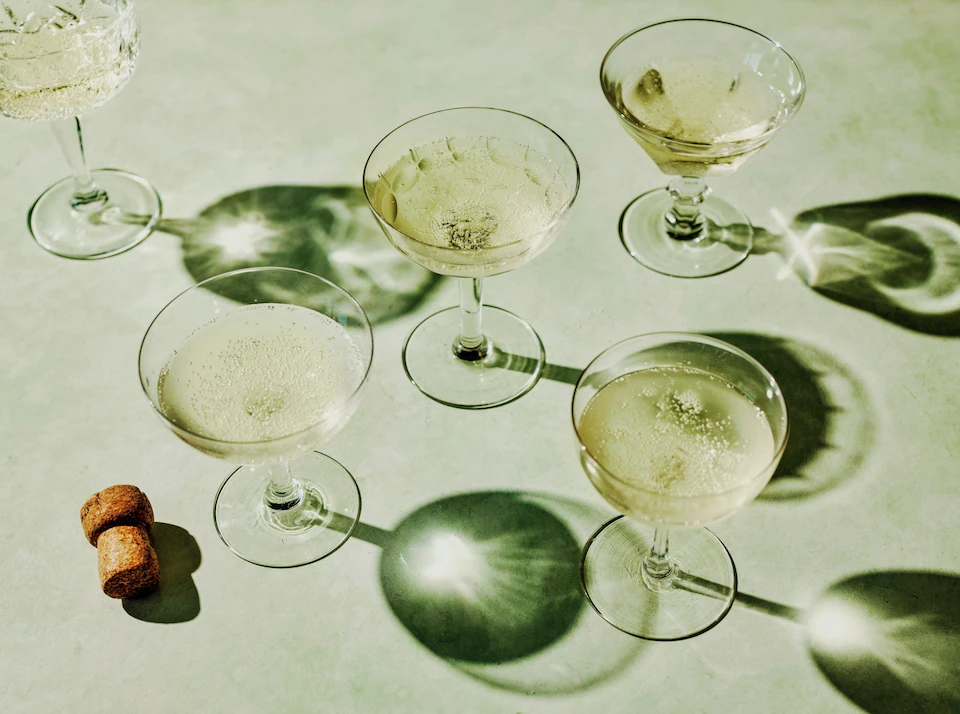
The Telegraph consulted wine experts to find out the dos and don’ts of drinking champagne Credit: Haarala Hamilton
Maximilian Riedel has a mission: to rid the world of champagne flutes. “My goal is to make them obsolete within my lifetime,” says the 11th-generation glassmaker from Austria. “Champagne and sparkling wines deserve to be shown at their very best. A narrow flute does nothing for them.”
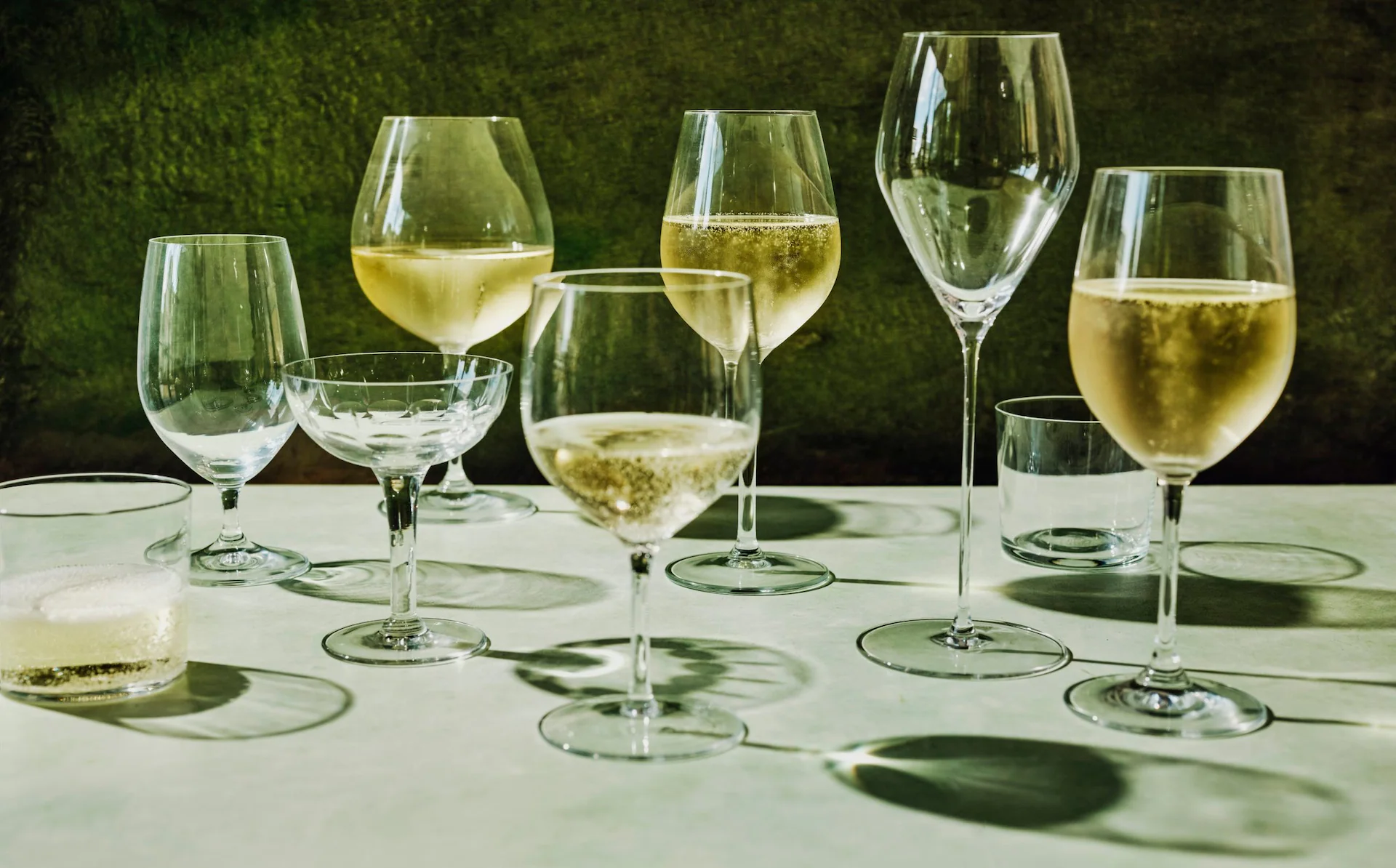
He is not alone in the charge against the tall, slender vessel – or in his determination to see wine glasses replace them. With 70 per cent of our perception of flavour coming from aroma, Riedel argues, the more open shape, whether a traditional white wine glass, a tulip-shaped one or bigger burgundy glass, enables the wine to be appreciated fully.
Acclaimed publican Heath Ball ditched “hundreds of flutes” when he took over The Angel in Highgate, London, in November 2024 – though he has reluctantly held a few back “because some people do like them and I hate to say no”.
At The Angel in Highgate, Heath Ball has largely dismissed flutes in favour of wider glasses
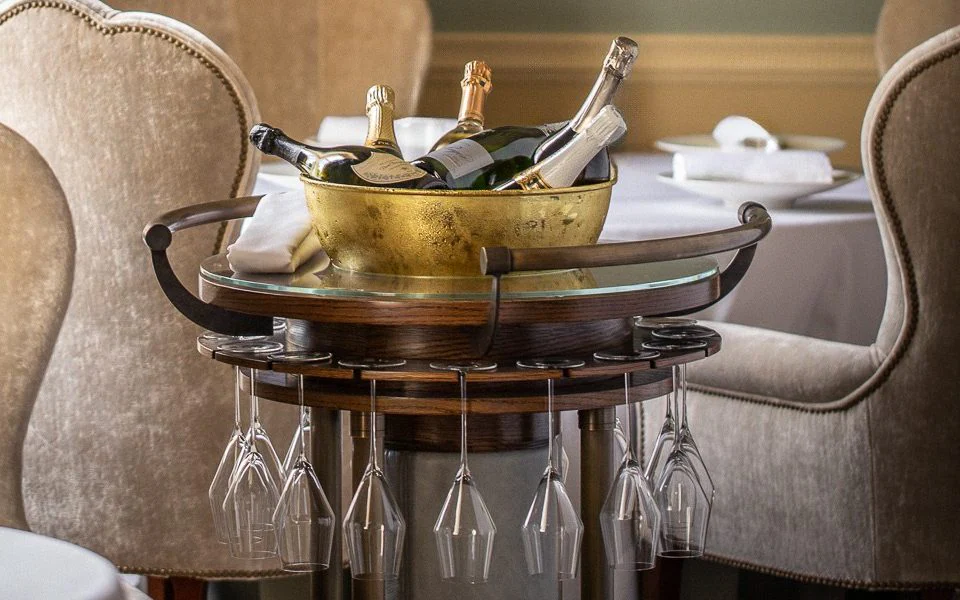
They should be “outlawed” insists sommelier Sandia Chang, who founded the online grower-champagne shop Bubbleshop and runs the two-Michelin-starred Kitchen Table restaurant in the capital with her chef husband James Knappett. And there’s not a flute in sight on the champagne trolley at the luxurious Grantley Hall near Ripon in North Yorkshire.
Flutes have been the go-to glass for champagne ever since – so legend says, and Riedel reports – 18th-century Benedictine monk and abbey cellarman Dom Pérignon said he liked to “watch the dance of the sparkling atoms” in a slim glass. As champagne became a drink associated with celebration, the flute contained a measured serving just right for a toast.
But sparkling wine is increasingly appreciated as a versatile, food-friendly drink worthy of more than just chin-chin moments at weddings. “We’re seeing more and more people drink sparkling wine just as they would a still wine,” says Ball. “And when you shift it from the flute [into a wine glass] it becomes more relaxed and more enjoyable. I’m all for that.”
So if flutes are out, what should you pour your next glass of fizz into?
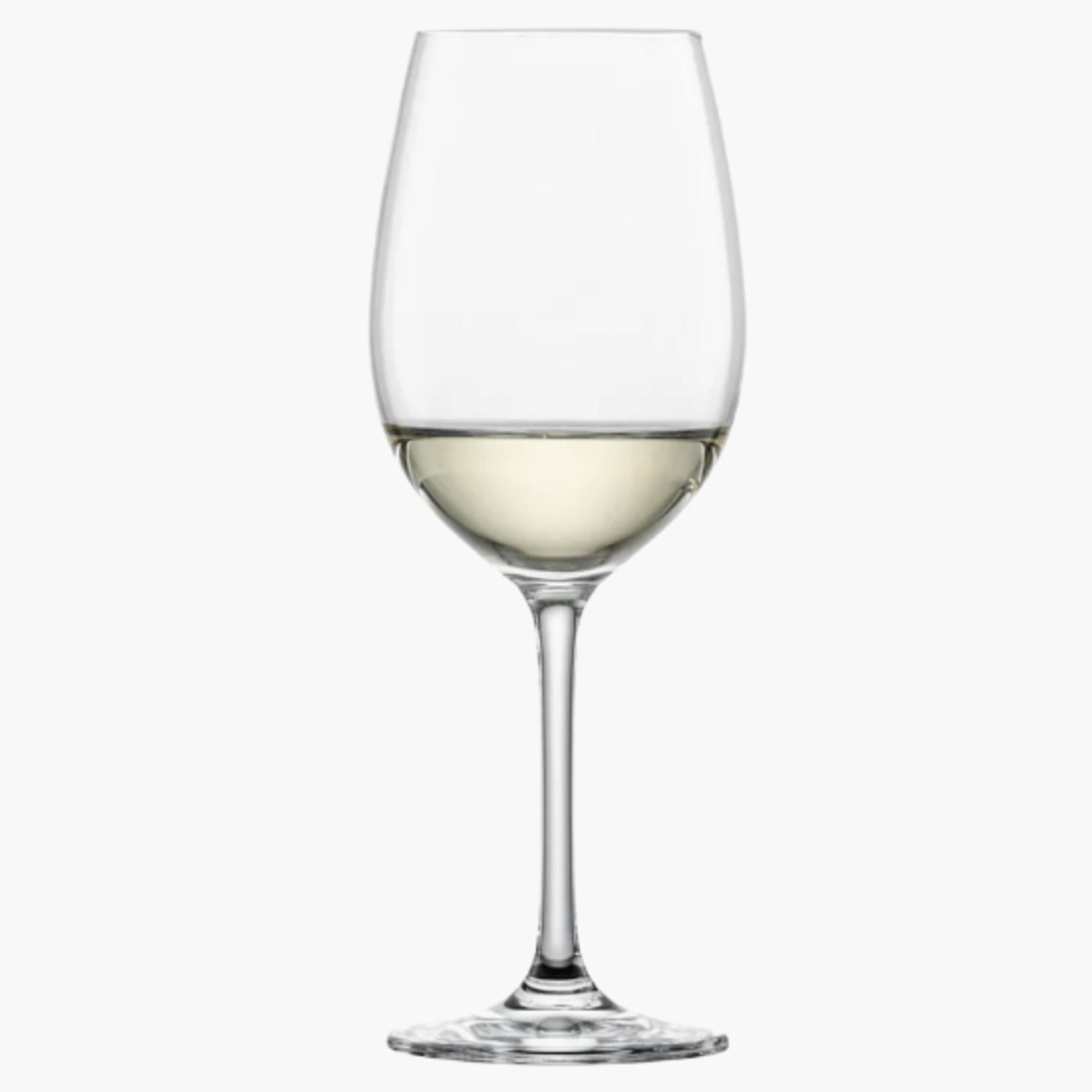
A white wine glass
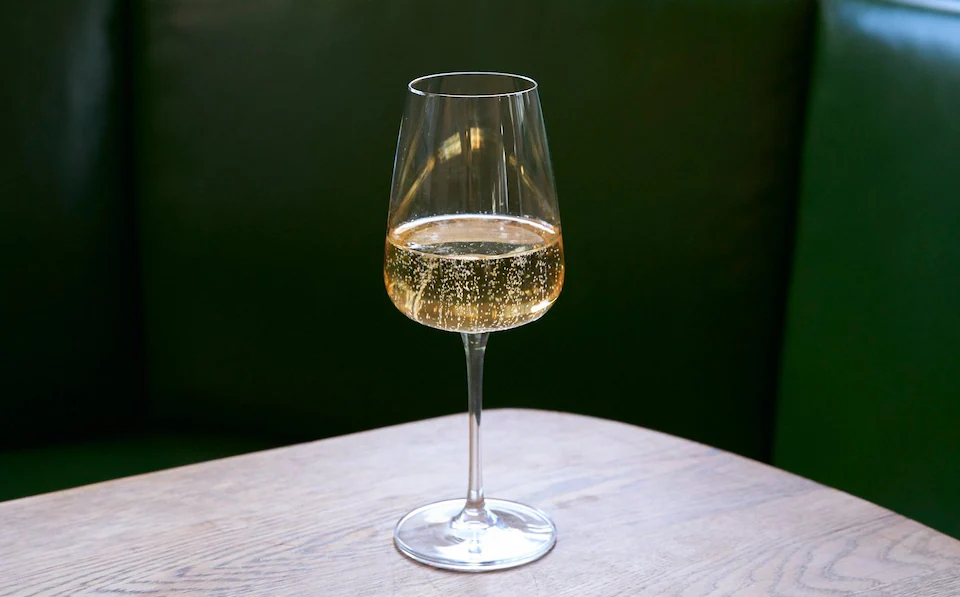
“All sparkling wines are better enjoyed in wine glasses rather than flutes,” argues Chang. “Flutes may look pretty but it’s almost impossible to appreciate the aromas of the wine without getting just bubbles up your nose.” And no, the flute’s shape doesn’t necessarily keep bubbles bubblier for longer: “A well-made sparkling wine will not lose its bubbles during the time it takes to drink a glass,” she says.
Sommelier Sandia Chang argues that sparkling wines are better suited to a white wine glass than a flute
The bowl of a white wine glass allows aromas and flavours to develop, and acidity to become balanced. “The wine looks good,” says Ball, “it’s better value for the customer, and more relaxed and contemporary.”
It’s more generous too. At The Angel, Ball will pour Château Palmer champagne or Australian lambrusco into an elegant wine glass as a 175ml serving, rather than the 125ml typically held in a flute. “With flutes, you fill the glass, then two sips later it’s all over. Where’s the fun in that?”
The universal shape of a white wine glass makes it a practical choice, a consideration even for a top sommelier like Isa Bal, co-owner with chef Jonny Lake of Trivet, the two-Michelin-star restaurant in Bermondsey. At home he keeps things simple – and saves space – with one set of glassware for all wines, including champagne: “A white wine glass does the job perfectly,” says Bal. “Leave it to restaurants and bars to have all those different glasses, and enjoy them when you’re out.”
Andrew Rogerson, who oversees the wine programme at Michelin-starred Shaun Rankin at Grantley Hall restaurant, cuts to the chase: “The less you spend on glassware, the more you can spend on champagne.” Who can argue with that?
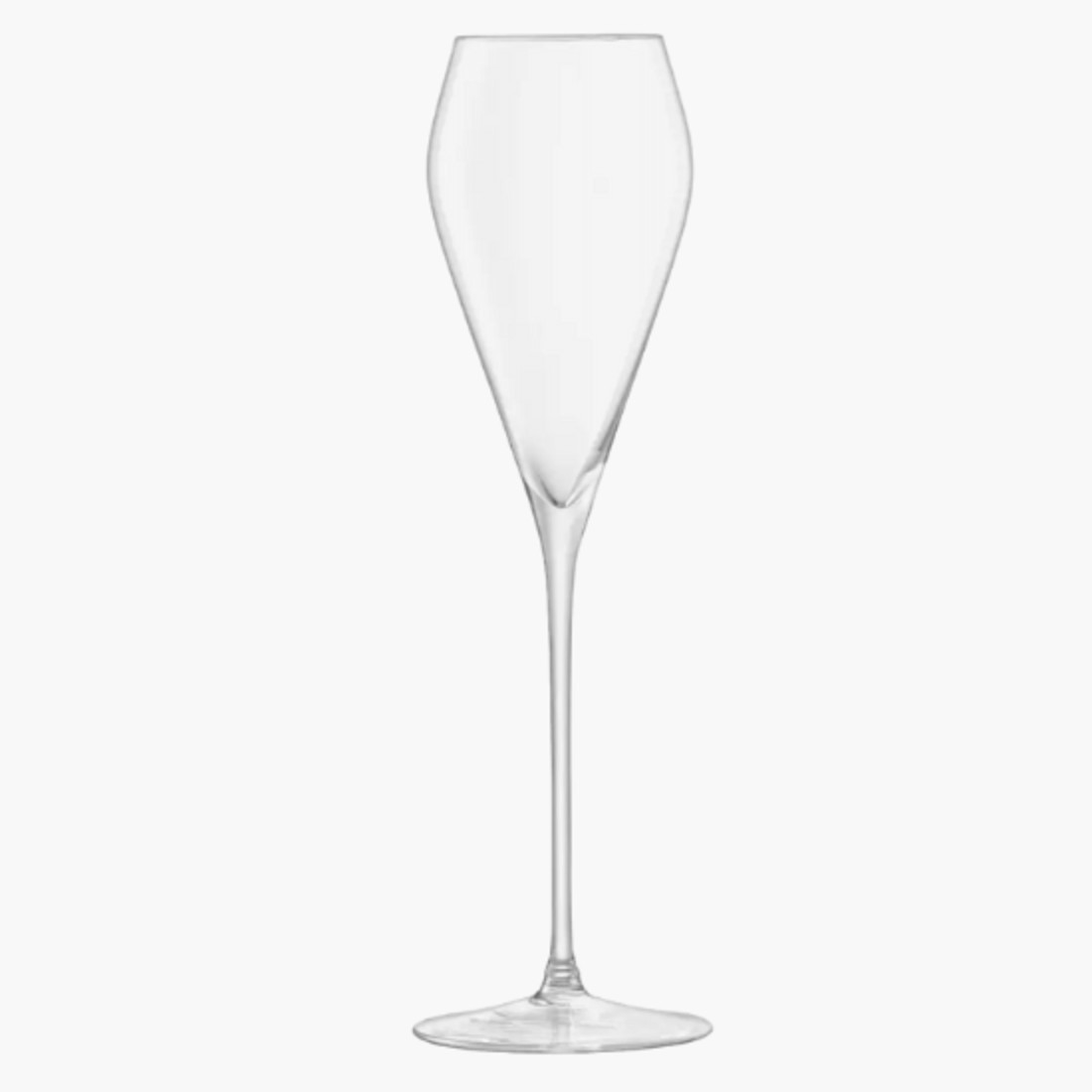
A tulip-shaped wine glass
The narrower meeting point of bowl and stem in a tulip-shaped glass means bubbles are released gradually, its wider “hips” allow oxygen to reach the liquid, and the tapered rim captures and concentrates aromas.
“Those aromas are such a key part of how the champagne is experienced, how it tastes,” says Rogerson. Sommeliers steering the Grantley Hall trolley select subtly different-shaped glasses (most are German-made Zalto) for each champagne: it’s a narrower one for Shaun Rankin’s blanc de blanc because the wine’s delicate, leaner notes don’t require as much aeration to be enjoyed. A broader glass suits the richer Femme de Champagne by Duval-Leroy, while the Krug grand cuvée is poured into a glass the champagne house developed in collaboration with Riedel. “It has a broad, almost diamond shape that allows more space for aromas to develop,” says Rogerson. “The base of the bowl comes to a point to aid the formation of bubbles, and the wider body allows you to swirl the wine, speeding up oxidation and revealing the flavour in a way not achieved by more narrow glasses.”
The Grantley Hall wine trolley features various slightly differently-shaped glasses for different champagnes
Champagnes from Trivet’s renowned wine list, which includes tiny-production grower champagnes such as Pierre Péters grand cru Le Mesnil-sur-Oger, are also poured into delicate tulip-shaped glasses, the better to appreciate the wine.
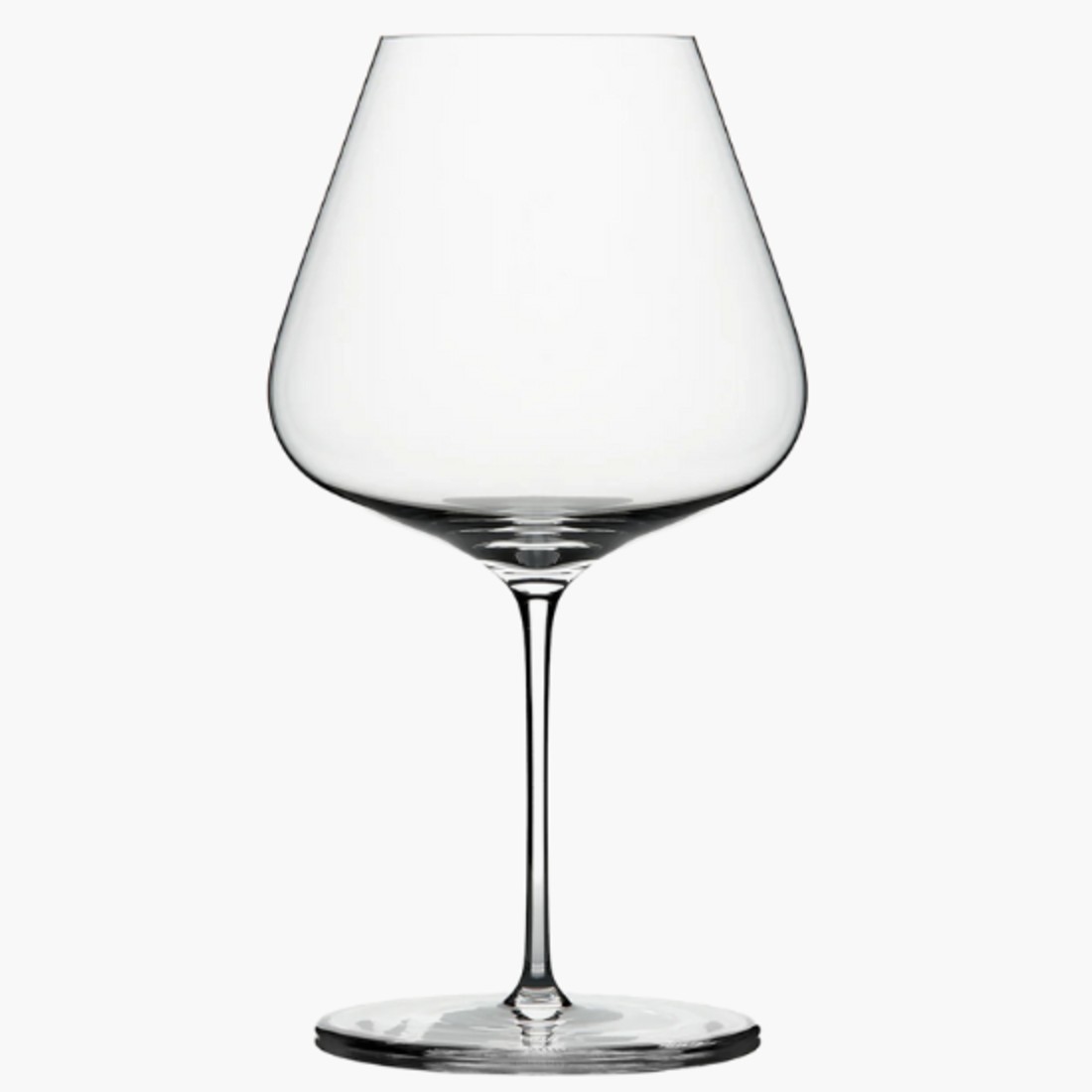
A burgundy glass
Older vintages, or full-bodied rosé champagnes with aromatic red-fruit notes, can benefit from a larger pinot noir glass. “The intensity and complexity can require more interaction with oxygen,” says Rogerson. “They can also be best enjoyed at a slightly warmer temperature, making red wine glasses perfect. I was lucky enough to enjoy a glass of 1988 Cristal champagne, and in a red burgundy glass it opened up beautifully.”
A coupe (but only for vintage vibes)
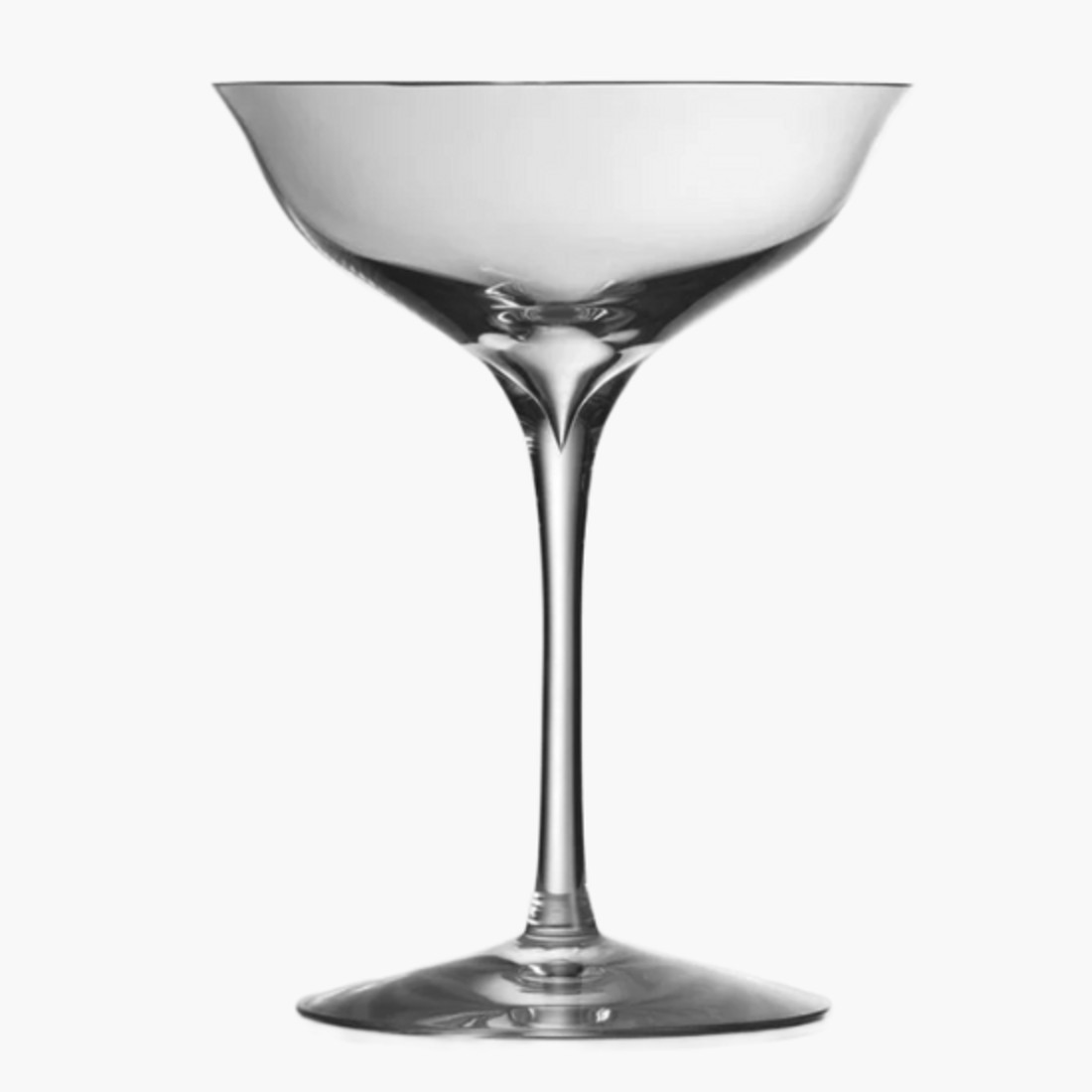
Champagne can lose its bubbles and aroma quickly in a coupe or champagne saucer, but there’s still vintage and photogenic charm in this wide, shallow glass, says Fran Cutler, renowned planner of many a society party: “For a wedding or a special birthday toast, or when you just want people to feel more elegant, I love a coupe. There’s something about the shape that’s so timeless – the way you can cup it in your hands just feels glamorous. It has that charm that you don’t get with flutes or wine glasses, making people feel sexy, inviting a bit of mischief to the occasion.”
Coupes have a sexy, vintage air about them – but be mindful the champagne loses its bubbles quickly in this vessel Credit: Haarala Hamilton
The style is forever associated with the Great Gatsby-esque flamboyance of the 1920s but the rumour that coupes were first modelled on Marie Antoinette’s left breast is just that – a rumour – though they were popular during the 18th century. “The coupe is playful,” says Rogerson. “You might not get the most technically from the champagne, but if [a coupe] brings the most enjoyment, then people shouldn’t feel shy about asking for one. We always keep a few on the trolley just in case.”
A tumbler (so long as its crystal)
Small, chunky glasses should be avoided “for any type of wine,” believes Cutler. “That should be obvious, but I’ve seen it done, and it’s a shame – and a bit wasteful, especially when you’ve invested in good champagne. Glassware should be selected to set the mood for a good time.”
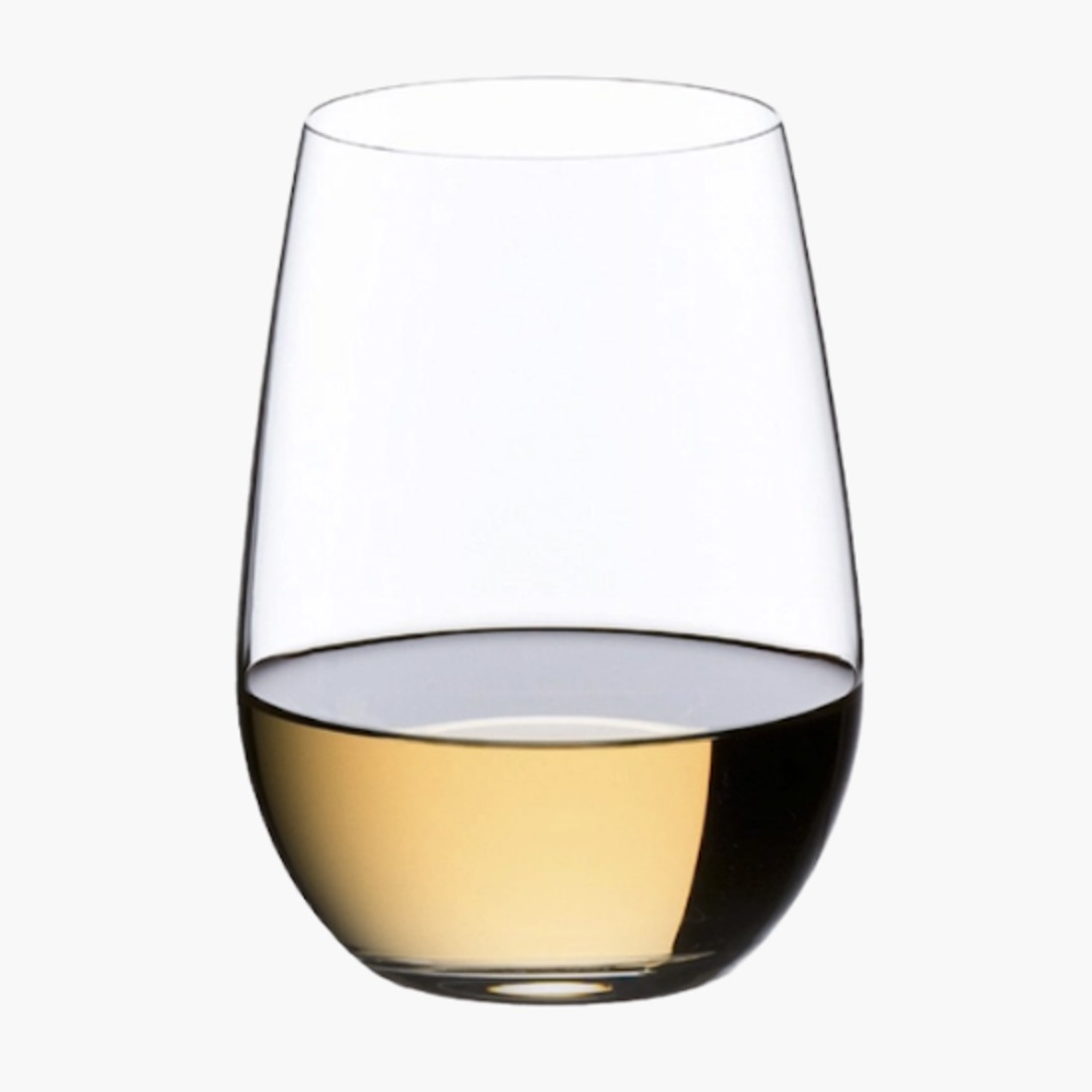
But is there a place for fizz in a tumbler? Riedel was recently spotted – on Instagram at least – splashing chilled Bruno Paillard champagne into one while on an Alpine hike. Needless to say, it was not a plastic beaker dredged from the back of the cupboard, but his own rather more elegant O to Go crystal glass tumbler.
Champagne flutes are out – try these instead
Tulip-shaped glass – mouth-blown glasses with tall stems, if you still hanker after a flute.White wine glass – a great all-rounder, and dishwasher-safe, too.Burgundy glass – with a generously sized, wafer-thin bowl.Coupe Waterford Elegance champagne belle – contemporary and delicate with a subtly flared rim.Tumbler Riedel O to Go White – the chic stemless option.
Some tips, before you reach for that wine glass…
Don’t
Stick your fizz in the fridge. The bottle should be well chilled before opening (between 8-10C is ideal, according to Riedel, because if too cold the flavours are masked), but 30 minutes in a wine bucket filled with ice is better to achieve this quickly if you forgot to put it in the fridge.
Do
Try decanting champagne. The process can lessen foaming, help soften acidity and release flavour. Riedel calls it “a revelation”, especially with young bottles, though he doesn’t recommend the process for older ones or champagnes with particularly delicate bubbles.
Don’t
Fill the glass more than half- or two-thirds full. This gives space for aromas to develop and concentrate.
Do
Keep the wine glass flat on the table when pouring – if you’ve got the skills of a sommelier. “The trick is to pour the champagne into the glass in one steady unbroken stream without the wine bubbling over the rim,” says Chang. The rest of us should adopt the 45-degree tilt and a slow pour to minimise foaming. “Wet” the glass first with a little champagne to let bubbles settle before continuing to pour.
A new horticultural initiative could transform New Zealand into a commercial catnip producer, paving the way for the export of locally made pet wines to international markets.
Kiwi start-up, Muttley’s Estate, has created a shelf-stable pet wine that can be stored for up to 12 months.
Catnip (or Nepeta cataria) was introduced to New Zealand as a garden herb in 1870 and is estimated to positively impact mood in about two-thirds of cats while helping to soothe anxiety in dogs.
Global demand for catnip is rising, driven by pet product manufacturers and natural health industries.
The catnip essential oil market alone is projected to grow by 5.8% annually by 2030 to reach $400 million.
Kiwi start-up, Muttley’s Estate, is believed to be the world’s first manufacturer to have created a shelf-stable pet wine that can be stored for up to 12 months.
The breakthrough has made large-scale production and export more viable.
John Roberts, director of Muttley’s Estate, said catnip was a resilient crop that had adapted to grow well in New Zealand’s temperate climate and well-drained soils since it was first introduced.
He said the commercial-scale farming of catnip would further diversify New Zealand’s horticultural sector.
Roberts said, with a growing domestic footprint, the company had now set its sights on the lucrative US market, where pet owners sought premium, novelty products for their furry companions.
“One of the key advantages of catnip is that even a small crop yields enough to produce a batch of pet wine, allowing us to create a high-value product without requiring extensive land investment,” he said.
“With the growing international interest in catnip and the ‘humanification’ of pet diets, it was a natural extension to explore the development of a premium beverage for pet owners to celebrate with their pets.”
Roberts said Muttley’s Estate had already signed more than 40 retailers since launching the range in New Zealand less than a year ago.
“We believe the reputation of NZ’s wine sector in North America will help us establish an entry into this market and we [are] now actively looking for US distributors.”
Roberts said research showed the impact of chronic anxiety and stress among pets had become more prevalent due to a combination of urbanisation, multi-pet household dynamics, ongoing issues relating to the pandemic and shifting lifestyles.
“International studies have found almost a third of dogs showed high sensitivity to noise, with fireworks a particular problem, while 29% of dogs were said to be highly fearful, and 14% showed highly problematic aggression.
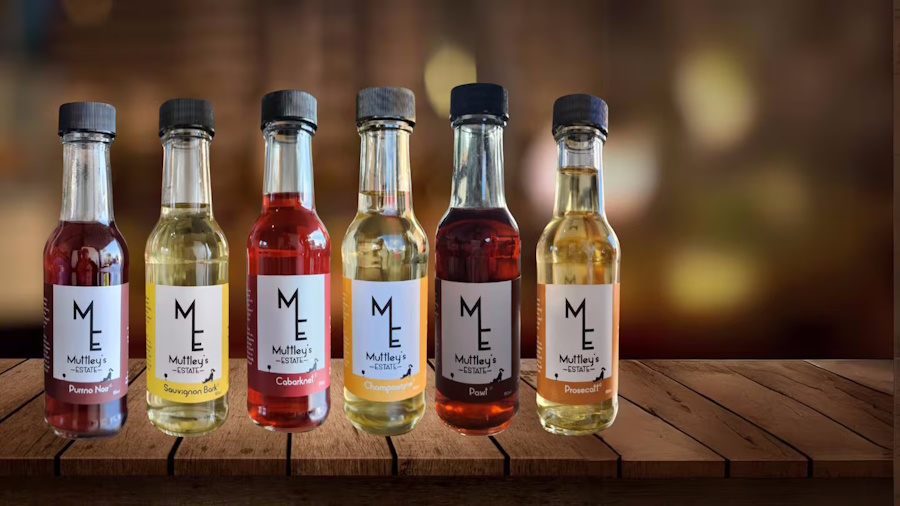
The Muttley’s Estate offers multiple “varietals,” each featuring a different concentration of catnip.
“Symptoms of anxiety in cats are often more subtle, yet owners reported signs of tail flicking, avoiding eye contact, and shifting head/body away repeatedly [every week or every other day] or more often than usual.”
He said the range was created to help alleviate some of the modern stressors on pets, but unlike conventional wines, the products contained zero alcohol.
“The range offers multiple ‘varietals,’ each featuring a different concentration of catnip: lighter whites such as the Champawgne appeal more to cats, while the deeper blends such as the Purrno Noir and Pawt are popular with dogs,” he said.
Muttley’s Estate is already selling through veterinary clinics and pet retailers across New Zealand.
It has also held tasting events at local dog parks.
“We were overrun by canines wanting to taste the pet wine, and it demonstrated the positive response across a wide variety of breeds,” Roberts said.
The company was now working with New Zealand Trade and Enterprise to identify distributors in overseas markets.
“We’d love to see entire fields of catnip grown right here,” Roberts said.
“The idea that we could turn a small backyard experiment into a nationwide horticultural endeavour, and share it with pet lovers worldwide, is really exciting.
“It’s a chance for New Zealand to do something fresh and unexpected – yet again.”
The company is also investigating the potential of catnip for human consumption, with trials underway to determine its suitability for the human market.
“Catnip is related to the mint family, so it is safe for humans,” Roberts said.
“We’re working with food technologists to explore the possibilities.”
‘After our first vintage, my Italian viticulture professor came over with tears in his eyes’
The founder of Cloudy Bay wine, David Hohnen, has teamed up with entrepreneur Rupert Clevely — of Geronimo Inns fame — and the Marlborough Grape Growers Cooperative to launch Marlborough Heartland, a Sauvignon Blanc which captures the essence of a remarkable landscape.
Hohnen doesn’t just move through the wine world, he tears through it on a motorbike. Literally. In 1969, aged 20, he rode from Adelaide to Sydney, loaded his bike onto a P&O liner, and crossed the Pacific to California, petrol still sloshing in the tank. He landed in Fresno, a dusty, agricultural outpost in the Central Valley, where the local university offered five-acre student vineyards and a neglected teaching winery which hadn’t produced a drinkable drop in years. That changed when Hohnen got the keys.
“They gave me five acres of Carignan and told me to get on with it,” he says. “The winery was a mess. I spent three months scrubbing tanks. After our first vintage, my Italian viticulture professor — a good man called Vince Petrucci — came over with tears in his eyes and said, ‘Thank you, this is the first wine I’ve been able to drink from this place.”’ Hohnen was hooked.
Back in Western Australia by 1970, Hohnen helped plant the early vines which became Cape Mentelle. There was no blueprint, just instinct, energy and the conviction that wine ought to express something beyond itself. “In ‘74 we had our first real vintage. ‘78 was terrific — critic James Halliday gave us a great write-up. We were in a shed, crude kit, but the wines had promise.”
Then, in 1983, he was ambushed by a grape. A few bottles left by visiting Kiwi winemakers turned everything. He says: “It wasn’t just good – it was electrifying.”
Armed with curiosity and air miles donated by his brother Mark, Hohnen zigzagged across New Zealand in search of the right spot for Sauvignon Blanc. Gisborne was too lush. Hawke’s Bay, too humid. Then came Marlborough. “It was brown. Dry. Sunlit. I thought, “Gotcha!”’
From trout to triumph
By 1985, Cloudy Bay was born; funded by a brutal million-dollar loan at 23.5 per cent interest. The decision was sealed after Hohnen’s brother’s business partner, Simon Fraser (of the Loch Ness Frasers), caught a trophy trout on a fishing trip in the area. “I always said Cloudy Bay owes it to a fish.”
They built the winery at speed, introduced a tilt-up slab technique that had never been used in New Zealand, and sent grapes north to Kevin Judd, the pioneering winemaker Hohnen had met at a wine show in Auckland. The 1985 vintage was blended with a little Riesling and Semillon, allowing it to age gracefully. “It worked,” says Hohnen says. “People still remember their first glass.”
Cloudy Bay wasn’t launched. It bolted onto the scene: “People thought we contrived the allocation. We didn’t. It was a runaway horse. I just sat firm in the saddle, held the reins, and tried to steer.” Demand constantly outpaced supply. “Probably never caught up in my time.”
Veuve Clicquot came calling. Under the stewardship of Joseph Henriot, and later Cécile Bonnefond, Cloudy Bay thrived. “They were smart. Understood wine. Understood brand. Let us get on with it.”
By 2000, Hohnen found himself Chairman and MD of both Cape Mentelle and Cloudy Bay. “Not my choice of title. For a country hick, it sat heavy. I decided to leave. Should’ve gone straight away. Instead, I stuck around for the handover — the worst mistake I ever made.”
He drifted, gloriously. Raised free-range pigs with real care, railing against their status as “the four-legged chooks of the world.” Then came the charcuterie, but done properly: low intervention, slow drying, clean, honest flavours.
The return
In 2022, Cloudy Bay called him back. They’d rebuilt the original winery as a visitor centre and named it the Founder’s Centre. “It was emotional. We’d parted well, and we’re friends again now.”
He had one last idea: enter Marlborough Heartland – a new label, made in collaboration with Rupert Clevely (of Geronimo Inns) and the Marlborough Grape Growers Cooperative, a formidable alliance of 80 growers who usually make bulk wine.
“They do 16 million litres a year,” Hohnen says. “I said, let’s make something special. We picked eight vineyards on deep pebble soils in the central Wairau Valley – the black country. That’s where the best Sauvignon comes from. Ripe, not green. No tomato leaf. Just bright fruit, full palate, lovely tingle. For just over a tenner, it speaks.”
His daughter, Freya — top of her class, a seasoned winemaker, and mother of two — is on the blending bench. “She does the high notes. I do the low. You’ve got to have both.”
A sense of place
What’s in the name? Like Cape Mentelle or Cloudy Bay, it’s geographical. “Some said ‘Cloudy’ sounded like cloudy wine. They were wrong. Place matters. It grounds you.”
Today, the second vintage of Marlborough Heartland is sailing towards England. Sainsbury’s has backed it. The supermarket’s wine agency partner, Watermill Wines, helped secure the listing. “They’ve got the buyers. We’ve got the story.”
And what a story. Cloudy Bay went on to become the world’s best-known white wine. No fuss, no spin, just magnetic Marlborough Sauvignon bottled by a man who listened when the land spoke.
Says Hohnen: “I’ve never had anything from New Zealand. But that’s because I’m Australian. Not sure they like to admit an Aussie created their most famous wine. Doesn’t matter. I’m just happy to be back.”
What’s next? “I don’t look back. I’ve made mistakes, sure. But winemaking is a privilege. You meet good people — real people — farmers whose wealth comes from the earth. Not suits.”
If he could share a bottle with anyone? “It’d be family. Always family. Someone once said, “Without family, you’d have to fight with strangers!” We’ve done pretty well.”
So ends this chapter, with the vines back under his feet and the Marlborough sun on his face. David Hohnen, still steering the horse. Still making the wine speak…
It’s all very well making great Pinot, but what if nobody knows that is what you do?
On day three of the New Zealand Pinot Noir 2025 conference held in Christchurch, Wine-Searcher’s wine director David Allen took to the stage to talk everything data, particularly with respects to the grape’s worldwide reach and the supply and demand within key markets – and particularly how New Zealand Pinot was faring.
Using Wine-Searcher’s vast database of offers and price history broken down by both product, grape and region, Allen was able to extract where New Zealand Pinot Noir is now, with a direct comparison to where it stood eight years ago at the last New Zealand Pinot Noir conference in 2017.
However, before getting to the nitty gritty of New Zealand Pinot Noir, Allen produced some facts to give a general overview of where Wine-Searcher was in its global capture of wine and spirits data.
Today there are currently 14.7 million live offers for wines and spirits listed on Wine-Searcher – compared to the 6.7 million eight years ago. This is partly down to there simply being more products on the market; however, Allen noted, it is also down to Wine-Searcher’s greater ability to collect offers. Technology has simply gotten better.
Making up these 14.7 million offers are more than 850,000 products being listed by 37,500 merchants and auctions across 130 markets.
Every month, Wine-Searcher receives roughly 5 million unique users trawling the site for wine.
How many of those unique users are looking for Pinot Noir? Allen was happy to provide the answers.
In 2016, there were 12.8 million searches for Pinot Noir wines within 122 million wine searches worldwide – making up a total of 10.5 percent.
In 2024, there were 27.2 million searches for Pinot Noir within 176 million wine searches worldwide, accounting for 15.5 percent. A not insignificant increase, with the majority concentrated in the US.
When it comes to the number of offers for Pinot Noir listed on Wine-Searcher, the numbers tell more of the same story.
Back on 15 December 2016, there were 0.5 million offers for Pinot Noir Wine within the 5 million offers for wine worldwide, with tiny dark grape accounting for 9.5 percent of all offers.
Nine years later on 15 December 2024, there were 1.1 million offers for Pinot Noir wines within 10 million offers for wine worldwide, making up 11.5 percent.
Both sets of figures show an increase in both interest and offers for the grape variety, with it claiming an ever larger market share as the years rolled on by.
Conversely, during the same time frame, other grape varieties shuffled. Big red Bordeaux blends, for example, slipped from claiming 22.3 percent of searches back in 2016, to 17.4 percent in 2024.
Chardonnay, however, that other great Burgundian variety, claimed 6 percent of searches back in 2016, but snaffled 10.3 percent in 2024, reflecting the often commented-on rise of Burgundy while Bordeaux continues to flail.
However, regarding those 2024 search stats Pinot Noir may be on the rise, but it won’t be evenly across the globe, so where are its main fan clubs?
Well, as Allen presented, France – naturally – accounted for the majority of searches, claiming 22.5 percent, while Hong Kong came in at a close second with 21.4 percent. China sat at 20.8 percent, while the UK and New Zealand sat at 15.5 percent and 15.3 percent respectively, and the US and Australia claimed 13 percent each.
Please bear in mind, the above facts and figures are all still pertain to any Pinot Noir from anywhere in the world.
Back to NZ
Allen then switched his focus firmly to New Zealand and where its Pinot Noir stood in the global market. When it comes to the 2024 searches for New Zealand wines broken down by variety, 35 percent unsurprisingly went to Kiwi stalwart Sauvignon Blanc, while Pinot Noir came in at a close second with 32.4 percent.
However, Sauvignon Blanc has dropped off from its giddy 45 percent back in 2016, while Pinot Noir has risen, albeit marginally. Chardonnay, however, claiming 12.6 percent, has also seen a slow but steady rise.
When it comes to offers, however, the figures fall sharply out of sync. The 2024 figures show 45.1 percent offers for New Zealand wine are for its Sauvignon Blanc, with just 20.7 percent for Pinot Noir, and 9.4 percent for Chardonnay. While Sauvignon Blanc has seen its offers increase from 2016’s 39 percent, Pinot Noir has seen it fall from 24 percent – despite the increase in interest – while Chardonnay has flat-lined.
Where these offers have been made has also changed dramatically. Back in 2016, the USA had the most offers at 28.4 percent, with New Zealand second with 22.4 percent, while the UK claimed 16.6 percent and Australia 10.5 percent.
In 2024, these figures have seen a dramatic shift with the USA now offering a whopping 44 percent and New Zealand increasing slightly to 27.7 percent. However, both the UK and Australia had dropped to 6.1 percent and 6.5 percent respectively. This reflected a comment made by Stephen Wong MW who noted that UK restaurant lists were largely failing to feature New Zealand wines.
Overall, however, since 15 Dec 2016 when there were 83K offers for New Zealand wine, making up 1.6 percent of the 5 million offers for wine worldwide, there has – as of 15 Dec 2024 – been an increase to 175K offers of New Zealand wine within 10M offers for wine worldwide, claiming 1.8 percent, showing slow but steady growth.
As Allen noted, there were a few key takeaways – chiefly the rise of the Burgundian varietals, and how that places New Zealand in good stead. As well as the opportunity to target both the lower pricing tiers as well as the upper, where the big Napa giants lurk.
Finally, a message that has been drummed in over the course of the past three days by various speakers – but one worth listening to. The world is keen, ready and waiting but ever so slightly deaf, and New Zealand Pinot Noir just needs to raise its voice.
University of Otago food science senior lecturer Dr Biniam Kebede has been awarded $300,000 in funding from the Ministry of Business, Innovation and Employment to carry out a new research project aimed at protecting New Zealand’s wine industry from fraud. PHOTO: GERARD O’BRIEN
As food fraud continues to grow around the world, Otago researchers have begun a ground-breaking project aimed at protecting the New Zealand wine industry from imposters.
University of Otago food science senior lecturer Dr Biniam Kebede is developing an artificial intelligence-powered hyperspectral imaging technique to test wine authenticity and traceability — all without opening the bottle.
The portable cutting-edge initiative aims to strengthen the industry’s integrity, combat fraud and ensure product safety.
There was a growing food fraud problem across all commodities, Dr Kebede said.
“That issue has also been increasing after Covid-19 because there is less control, supply chain disruptions — all those things.
“One of the most common forms of food fraud is geographical origin fraud, where a wine from one country could be claimed to be from another country.”
New Zealand wine was well known for its good quality and unique flavour, so consumers were willing to pay a higher price for it.
“Some people will take advantage of that, so we have to protect that.
“Geographical origin fraud can severely impact a brand’s reputation and market trust.”
One of the ways to check where a wine was from was to taste it or do a chemical analysis on it, he said.
It was a well-established method, but it meant opening the bottle.
“You can’t sell it once you’ve done that.
“So, we are trying to leverage advancements in imaging methods, like hyperspectral imaging.
“There are a number of imaging methods which you can use to analyse the contents without opening the bottle.
“You basically shine infrared light through the bottle, and it will give very complex imaging data, which is where artificial intelligence and deep learning will be used.”
The main part of the research was to create an imaging database of existing New Zealand wines, so it could be used to verify the authenticity of other wines claiming to be from New Zealand.
“We want to focus on protecting the integrity, the traceability and the origin of the product.
“The development of effective techniques for ensuring food integrity has broad national and global benefits.
“It strengthens the economy, enhances market reputation and boosts consumer confidence and premium pricing.”
Similar research had been used to verify the authenticity of coffees, Dr Kebede said.
The project was recently awarded $300,000 in Catalyst funding from the Ministry of Business, Innovation and Employment as part of the New Zealand-China Strategic Research Alliance.
The project brings together leading research institutes and industry stakeholders from the University of Otago, AgResearch, Oritain and China-based company Sinolight Technology Innovation Centre Ltd.
An experimental vineyard is one of the ways that science will ensure the world will still be able to enjoy New Zealand wine as the climate changes.
With the ability to fine-tune the environmental conditions, scientists at the Plant & Food Research Experimental Future Vineyard at the New Zealand Wine Centre -Te Pokapū Wāina o Aotearoa – will be able to mimic expected climate scenarios of the future.
Plants grown in the new 600sqm facility which is due for completion in 2024, will help scientists understand how different temperatures, soil types and water availability may impact grape production in the future, and provide the industry with key knowledge to help it adapt.
The experiment comes as a Plant & Food Research study suggests areas of the North Island suitable for growing Sauvignon blanc vines are likely to substantially reduce this century as climate change brings rising temperatures.
Dr Jill Stanley, Plant & Food Research Science Group Leader, Fruit Crops Physiology. Photo / Supplied
However, Plant & Food Research Science Group Leader, Fruit Crops Physiology, Dr Jill Stanley, says it is not all bad news for connoisseurs of the wine – one of New Zealand’s most popular varieties – as modelling under both low and high temperature rise scenarios also shows areas of the South Island are likely to increase in growing suitability.
“Moderate gains are predicted in Marlborough, Canterbury and central Otago under low rise scenarios, but substantial gains under higher temperatures,” she says. “By mid-century, there may be an opportunity for Canterbury and parts of Otago to become global Sauvignon blanc powerhouses, alongside Marlborough (New Zealand’s current prime Sauvignon blanc producing region, accounting for 72 per cent of output).
“So, if you like a drop of New Zealand Sauvignon blanc, you’re probably going to be okay.”
Chief Sustainability Officer, Dr Roger Robson-Williams, says Plant & Food Research is working with a variety of industry sectors, to understand what and where crops can be grown in the future. By using computers to jump in a ‘virtual time machine’, scientists can see what rainfall patterns and temperatures are going to look like in different parts of Aotearoa.
“Climate change is going to affect what we eat over time,” he says. “For wealthy nations, the impact may seem quite small at first, as they will generally have the resources to secure more-or-less whatever foods they want for the time being.
“For less developed countries, climate change will produce real issues in terms of food security; not just impacting the type of foods available but, more worryingly, it will lead to absolute scarcity of food with ever-increasing risks of crop failures around the globe. We want to make sure that New Zealand can continue to grow good, nutritious food, for ourselves and for others.”
Robson-Williams says the first step is to get a picture of what crops will grow well and where; these may be crops we already have, or new crops.
“We’re also looking at improving our current crops so they can cope better with the impacts of climate change – be it drought tolerance, resistance to different pests and diseases, or just the ability to grow in hotter conditions,” he says.
Stanley says the research contains a key message for growers and the industry: “It’s increasingly important growers start thinking about what the future holds and the adaptations they can take to mitigate and reduce the effects of climate change.
“While we don’t know for certain what is ahead as many different factors affect how crops are grown, the research is designed to give the sector some idea of what could occur,” she says.
Dr Zac Hanley, General Manager Science New Cultivar Innovation, Plant & Food Research. Photo / Supplied
As well as changing to varieties that are more suited to the changing climate, Stanley says growers could adapt the way they grow crops, such as using covers to protect them from increasing risk of rain and hail. They could change the crops they grow (for example growing avocados or apples instead of grapes) or consider expanding into different regions.
Dr Zac Hanley, General Manager Science New Cultivar Innovation, says that the changing climate might also create new opportunities for New Zealand’s horticulture sector.
“We’re bringing new crops into New Zealand, testing things that might be able to cope with future conditions. For example, New Zealand might be able to successfully grow sub-tropical plants like dragon fruit as our climate changes, and that could be a potential new industry for growers in these warmer regions.”
New Zealand-Viet Nam dragon fruit breeding programme. Photo / Supplied
A joint New Zealand-Viet Nam dragon fruit breeding programme has resulted in the development of the first varieties of dragon fruit that could form the basis of a New Zealand sector.
Supported by the Ministry of Foreign Affairs and Trade, the New Premium Fruit Variety Development project has bred three new varieties of dragon fruit which will be commercialised globally by VentureFruit, a T&G Company. Initial testing and evaluation is underway to determine how these new varieties could be commercially grown in Northland.
Plant & Food Research is also looking at the viability of commercial production of other non-traditional crops, such as peanuts in Northland and almonds in the Hawke’s Bay, that may do well in New Zealand’s future climate.
Dr Samantha Baldwin, a Science Group Leader at Plant & Food Research. Photo / Supplied
Growing indoors, away from the weather, is also an option. Dr Samantha Baldwin, a Science Group Leader at Plant & Food Research, says their research is attempting to make sure New Zealand can deliver food than can be grown long into the future, despite the climate issues being experienced.
She says indoor growing could help food security “because we can basically recreate the entire environment within a controlled area so we can take out the risk not only of erratic weather but also seasonal weather. We can create all seasons in one day if we really want.”
Stanley says that climate change will potentially have major impacts on New Zealand and growers are already thinking about how they will respond.
“The horticulture sector needs to weigh the costs of adaptations or mitigations to climate change against the economic impact of doing nothing,” she says. “It is great to see industry bodies starting to think about what these changes might mean and to plan accordingly.”
By Samantha Maxwell & Hayley Hamilton Cogill Tasting Table | Aug 8, 2022 & others
If you’re a beginner in the world of red wine, walking down a wine aisle at a local wine shop or even your grocery store can be intimidating. Sure, you know that Merlot and Malbec are both red, but your knowledge doesn’t go too far beyond that. If that’s the case for you, don’t worry. We’re here to shed some light on the red wine section. The truth is, the vast majority of red wines come down to a handful of grapes, so if you know about those grapes, then you’ll have a much clearer picture of the wine landscape. That can help you choose the perfect red for that steak dinner or select a bottle for your friend’s housewarming party.
We’re going to cover 10 common types of red wine you’ll find on shelves. Of course, there are countless other varieties out there, but these are the types you’re most likely to see regularly. Get acquainted with these varieties first, then make your way to your local wine shop and try them out for yourself. After all, the best way to determine what kind of wine you prefer is by sipping it yourself. Ready to get started? Here’s every major type of red wine you’d ever need to know.
1. Merlot
If you’re looking for an easy, approachable red wine to start sipping, you certainly can’t go wrong with a Merlot. According to Wine Enthusiast, it’s one of the most popular red wines in the world, and it comes in at number two in red wine popularity in the United States (right behind Cabernet Sauvignon). It’s a versatile grape that can be transformed into fruity or oaky wines alike, serving a variety of taste palettes.
When you get a good Merlot, you’re going to experience a well-balanced wine with moderate tannins, moderate acidity, and relatively high alcohol content. Though individual bottles may vary significantly, you can expect a medium or full-bodied wine. It’s common for tasters to pick up notes of cherry, berries, or plums, or you might get a taste of chocolate or vanilla if you’re drinking an oakier variety (via Wine Folly).
While a wine featuring only Merlot grapes is common on its own, these grapes also commonly find their way into Bordeaux blends. One thing’s for sure: If you bring a Merlot to a dinner party, no one is going to complain. We think this is a great entry point for all those just beginning to get into wine.
2. Zinfandel
Let’s clear one thing up right away: Zinfandel is not the same thing as white Zinfandel. The latter is a sweet or off-dry rosé that many wine drinkers dislike. Of course, if you like it, you should enjoy it, but you definitely shouldn’t confuse it with Zinfandel, which is a red wine with moderate tannins and high alcohol levels, per Wine Folly. This results in a big-bodied wine that pairs well with various Arabic and Mediterranean cuisines. However, the wine itself is originally from Croatia, which has a thriving wine industry. Fun fact: Per Wine Folly, Zinfandel is the only grape varietal in the world that has an annual festival called the ZAP Wine Festival.
While white Zinfandel might be more common on grocery store wine shelves than red Zinfandel, you can usually find the latter without too many issues. This grape is also often found in California red blends (via VinePair). If you’re looking for a bold, robust red that will pair deliciously with all of your favorite foods like grilled meats and mezze, you may find just what you’re searching for in a Zinfandel.
3. Cabernet Sauvignon
Moderately bold, full-bodied, and perfect for pairing with food, it’s hard not to love a good Cabernet Sauvignon. This is an extremely popular type of wine. In fact, it’s the most popular in the world. Like Merlot, Cabernet Sauvignon is a great variety for beginner red-drinkers, as it’s both easy to obtain and has a widely appreciated taste. You may notice notes of black cherry or black currant if you’re enjoying a fruitier Cab, while an oakier variety may evoke notes of graphite or cedar, per Wine Folly. Cabernet Sauvignon is produced worldwide, from France, Italy, and Spain to South Africa, Argentina, and even China.
One of the reasons Cabernet Sauvignons are so popular is because they age really well. Tannins and chemical compounds referred to as phenolics ensure that Cabs taste amazing even after they’ve been in a cellar for decades (via The California Wine Club). The tannins in this wine are more pronounced in younger bottles, but older vintages tend to be more mellow, thus pairing with a wider variety of foods. If you’re looking for the perfect entryway into the world of red wine, grab yourself a Cabernet Sauvignon the next time you’re out.
4. Nebbiolo
According to Wine-Searcher, while Nebbiolo grapes are produced in many parts of the world, they’re overwhelmingly grown in the Piedmont region of Italy. It has high-quality wines that are known for their intense tannin and acidity. Because of these qualities, they pair well with cheese and other fatty, creamy dishes, as the acidity helps cut through those intense flavors (via “Wine Folly: Magnum Edition”). Taste for notes of cherry, leather, rose, and star anise.
You may find cheaper Nebbiolo varieties on the market, but you should expect to pay around $30 for a good bottle. Due to this price point and its intense, bold flavor, Nebbiolo is generally not a wine that new drinkers start with, but it’s certainly worth a try if you’re looking for something new and interesting. There’s a chance that you won’t be able to find it in your grocery store wine aisle, but most well-stocked wine stores, especially those with robust Italian sections, should carry a wide selection of Nebbiolo. This wine can be consumed young, but it typically ages well rather quickly.
5. Syrah (Shiraz)
This one causes quite a bit of confusion for some new wine drinkers because it technically has two names. According to Wine Folly, the grape originated in France’s Rhone Valley, a legendary wine-producing area. However, since then, it has made its way to Australia, and it’s now the most-planted grape in the country. In Australia, they don’t refer to it as Syrah like they do in Europe. Instead, it’s called Shiraz. If you see different wine bottles with these different names, you’ll know that they’re the same grape, and it gives you an idea about where that particular bottle was produced.
This full-bodied red wine has a moderately high alcohol level, medium-high tannins, and tends to be on the drier side (though not intensely so). It’s excellent when paired with dark meats and intense spices, as those flavors tend to bring out its fun, fruity side. Notes of blueberry and plum are standard, as are tobacco and milk chocolate aromas.
If you’re already a fan of Cabernet Sauvignon and Merlot and want to branch out to try something new, Syrah is an excellent option. These wines share many of the same characteristics, but Syrah is a slightly less common find in the U.S.
6. Malbec
Are you looking for a way to get into South American wines? Then do we have a treat for you: it’s called Malbec! Malbec is grown everywhere from South Africa to New Zealand, but most of its production comes from Argentina, per Wine Folly. VinePair says that it’s been a popular blending grape in France for over 100 years, but Malbec has grown as a wine in its own right over the past few decades. And the stuff from Argentina is generally regarded as some of the best.
If you like juicy, fruity wines, Malbec is going to be perfect for you. Don’t assume that juiciness means it will be too sweet, though. Most Malbec is quite dry. We love that this type of wine is affordable so that everyone can enjoy it. If you’re looking for a good bottle of Malbec, you can expect to spend around $15. You should be able to find Malbec at most shops that sell wine.
While many red wines tend to have a longer finish (meaning the flavor stays with you for a while after you take a sip), the finish on Malbec is relatively short. This means it’s great for pairing with red meats that tend toward the leaner side.
7. Pinot Noir
Burgundy is one of the most legendary wine regions globally, and Pinot Noir is right at home there, according to Decanter. However, it’s also grown in other parts of the world, from Chile to Switzerland, so you shouldn’t worry about tracking down a Burgundy if you can’t find it at first. This light-bodied red is great for those who generally drink white wine but want to branch out and try something new. It’s not very sweet, but the acidity is intense, making it ideal for pairing with foods that you normally wouldn’t think of eating with a glass of red wine (via “Wine Folly: Magnum Edition”). Chicken, for instance, is an excellent pairing with Pinot Noir.
Unfortunately, Pinot Noir can be more expensive than other bottles, which means you’ll want to spend around $30 for a bottle of the good stuff. Pinot Noir is an incredibly finicky varietal for grape growers to work with, per Wine Enthusiast, since it is susceptible to disease and root rot. But even though it is hard to grow, Pinot Noir is a fave for many drinkers, and if you haven’t tried it yet, it’s worth a sip.
8. Cabernet Franc
Never seen a Cabernet Franc in the flesh before? You’re not alone. It’s not especially common to see this wine on its own because it is most often used for blending with other varietals into Bordeaux red wines. However, it is sometimes produced as a single varietal, according to MasterClass. When you drink this wine, expect a medium-bodied red with plenty of acidity that makes it sippable and perfect to pair with tomato-based dishes. You might pick up on notes of strawberry or raspberry as well as bell pepper and chili pepper.
If you’re looking for intense tannins, then Cabernet Franc is probably not for you. While it can often be confused with Cabernet Sauvignon, Sauvignon grapes have a thicker skin than Franc ones, which gives Sauvignon a heavier and more intense flavor. However, if you’re not super into red wines generally, this wine is a great place to start. It’s a fun option to serve at a party if you want to introduce your guests to something a little different than what they might be used to drinking.
9. Sangiovese
According to Wine Folly, Italy, Tuscany grows most of the world’s Sangiovese, a dry, acidic, savory red wine. Because it’s so acidic, it can pair well with spicy and other acidic dishes, making it one of our favorites for a dinner party. It pairs excellently with tomatoes and potent herbs. It can be a great option for vegetarian cooking — as long as the food you’re eating has plenty of plant-derived fats. However, Sangiovese generally isn’t amazing for pairing with sweet dishes, so if you’re looking for a dessert-adjacent drink, it’s usually not the way to go.
Wine Folly refers to Sangiovese as a “chameleon,” meaning that different wines using this varietal will taste different. The variation is huge, so it pays to learn about the specific region you’re getting your Sangiovese from if you’re curious about the details. This fun, interesting wine is a great option for food lovers and those who want to branch out to slightly less recognized varietals that are still widely available.
10. Grenache
Grenache, also known as Garnacha in Spain, is a common grape used in wines throughout the world. VinePair describes the flavor as berry-forward with notes of strawberries and white pepper along with a hint of Fruit Roll=Ups. Umm … sign us up! This varietal was originally cultivated in Spain, and it’s sold both as a single varietal as well as appearing in blended bottles. You may want to consider pairing it with autumnal dishes like roasted veggies, lamb, or even prime rib. However, The Wine Cellar Insider shares that it’s extremely versatile, so don’t be afraid to try some creative pairings if that’s what you’re into.
While Grenache can be quite expensive, you won’t have to spend a fortune to enjoy this wine to its fullest. A $15 to $20 bottle can give you a good idea of what this grape offers and initiate you into a whole new world of red wine. Give it a try the next time you cook a special dinner.
11. Lambrusco
From Italy’s Emilia-Romagna, Lambrusco is a regional designation and a mix of various grapes that grow wildly and flourish quickly (via Wine Traveler). Yes, it can be confusing. Don’t fret, though. You’ll love this type if you like juicy, lively wine with an effervescence. With origins potentially dating back to 160 BC, Wine Folly says Lambrusco tends to be low-alcohol and easy-drinking.
The different varieties range from pale-pink to inky purple, the site says, and are produced either dry or semi-sweet. The wines also tend to have aromas of wildflower, black cherry, pomegranate, and wild herbs. Flavors can be fruit-forward like tart cranberry and sour cherry, or savory with black tea, spice, and olive. Best served chilled, this type of sparkling wine always has a bubbly element as a semi-sparkling frizzante or fully-carbonated spumante.
Regional classifications can help you determine which you’ll most enjoy. Lambrusco di Modena is an uncomplicated and approachable introductory style. Lambrusco di Grasparossa is dark, dry, and structured with blue-and-black fruit flavors, bold tannins, and mouth-watering astringency. If you’re a fan of semi-sweet, fruity, and creamy wines, Lambrusco Salamino and Lambrusco Reggiano should be on your list.
Lambrusco is known for high acidity that pairs with rich, fatty foods, particularly from the Emilia-Romagna province — home of balsamic vinegar of Modena, mortadella, and Parmesan-Reggiano cheese. Pair Lambrusco with parmesan risotto or a charcuterie board with Prosciutto di Parma.
12. Barbera
Slo Wine shares that over 5000 varieties of wine grapes are included in the Italian National Registry! Of which, they add about 350 are actively growing native varieties. Within Italy’s northwestern Piedmont region, Barolo might be best known for its production of powerful, tannic (and often expensive) wine from nebbiolo grapes.
But, it isn’t the only variety grown in this region notable for white truffles, chestnuts, and hazelnuts. The barbera wine grape thrives on low slopes and valleys below the fog line (as in, the less-than-prime locations) throughout the Piedmont province, notes Wine Folly.
Barbera wines are fleshy and food-friendly with a light-to-medium body. With its rich purple color, this wine can confuse your palate. You may expect the wine to be dense and tannic. Instead, barbera is aromatic and fresh with high acidity. The wine site shares the wine’s flavors include juicy wild strawberry, tart cherry, and pencil lead. A young, fresh style of wine also has a structure, texture, and balance that is ideally enjoyed the first few years after release.
Some of the best come from vineyards around Asti and Alba, where the wines are bright and fresh with an easy approachability. Outside of Italy, barbera is grown in California, Australia, and Argentina, typically delivering darker fruit notes with higher alcohol from the warmer growing conditions.
Barbera wine is usually quite affordable, making it the perfect Tuesday night wine for pairing with regional dishes like truffle-topped chestnut agnolotti.
13. Tempranillo
Tempranillo is a tale of mediums: Medium to full-bodied, medium to low acidity, medium to high tannin, medium alcohol, and a lot of flavor. Though various red wine varieties originate in Spain, tempranillo is the country’s signature grape. Foods and Wines of Spain says tempranillo grapes cover 20% of Spain’s total vineyard area. The grape’s native region, Rioja, enjoys high elevations with warm days and cool nights, resulting in balanced, fresh wines with notes of red fruit, soft herb, and leather. In central Spain’s Ribera del Duero and Toro regions, Wine-Searcher finds the wines are more rugged, tannic, and high in alcohol due to the extreme temperatures.
Tempranillo comes from the Spanish word temprano, meaning early, because it ripens quickly, producing thick-skinned grapes on highly productive vines. The variety goes by different names, including tinto fino, cencibel, and tinta de toro, with each showing different characteristics and styles. The best tempranillo wines are from areas preserving the fruit’s natural acidity.
Tempranillo has an affinity for American oak aging, embracing the oak’s vanilla coconut flavors in the wine. As the wine ages, tertiary qualities emerge like dried cherry, fig, and woody herbs. By law, a Rioja Reserva wine must age at least three years, of which one year must be in barrel and six months in bottle (via Rioja Wine). Rioja delivers incredible quality for the price point. Delicious Rioja Reserva wines are available for under $20 from producers like CVNE, Beronia, and LAN.
14. Carménère
As Spain has tempranillo and Argentina has malbec, the signature red wine of Chile is carménère. Though a native Bordeaux variety, its success shines brightest in South America. After phylloxera devastated the vine in France, carménère was considered extinct. However, before the pest spread throughout Europe, vintners took cuttings of the carménère vines to Chile says Wine Enthusiast.
Vinepair adds Chilean vintners had misunderstood what variety they were growing for decades. They thought the carménère was merlot, and treated it as such in the vineyard, harvesting the fruit side by side with early-ripening grape. In the 1990s scientists confirmed they were growing a late-ripening carménère. In 1998, the Chilean Department of Agriculture designated carménère as a distinct variety, skyrocketing production. The sun-loving variety now thrives throughout Chile’s Central Valley.
Carménère wines made from unripe grapes display bitter green pepper, paprika, and Tabasco. These qualities are similar to the carménère parent grape, Cabernet Franc. The wines have moderate tannin, medium to full body, rich concentration, and flavors of black plum, fig, cherry, and woody herb. Though most carménère grapes are grown in Chile, vintners in Italy and New Zealand dabble with small productions, though they too likely began growing the grape confusing it with something else.
15. Tannat
Tannat is believed to originate from the Basque country on the border of France and Spain. Today, it is most widely planted in France’s Madiran region. Wine Enthusiast says tannat’s opaque, purplish-black wine grapes are filled with tannin and thrive in arid, desert-like conditions, like the dry and dusty vineyards of California’s Paso Robles.
Tannat is the signature variety of wine grape for Uruguay, where vintners first planted tannat vines in the 1870s. However, Uruguayan tannat is unlike other versions worldwide, in part, because cuttings came from vines from the Basque country arrived before the phylloxera louse wiped out much of Europe’s vineyards throughout the 1800s (via Vinepair). Chile’s old vine tannat produces wines that have bold tannin with racy acidity, dense concentration and structure, and a rustic yet finessed Old World style.
In addition to its powerful flavor profile, tannat may be one of the healthiest red wines available. The Grape Collective adds tannat has high levels of antioxidants, including polyphenols, procyanidins, flavenoids, and resveratrol, thanks to the number of seeds grown within tannat grapes; most grapes have two or three seeds, but tannat has five. If you haven’t tried tannat and want to start with a good one, we love Bodega Garzon — and we’re not the only ones. Bodega Garzon’s Reserva Tannat has landed on Wine Enthusiast’s top 100 wines of the year multiple times.
16. Mourvèdre
Deep and intense, mourvèdre is a robust, sun-loving grape that creates concentrated, full-bodied wines. The variety originates from eastern Spain, where it is known as monastrell. Cellar Tours finds that Phoenicians are believed to have introduced the grape to Spain around 500 BC before the Romans brought it to France, where it took on its internationally recognized name, mourvèdre. A challenging variety to work with, the late-ripening grape requires a long-growing cycle to fully mature, which pushes alcohol levels to extremes, often exceeding 16%, says Cellar Tours. It becomes a continuous juggling act in the vineyard as picking mourvèdre wine grapes early, before the fruit is ripe, creates intensely tannic wines with astringency.
Blending mourvèdre with other varieties, like grenache and syrah, helps create wines with balance and appealing flavors, such as the bold wines of France’s Bandol. Wine Folly shares that Bandol wines are full-bodied and tannic, with peppery, meaty flavors. Wile the wine grape is integral to red blends, in Spain, mourvèdre, or monastrell, is still showcased on its own.
Mourvèdre benefits from aging to soften tannins, the wine site suggests up to ten years for the Bandol selections. Open and decant mourvèdre wine an hour or so before dinner to introduce oxygen into the wine, helping the flavors open. The meaty and robust wines pair well with hearty dishes like boneless short ribs, roasted leg of lamb, or venison.
17. Portuguese Field Blend
Deep red grapes creates sweet, fortified port wines, and dry, concentrated red table wines.
If you stroll through the slate-filled, steeply terraced vineyards along the Douro River in Portugal, you will see a patchwork of vines known as the Portuguese field blend. The Best Portugal explains this melange of deep red grapes creates sweet, fortified port wines, as well as dry, concentrated Portuguese red table wines. The site says the combination varies, but includes varieties like tinto roriz (the Portuguese tempranillo), touriga nacional, alicante bouchet, touriga franca, and legally upwards of 90 more. All of these are warm-weather varieties that thrive in hot, arid temperatures.
Wine-Searcher reports the effects of global warming in wine-producing regions means thick-skinned, high-tannin, and warm weather varieties that might have been obscure in the past could become the standard vines in the future. The site says varieties commonly included in the Portuguese field blend are heat resistant and adapt well to little rainfall and extreme daytime temperatures.
Although Portugal’s field blend is often best associated with fortified port wines, the blends meld harmoniously as dry Portuguese table wines. Wine Enthusiast shares that in the past these wines left much to be desired; however, when Portugal joined the European Union in 1986, investment from the EU brought about essential improvements and modern technology to vineyards and wineries — white Vinho Verde has famously benefited from a modern update. Leading Portuguese winemakers, like Symington and Esporao, are crafting high-quality, affordable table wines that are powerful and have an easy-drinking, balanced style.
18. Red Meritage
Blend of words: “merit” to indicate quality and “heritage,” referring to the historic art of blending.
Every Bordeaux wine is a blend of select varieties — including cabernet sauvignon, cabernet franc, and merlot — that must come from the celebrated Bordeaux region in France. So, how could every other international winemaker blending these varieties distinguish their wine as a premium product and differentiate itself from various other Bordeaux-style red table blends?
Enter the Meritage Alliance: The Alliance began in the United States in 1988, known then as the Meritage Association, when producers sought a way to discern their New World wine blends. The name is a blend of words: “merit” to indicate quality and “heritage,” referring to the historic art of blending. With the label, premium quality blends of white and red noble varieties denoted higher prestige and the finest wines of the vintage, particularly the red blends from Napa Valley.
The Meritage Alliance is dominated by New World members mainly from California but includes international makers from Argentina, Mexico, Australia, and Canada. For red wines to be classified as a Meritage, the grape blend must contain only cabernet sauvignon, merlot, cabernet franc, malbec, petit verdot, carmenère, or the relatively obscure varieties of Saint-Macaire and Gros Verdot. Red Meritage wines can also include no more than 90% of any one variety. Enjoy red Meritage wines with dishes that pair well with Bordeaux wines, including braised lamb, pork belly, beef cheeks, or slow-cooked, sous vide ribeye.
19. Gamay
Best served slightly chilled, highlighting the natural fruit notes.
If you have ever tried a bottle of Beaujolais Nouveau wine, you have enjoyed gamay grapes. The quickly produced, grape juice-like wine is released on the third Thursday of November and raced from the Beaujolais region to Paris to celebrate the first wines of the season on Beaujolais Nouveau Day. But, gamay wines are so much more than the youthful nouveau selections.
Like pinot noir in weight and body, gamay has light tannin and high acidity, shares Vinepair. Gamay wines are also usually best served slightly chilled, highlighting the natural red fruit notes. Styles range from light and fresh to well-rounded and age-worthy. One thing is sure, all gamays are approachable, easy to drink, and delicious.
The most famous gamay wines come from Beaujolais, a 34-mile-long area in central France south of Burgundy that encompasses 12 regional designations. Vinepair says wines labeled as Beaujolais are most common, but the 10 cru Beaujolais, like Morgon, Fleurie, and Brouilly, are the most high-quality wines. If you are a fan of light-bodied wines, Wine Folly says wines from Fleurie showcase floral aromas with a delicate softness. If you prefer something heartier, the site adds the Morgon wines are similar in taste to pinot noir from Burgundy thanks to notes of dark cherry, mushroom, and truffle, especially when allowed to age.
Due to gamay’s overall low alcohol, juicy fruit, and fresh acidity, the wine is incredibly food-friendly: Pair with salmon tacos, crispy roast duck, and roasted turkey and cranberry sauce on Thanksgiving.
20. Mencia
Spain’s answer to Pinot Noir
Mencía is Spain’s answer to Pinot Noir. The thick-skinned up-and-coming mencía grape produces aromatic, complex wines filled with notes of wildflowers melding with dried leaves or truffles. These intoxicating aromas lead to flavors of wild strawberry and pomegranate, then finishing with spicy, freshly cracked pepper. Cellar Tours says mencía, pronounced “men-thee-ah,” is a native variety to northwest Spain, specifically Bierzo in Castilla y Leon and neighboring Galicia. The delicate variety presents various challenges in the vineyard because mencía is sensitive to disease, can quickly lose acidity, and delivers high-alcohol levels, adds Cellar Tours. However, when mencía is crafted with care, the expressive wines are some of the most compelling, delicious selections from Spain today.
A region filled with mountains and valleys, Wine Tourism Mag says Bierzo benefits from its location nestled between Galicia’s rainy, humid, Atlantic-influenced climate, and Castilla y Leon’s sunshine-filled, continental climate. Wine Enthusiast adds that Bierzo enjoys a balanced growing season thanks to its higher, cooler elevation compared to the rest of the province, resulting in wines showcasing minerality that’s attributed to the region’s slate and schist deposits — a defining element of these expressive wines.
We love the wine with grilled pork belly or roasted mushroom burgers. Though the popularity of the wines has grown in recent years, mencía remains affordable, with options from Losada, Raul Perez, and Avancia often costing less than $20 — making it a good option for a red wine spritzer.
21. Cinsault
Cinsault should hold a permanent position in your wine rack if you are a fan of refreshing, balanced wines with ripe red-fruit flavors. Cinsault, also known as cinsaut or hermitage in South Africa, is a heat-loving red grape from southern France. It is a vigorous vine, producing a lot of fruit each year thanks to its resistance to drought and love of hot, dry growing conditions. But, just because the vine delivers like the “Giving Tree” doesn’t mean the fruit quality is lacking: Cinsault produces clean, crunchy, bright rosé wine and luscious, dry red wines.
Cards of Wine notes cinsault is often used as a blending partner with Rhone varieties in the wines from France’s Rhone Valley and Languedoc-Roussillon. It is also a key part of South Africa’s regional favorite, pinotage, which is blended with pinot noir, the site adds. But, cinsault can easily shine as a single variety wine thanks to its wild red berry and stone fruit flavors. Henry Jeffreys shares in Club Oenologique that today young winemakers are producing high-quality, single-variety South African cinsault wines from old bush vines. The light-bodied wines are low alcohol, refreshing, and affordable, he adds.
Cinsault Rhone blends are perfect pairing partners for hearty, fatty dishes like Irish stew. Cinsault rosé wines are excellent with seafood and shellfish, grilled vegetables, and summer salads. Pop a bottle of single-varietal cinsault wine in the fridge for 15 minutes before opening and sip solo on a lazy summer afternoon.
22. Chambourcin
Mony Knight. Okahu Wines, Northland. One of the few NZ wineries selling Chambourcin.
Chambourcin is a species of grapevines belonging to the Vitis genus in the flowering plant family Vitaceae. It is a French-American interspecific hybrid grape variety used for making wine. Its parentage is uncertain. The hybrid was produced by Joannes Seyve who often used Seibel hybrids produced in the 1860s. The grape has only been available since 1963; it has a good resistance to fungal disease, and is one of the parents of the new disease resistant variety, Regent, which is increasing in popularity among German grape growers.
The grape produces a deep-colored and aromatic wine. It can be made into a dry style or one with a moderate residual sugar level. Chambourcin is a teinturier a grape whose juice is pink or red rather than clear like most red vitis vinifera cultivars.
The red juice fermented over the red skins can produce a very strongly flavoured wine. Most red wines are served at cellar temperature (55-58 degrees F.) to bring out the flavour but some Chambourcin wines have such a strong flavour that it is recommended that they be served chilled.
Chambourcin has been planted widely in the mid-Atlantic region of North America, particularly in such states as New Jersey, New York, and Pennsylvania. It is also grown in Harrow and Ruthven, Ontario, and in Kelowna, B.C., Canada; several counties in Virginia; Frederick, Washington, Harford, Prince George’s County, Maryland, Calvert County, Maryland, and St. Mary’s County, Maryland; Kent County, Delaware; Monroe County, Indiana; Daviess County, Kentucky; in the Ohio River Valley AVA Ohio; Greenbrier, Calhoun, Roane, and Mineral counties in West Virginia; Allegan County, Michigan; the Shawnee Hills AVA of southern Illinois; the Yadkin Valley and Haw River Valley of North Carolina; Western Tennessee in the Mississippi Delta AVA[3][circular reference]; Missouri; south-central Kansas; Norman Oklahoma; New Zealand’s Northland Region;[4] the Hunter Valley Region of New South Wales and other warm, humid regions in Australia; also in France and Portugal.
Humans have made wine for about 7,000 years, and experts agree that until relatively recently, it may not have tasted perfect. For millennia wine has been the ultimate expression of agriculture. Still, once grapes are transported from the vineyard to the winery, it is up to the winemaker to apply their hand to create the best beverage possible. While cold fermentation is a relatively new technique introduced in the 1950s, many other practices are as old as winemaking. Many terms are casually tossed around by those in the know, so here is a quick explanation of some of the more common winemaking terms you may come across and how wine is fermented will affect the final product.
Cold Fermentation
Of course, wine is made by fermentation: Yeast converts grape sugar to alcohol, and the result is this glorious liquid we love. One of the byproducts of fermentation is heat, which, left unchecked, could cause temperatures to rise to the point that yeast dies and fermentation stops. Fermentation at higher temperatures can also create a wine with lighter aromatics, unpleasant flavours, and a lack of elegance or finesse. A colder, slower fermentation preserves aromatics, fruit flavours and colour. External cooling jackets or pipes filled with cold running water maintain temperatures within the tank, allowing the winemaker to control the fermentation speed.
Barrel Fermentation
Some wines, like the Malbec in Argentina, are fermented in concrete eggs. David Silverman/Getty Images
Wine may be fermented in various containers, including stainless steel tanks, concrete vats or “eggs,” fibreglass tanks, terra cotta amphorae, or wooden barrels or vats. While stainless steel, concrete and fibreglass are considered neutral and do not impart flavour or texture to the contents within, fermenting in a barrel adds flavour to the wood and a buttery or creamy texture. This method leads to a richer mouthfeel and may bring flavours of vanilla, baking spice, coconut or coffee. It can be used for white wines like Chardonnay or Verdejo and red wines like Cabernet Sauvignon, Merlot, Nebbiolo or Tempranillo.
Yolanda García Viadero, proprietor and winemaker at Bodegas Valduero in Ribera del Duero, Spain, began using this technique 12 years ago with external rollers that rotate horizontal barrels during fermentation. She told Robb Report, “For fermentation, wood is interesting. The structure is improved, and all the grape characteristics are reinforced and amplified. But at the same time, the texture and flavour are softer.”
Malolactic Fermentation
Sometimes shortened to “malo” by winemakers, malolactic fermentation converts tart malic acid to more creamy or buttery lactic acid. This is easy to remember because “lactic” pertains to milk; a class of bacteria known as lactobacillus are responsible for the conversion. Technically it is not truly fermentation because yeast isn’t involved. It lowers acidity and raises pH, resulting in rounder, smoother or fuller wines. It can occur spontaneously during primary fermentation or after the first fermentation. Many red wines and some white wines, such as Chardonnay, Viognier or Soave, undergo malolactic conversion, which adds stability to wines but may decrease the sense of freshness.
At Bodegas José Pariente in Rueda, Spain, winemaker Martina Prieto Pariente uses malo in her Finca Las Comas wine, a single-vineyard, small batch Verdejo. She explained to Robb Report, “This vineyard tends to maintain a high acidity and therefore also a somewhat higher than normal malic acid content. The partial malolactic conversion in this wine allows us to soften the acidity and provide greater aromatic complexity due to the light notes of butter and cream, respecting the primary aromas as it is partial and not complete. This translates into a wine with more volume, silky texture and depth.”
On the Lees
Champagne has to spend at least a year on the lees, but this bottle spent nearly four decades.
Although the process sounds highly unattractive, ageing on the lees heightens many of the pleasant characteristics of wine’s aroma, flavour and texture. Admittedly, this step isn’t fermentation itself but using the byproduct of fermentation to influence the final product. Called sur lie in French and Sobre lias in Spanish, this is the practice of allowing the wine to remain in contact with dead or spent yeast cells. As fermentation occurs, sediment falls to the bottom of the tank or barrel. The first to sink is gross lees, consisting of dead yeast, grape skins and yeast cells—fine lees, which have a sleeker texture and settle to the bottom throughout the fermentation. Lees can be filtered out, but winemakers may also leave them in to provide more complexity to the finished wine.
This method is always used for Champagne; non-vintage Champagne must spend at least 12 months on the lees, while vintage Champagne must remain in contact with the lees for a minimum of three years. This can add aromas and flavours of almonds, hazelnuts, baking bread, brioche and toast—many other wines, whether white, red or rosé, are also aged in this way.
“The process of ageing Chardonnay on the lees adds complexity, both in the secondary aromas and flavours that it adds to the wines and what it delivers in texture,” Graham Weerts, winemaker for South Africa’s Capensis told Robb Report, “Chardonnay can be subtle in its primary fruit characters, but it’s one of the few white varieties that gains complexity through its evolution over time. The intent for Capensis has always been to produce wines that rival the best white wines in the world in terms of quality and longevity, and lees ageing is a fundamental part of the approach.”
Wednesday 12th October | Door Price: Members $14 / Guests $18
Pretty in pink
Rosé wine is an exciting and diverse category. New Zealand Rosé comes in a rainbow of pink hues, from the palest salmon to deep watermelon. Typically, they’re light-bodied, fruit-focused and just off-dry in style. While it’s often associated with Pinot Noir in NZ, this style of wine is no one-trick pony, and there is so much more to discover.
So, join us on Wednesday the 12th Oct, when our panel will take you on a tasting discovery of just what wonderful wines NZ can produce in this style.
Our presentation includes both still and sparkling Rosés, showing delicious aromas and flavours of ripe strawberries, raspberries and crushed cherries, sweet citrus, watermelon, honeydew melon, spices and fresh herbs. And the grapes used in the wines to be tasted will surprise you. They won’t just be Pinot Noir or Merlot dominant.
Here is some more Rosé information that may help in your appreciation of what the tasting may cover.
The specific colour of a given rosé is based on the amount of time that the skins have spent with the juice—though contrary to popular belief, darker-hued rosés are not always sweeter.
Due to their low tannins, high acid, and fruit-forward nature, Rosé—whether still or sparkling—is one of the most versatile, food-friendly wine styles on the planet.
When to Drink Pink? Rosés are perfect for spring and summer, as they are served chilled and can be a refreshing accompaniment to a variety of warm- weather fare. Rosé wines also top the charts for food-friendly versatility, as there’s a Rosé to suit most food types.
Regional styles of Rosé
Rosé styles, hues and myriad varieties are found throughout all of New Zealand’s wine regions, reflecting the fruit freshness and focus for which our wine is renowned.
Hawke’s Bay
Hawke’s Bay is home to a great many of the Merlot and Syrah-based Rosé, with some wines made from a blend of (often Bordeaux) varieties. The moderately-warm climate lends itself to robust, spicy and savoury wines with good depth of flavour.
Marlborough
Pinot Noir is the most common variety used for Marlborough Rosé, with characteristic aromatic intensity, ripe berry fruit and spice, and vibrant, well-balanced palates. There are also some interesting examples using less-common varieties such as Syrah and Montepulciano. Excellent quality Methode Traditionnelle Rosé is made in Marlborough.
Central Otago
The vast majority of Central Otago Rosé is Pinot Noir-based. Packed with bright strawberry, raspberry, ripe cherries and often a touch of spice and fresh herbs, the palate is lively and crisp palates with clean acidity. There are also several very smart examples of Methode Traditionnelle Rosé.
For many, Novinophobia – the fear of running out of wine – is very real. If you’ve been faced with surprise houseguests or the need for a quick, last-minute gift, you know the anxiety of an empty wine rack. The fix? An everyday vino with the sass and substance to stand up to any wine-related emergency.
Novinophobia is something that is joked about in the wine-lover community, and several vendors have picked up on this and created funny wine glasses, pillows and other products featuring novinophobia jokes to sell to this niche community. One can also find YouTube videos, Facebook pages and Instagram memes that joke about novinophobia.
Although this phobia creates a lot of laughs within the wine-drinking community, it is a real mental disorder. Individuals with this disorder panic when their wine glasses become empty or almost empty. They remain in a constant state of anxiety as long as no wine is left to drink.
MONIQUE FORD/STUFF Wine emojis to help you choose a bottle.
If you feel lost as to what wine to serve at your Moroccan-inspired dinner party this weekend, one website is on a mission to help – using a database of unique, and very cute, specialised emojis.
When lockdown forced Wellington’s Noble Rot Wine Bar to close in March 2020, three wine experts used the downtime to create a database of wine profiles. The ultimate goal was to simplify the wine-buying process for the average consumer.
Two years later, Wine-oji, is a website featuring 221 emoji-like images designed to help anyone pick the perfect bottle of wine, whether they know what wine they enjoy or not.
Noble Rot owners Josh Pointon and Maciej Zimny, with head sommelier Jessica Wood, launched Wine-oji last December. Wood says the response has been “amazing” from consumers and producers.
But what exactly is Wine-oji, and how does a collection of wine-related emojis help someone pick a bottle of wine?
MONIQUE FORD/STUFF Wine-Oji was an idea born out of lockdown.
The website is a colourful, busy and interactive library of images used to describe flavour profiles, production methods and ideal food pairings for wines.
The list is pretty extensive. Images are allocated to primary aromas, such as fruits and vegetables, as well as floral notes such as jasmine and honeysuckle or earthy tones of oak and wet stone.
Secondary aromas, which come from the winemaking process, oak ageing, oxidation and bottle ageing include popcorn, butterscotch, oak, berries and fruit and tar and rubber, among others.
Wood says while the library of wine emojis is fun, the interactive “find your perfect match” section is where customers can hone in on exactly what they are after in a wine.
“You can search any winery or flavour,” she says. Users can also simply search for the food they plan to eat and find the perfect pairing.
“If you’re cooking snapper tonight, you can type snapper, and it will bring up all the wines that have any of those Wine-ojis allocated to the profile.”
MONIQUE FORD/STUFF The initial idea began when Wood realised she was fielding questions from customers at Noble Rot about what certain wines taste like.
She says the site also allows people to open their minds a bit to try new wines.
“[You can find] things you’ll actually like, rather than based on wine that’s discounted heavily at the store, or because you tried it before, or like the label. It’s actually all about your experience of the wine.”
The initial idea began when Wood realised she was fielding questions from customers at Noble Rot about what certain wines taste like, and what wines pair best with certain foods.
And so the idea of creating a database of flavours, profiles and distributor information began to form.
“We … started composing a list of the key aromas and flavours, and structural components of the wine, that we could then build into a bit of a library. That became the new language – the language of Wine-oji,” she says.
The creation of the images was hugely important, Wood says. They brought in a local graphic designer to help create the library. They needed to be well-designed, but they also had to appeal to people who are not wine experts.
MONIQUE FORD/STUFF People need no previous knowledge of wine to use the emoji wine website.
“They had to be easily recognisable, quite quickly, by the average consumer.”
“There is a huge problem in that people don’t know what wine they like, or what wine they should buy. There’s never really been an understanding of their flavour profile or their taste preferences.”
“We were thinking, how can we translate to people quickly and instantly what’s in their bottle of wine using images rather than words?” she says.
The resulting database is something Wood insists people need no previous knowledge of wine to use.
“You just need to know if you like something or not,” she says.
Using the interactive section of the site, a search for “lemon” results in 33 bottles of wine. Of those, two are Pinot Gris and 12 are Chardonnay. The selections can be further filtered by wine type or vintage.
For each bottle, the full Wine-oji profile can be viewed. There are eight sections: aroma, flavour, sweetness, acidity, body, oak, finish and food. Each is illustrated with the relevant Wine-ojis.
MONIQUE FORD/STUFF Wine-Oji will give you the nous to have a good nose for wine – no experience required.
My 2019 Main Divide Riesling, for instance, had an acidity rating of 4½ lemons out of 5. Its sweetness is only worthy of one lollipop, however, and in terms of the body, my chosen riesling shows 2½ bodybuilders out of a possible 5.
My chosen wine also pairs well with prawn skewers, pad thai, Moroccan couscous and snapper ceviche.
And after two years of creating an extensive database of wine-related imagery, what are Wood’s favourite Wine-ojis?
She has a few, including lily, jasmine and ginger. She is also a fan of the food pairings.