
Cambridge Road Vineyard, Martinborough

Please note some of this information is from Cambridge Road’s website.

At the Luna evening in August, the presenter Joel Watson mentioned that a fellow local
vineyard, Cambridge Road Vineyard, had been experimenting using 90-year-old Totara barrels with two of its wines. So, I contacted the Vigneron, Lance Redgwell to find out more as I was immediately alerted to a potential story, as my husband who writes about whisky, has discovered that a NZ distillery, Pokeno, uses newly made totara barrels for some of its production. These have won gold medals overseas in blind-taste competitions!

The casks in question, crafted in the 1930s, are a far cry from the standard oak barrels of today. Hewn from the forest that carpeted this country, they hark back to a time before Stainless steel and imported European woods. The coopers tradition travelled with the early winegrowers to New Zealand and with them the first wines from this country began to emerge in the late 1800’s.

Ranging from 2,100 to 2,900 litres, these large-format casks, foudre or botte are commonly found in northern Italy, Germany, Austria, and Alsace and often used for high-acid varietals like Nebbiolo, Riesling, and Grüner Veltliner. “They provide lower oxidation levels and a more neutral wood profile,” explains Lance. “But beyond that, they carry mana, history, and a spirit that transcends a mere flavour profile. This is about rekindling a connection to the past and the
early history of winemaking in New Zealand.”

Discovered in a mothballed winery in the far-north town of Kaikohe, these barrels were traced back to the Brajkovich family, best known for their work with Kumeu River Wines in West Auckland. To bring the wood back to life, their restoration comes with immense challenges.

“Like restoring a vintage timber boat, it requires traditional techniques. We’ve had to use draw saws, working with the grain as they would have in the 1920s.
The wood is brittle, and every step requires immense care. It’s an ongoing journey, and we’re not there yet, it will take time.” says Lance Redgwell.

While this is a long-term project, the scale will always be limited by the number of barrels available.
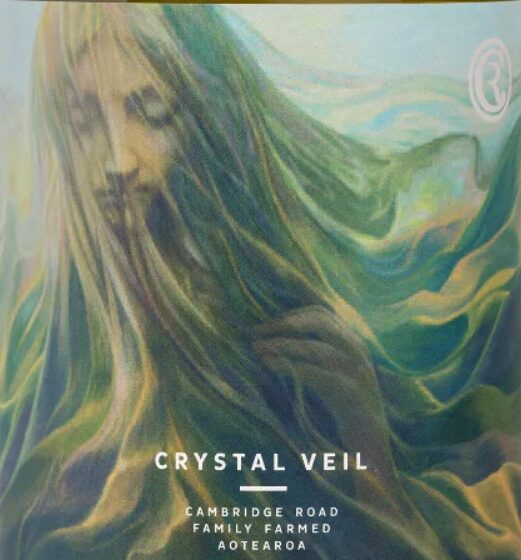
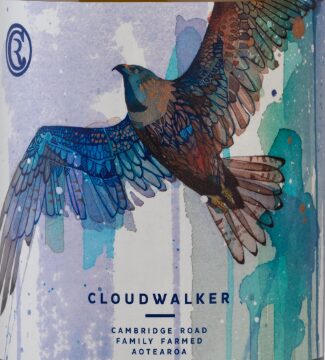
Crystal Veil 2023 $45.00Cloudwalker $45.00

“My hope is that this effort will keep these barrels in use for another 95 years, inspiring future generations to take pride in New Zealand’s winemaking heritage,” says Lance. “And ultimately, my goal is to craft the most distinctly Kiwi wines on the planet— wine that speaks not just of place, but of history, tradition, and the land that nurtures it.”

Cambridge Road has two current wines released which employ Totara cask ageing:

  • 2023 Crystal Veil – rediscovering NZ’s winemaking heritage – a Sauvignon Blanc born in Totara – Sauvignon Blanc Crystal Veil 2023 is both clean and complex. The Totara cask imparts subtle structure and texture, what Lance describes as “a phenolic gift,” giving the wine tension and finesse, along with a faint, lingering memory of fennel seed on the finish. Whole bunch pressed, wild fermented, and left on lees for nearly two years. With zero skin contact, low sulphites (23ppm), and an alcohol level of 12%.
  • 2023 Cloudwalker – this is an orange wine, with varietals of Pinot Gris, Riesling, Pinot Noir. This year’s Cloudwalker sees a more delicate extraction than typical, making it more flexible in terms of end use and food matching. Again, it’s a single vineyard expression looking into the stony, sandy, windswept fringes of the Dry River southwest of town. The Pinot Gris brings colour, spice and stone fruit dimensions, modest levels of Riesling engage further spice and citrus lift. Beyond this a subtle gift of Pinot Rose’ smooths the complexion ever so slightly. This is a wine to enjoy immediately or sometime in the next 5-6 years. Lean toward aromatic curries, brown butter, nuts and mandarin, green peppercorn, white fish & capers, that kind of direction for food matches.

Wine Bottle Trivia . . .

Bocksbeutel - design is said to be copied from a goat’s scrotum.
Bocksbeutel – design is said to be copied from a goat’s scrotum.

Bocksbeutel – An 18th-century flat flask from Franconia in Germany and Styria in  Austria, still popular in these regions although rarely seen in the export markets. Its design is said to be copied from a goat’s scrotum.

Bouteille – the French word for bottle, of which there are over 50 known shapes and sizes in France alone.

Fassle – a German wine vessel, sometimes made of leather, from which the contents are squirted into the mouth. Now used only at festivals and other celebrations.

Flagon – a wine flagon is usually made of green glass, unlike the better-known brown ones for beer or cider. It is a large, flattish bottle often used in New World countries to hold inexpensive wine.

Fiasco – Italian bottle contained in a straw basket

Fiasco – many wine guides simply describe fiasco as an Italian bottle or flask,
sometimes contained in a straw basket. Here’s how it came by the name . . . When the Etruscans began to develop glass production in the 4th century BC, they discovered that it was possible to blow a bottle in the shape of a round bubble. However, when the buddle cooled and they tried to stand it upright, it fell over – it was a fiasco, a failure. To correct the problem, the asked their women to weave flat straw bases into which the bottle was inserted. The fiasco can still be seen in Chianti and Orvieto.

Fillette – a slim half-bottle which is still widely found in the Loire Valley.

Flute d’Alsace – a tall, slender bottle used for Alsace wine.

Porron – a Spanish flask

Jug – a large bottle with a handle. It measures one US gallon and usually contains pasteurised wine of a basic quality, a favourite purchase of President Clinton when he was governor of Arkansas.

Porron – a Spanish flask with an extended neck or spout, often made of kid leather or wood. It is popular in the Basque region and regularly seen on sporting occasions when it facilitates the swift consumption of wine.

Pot – also known as le pot de Beaujolais, this is a half-litre, gently curved bottle still found in restaurants. Piat, the prominent Beaujolais negociants, have their own 75cl (centilitre) version.

Wine with Wings

By Walt Dickson. First published in Wairarapa Lifestyle Magazine, Winter 2020.

New owner of Gladstone Vineyard Eddie McDougall, also known as the Flying Winemaker. PHOTO/EMMA BROWN
The new owner of Gladstone Vineyard Eddie McDougall, also known as the Flying Winemaker. PHOTO/EMMA BROWN

Contrary to what the name might suggest, The Flying Winemaker doesn’t own a plane, nor does he hold a pilot’s licence. But there is sincerity in Eddie McDougall’s moniker, yes, he does literally jet in to make the wine.

Born in Hong Kong, based in Australia, Eddie might be relatively new on the scene in Wairarapa, but he is an established name in other parts of the world; an award-winning winemaker, chairman of the Asian Wine Review, wine judge and TV personality behind one of Asia-Pacific’s most dynamic wine brands, The Flying Winemaker.

He swooped into the region in late 2018 buying the Gladstone Vineyard with lofty ambitions to make the best and most expensive wine in New Zealand.

Last year, his first vintage, he made two special wines at Gladstone that he says, will turn heads when they’re released: a field blend of three aromatic white varietals and an icon Pinot Noir that will be positioned as ‘New Zealand’s most expensive wine and best pinot’.

Eddie grew up in Brisbane and was studying for a business degree and working as a waiter in the early 2000s when he had a wine epiphany one night. Someone handed him a glass of Alsace pinot blanc and he was hooked. He enrolled in a winemaking degree and worked vintages across Australia and Italy. In 2009, he launched his wine label, making wine in the King Valley (Victoria), and later, Margaret River (Western Australia), buying fruit and leasing space in other people’s wineries.

His big break came in 2009, when he moved back to Hong Kong to set up the city’s first urban winery, shipping frozen grapes in from Europe and Australia. That’s when he earned his Flying Winemaker name, attracting the attention of television producers. Fast-track to 2018 and he was again looking for opportunities, initially in Australia, but when nothing caught his fancy, he looked across the Tasman.

‘I was happy to go wherever good wine is made, and Gladstone ticked all the right boxes

Making it such a great acquisition was that at Gladstone, all the ‘really hard work’ has been done, he says. ‘We believe that it is still the oldest white wine vineyard in the area – the first Sauvignon Blanc grapes were planted in 1986’.

Pinot Gris and Riesling have also since been planted, and instead of making three wines, Eddie makes a blend of all three.

‘Coming here we want to represent the region, and on a brand, level to represent what our true unique selling point is …we think we can make some serious, serious wines’.

In addition to the winery site, Gladstone Vineyard also owns considerably larger blocks of vines at nearby Dakin Road, as well as leasing crops from other growers. It is from the Dakins Road block that Eddie hopes to produce his icon Pinot Noir – to be called The Wairarapa – which he says will be the most definitive wine of the region, only made in the best possible years, 2019 is one of them.

The Flying Winemaker Team

With a global team based in Hong Kong and currently exporting throughout Asia, Australia, Norway, UK and USA, the sky is the limit. But he is not ignoring the domestic market and is determined to continue Gladstone Vineyard’s reputation for hosting terrific events.

Building on the success of the nearby Harvest Festive, Eddie aims to run up to four events a year at the winery. Exactly what they will be and when, wine lovers won’t want to miss out if his super cool Rose’ Revolutions, a mainstay on the calendar in Asia, are anything to go by.

Meanwhile, if you are in the neighbourhood, the cellar door is open daily from 11 am – 5 pm (except public holidays), but don’t expect to see Eddie, after all, when you have wings you gotta fly.

For more on Eddie, visit The Flying Winemaker.

For more on Wairarapa winemakers, visit www.wairarapalifestyle.com.