
Cambridge Road Vineyard, Martinborough

Please note some of this information is from Cambridge Road’s website.

At the Luna evening in August, the presenter Joel Watson mentioned that a fellow local
vineyard, Cambridge Road Vineyard, had been experimenting using 90-year-old Totara barrels with two of its wines. So, I contacted the Vigneron, Lance Redgwell to find out more as I was immediately alerted to a potential story, as my husband who writes about whisky, has discovered that a NZ distillery, Pokeno, uses newly made totara barrels for some of its production. These have won gold medals overseas in blind-taste competitions!

The casks in question, crafted in the 1930s, are a far cry from the standard oak barrels of today. Hewn from the forest that carpeted this country, they hark back to a time before Stainless steel and imported European woods. The coopers tradition travelled with the early winegrowers to New Zealand and with them the first wines from this country began to emerge in the late 1800’s.

Ranging from 2,100 to 2,900 litres, these large-format casks, foudre or botte are commonly found in northern Italy, Germany, Austria, and Alsace and often used for high-acid varietals like Nebbiolo, Riesling, and Grüner Veltliner. “They provide lower oxidation levels and a more neutral wood profile,” explains Lance. “But beyond that, they carry mana, history, and a spirit that transcends a mere flavour profile. This is about rekindling a connection to the past and the
early history of winemaking in New Zealand.”

Discovered in a mothballed winery in the far-north town of Kaikohe, these barrels were traced back to the Brajkovich family, best known for their work with Kumeu River Wines in West Auckland. To bring the wood back to life, their restoration comes with immense challenges.

“Like restoring a vintage timber boat, it requires traditional techniques. We’ve had to use draw saws, working with the grain as they would have in the 1920s.
The wood is brittle, and every step requires immense care. It’s an ongoing journey, and we’re not there yet, it will take time.” says Lance Redgwell.

While this is a long-term project, the scale will always be limited by the number of barrels available.
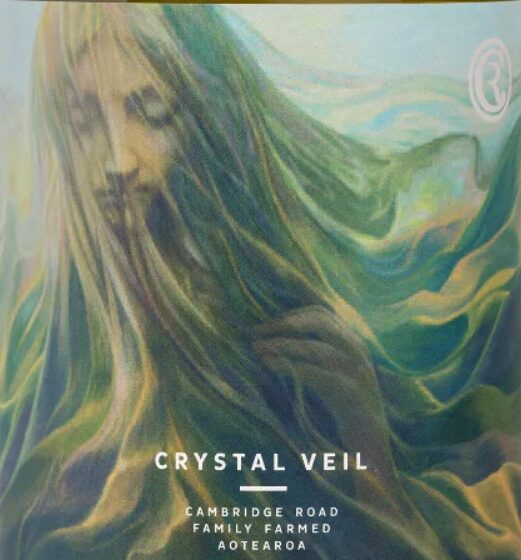
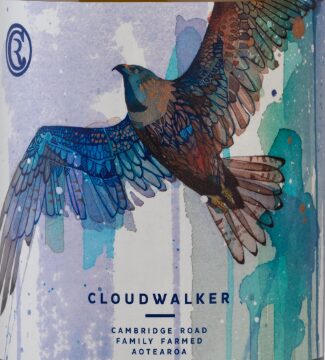
Crystal Veil 2023 $45.00Cloudwalker $45.00

“My hope is that this effort will keep these barrels in use for another 95 years, inspiring future generations to take pride in New Zealand’s winemaking heritage,” says Lance. “And ultimately, my goal is to craft the most distinctly Kiwi wines on the planet— wine that speaks not just of place, but of history, tradition, and the land that nurtures it.”

Cambridge Road has two current wines released which employ Totara cask ageing:

  • 2023 Crystal Veil – rediscovering NZ’s winemaking heritage – a Sauvignon Blanc born in Totara – Sauvignon Blanc Crystal Veil 2023 is both clean and complex. The Totara cask imparts subtle structure and texture, what Lance describes as “a phenolic gift,” giving the wine tension and finesse, along with a faint, lingering memory of fennel seed on the finish. Whole bunch pressed, wild fermented, and left on lees for nearly two years. With zero skin contact, low sulphites (23ppm), and an alcohol level of 12%.
  • 2023 Cloudwalker – this is an orange wine, with varietals of Pinot Gris, Riesling, Pinot Noir. This year’s Cloudwalker sees a more delicate extraction than typical, making it more flexible in terms of end use and food matching. Again, it’s a single vineyard expression looking into the stony, sandy, windswept fringes of the Dry River southwest of town. The Pinot Gris brings colour, spice and stone fruit dimensions, modest levels of Riesling engage further spice and citrus lift. Beyond this a subtle gift of Pinot Rose’ smooths the complexion ever so slightly. This is a wine to enjoy immediately or sometime in the next 5-6 years. Lean toward aromatic curries, brown butter, nuts and mandarin, green peppercorn, white fish & capers, that kind of direction for food matches.

Go NZ: A wine tour through and West Auckland’s best wineries

Maggie Wicks, NZ Herald | 18 June 2020

West Auckland’s wines are produced close to the city but their origins are a world away, writes Maggie Wicks

A view of the vineyards, Westbrook Winery, Auckland. Photo / Supplied

Dalmatian history is everywhere in West Auckland. You can see it as you drive. As central Auckland falls away, it gives way to suburbs, then motorways, then the low-lying industry of car yards and forklift hires. Finally, the paddocks and tractors and fruit trees of the countryside, only 25 minutes from town.

As the landscape changes, so does the language. Viksich. Vitasovich. Yukich and Fistonich. The history is written directly on to the street signs and the businesses.

And then there is wine. Award-winning, experimental, modern and traditional. It’s all here.

The late Josip Babich, who planted his first wines in 1912 when he was a teenager. Photo / Supplied

Kumeu is one of New Zealand’s most historic wine regions. Babich, one of the region’s best-known wineries, has been producing wine for 100 years. Josip Babich was just 14 years old when he left his home in Dalmatia, and set sail for New Zealand. He was alone – he never saw his parents again. He was here to dig kauri gum with his four brothers – he ended up establishing one of New Zealand’s most historic vineyards.

Down the road at Kumeu River, history is in the making. The Brajkovich family left Croatia for New Zealand in the 1930s, and have gone on to be internationally recognised as setting a benchmark for non-Burgundy chardonnays.

A world-leading chardonnay

In 2014, a very special blind tasting took place. London wine distributors Farr Vintners brought together a room of world-leading wine experts, critics and writers. Each of Kumeu River’s four chardonnays were tasted against white burgundies (chardonnay grown and produced in the French region of Burgundy) from the finest French producers. And the result? Kumeu triumphed over the top white burgundies in every category except one – where it came first-equal.

The Brajkovich family, the owners of Kumeu River. Photo / Supplied

Kumeu River was started by Mate and Melba Brajkovich, and the company is now run by their four children. Between them there is a Master of Wine, a hospitality expert, a chemical engineer and a marketing professional – they really couldn’t have planned it better.
Rather than pitch into the juice with commercially cultivated yeast, they use a natural fermentation, leaving it to the ravages of the wild yeasts in the atmosphere. The result is nothing short of gorgeous. This August they’ll release the 2019 Hunting Hill chardonnay, which they say it’s their best ever – do not miss out.
This is beautiful country to drive through, but you may not recognise any of it past Swanson, which is the last passenger stop on the line. These days the lines further out carry only stock, no passengers, which is a crying shame. A train would be a handy and safe way to get home after a day of wine tasting.
In the Ararimu Valley, Westbrook is named after an old station, between Waikomiti and Glen Eden, which closed in the 80s. The winery was owned by the Ivisovich family for 85 years, until they sold to another local family just a few years ago. Here they offer not just a wine tasting, but an education in wine and food matching.

An education in wine pairing

Food and drink at Westbrook, Riverhead. Photo / Supplied

Order the cheese and wine platter, and you’ll find a surprise on there – an outstanding bad match, which the server will delight in watching you discover for yourself. It’s a great lesson, and they’ll make sure you end on something delicious.

As you drive through Kumeu, you’ll realise that they’re experimental out here. Whereas Marlborough specialises in sauvignon blanc, in Kumeu they’re always testing and adjusting, trying new grapes, old grapes, fashionable styles and unheard of ones. Albarino is popular at the moment – it’s the chardonnay drinker’s sauv, and you’ll find it at many of the Kumeu cellar doors.
At the Hunting Lodge you’ll find an orange wine, a love-it or loathe-it drip that is fermented with the skins on. They’ve most recently released the Chardy Jack – bourbon-barrel-fermented chardonnay that could have happily come home with me.

An historic Auckland homestead

The Conservatory dining room at The Hunting Lodge, Waimauku. Photo / Supplied

Once a private country estate, the historic 19th-century lodge has been hosting Aucklanders’ boozy lunches for five decades. This is also the site of New Zealand’s first sauvignon blanc. Now, more than 70 per cent of wine produced in New Zealand is sauv, and the Hunting Lodge still bottles its Homeblock sauvignon from 40-year-old vines.

At the lodge, guests can choose a pizza to nibble at the lawn bar, play petanque in the family area, visit the cellar door for a tasting (free if you buy a bottle), or take a table in the airy all-white conservatory, where the windows run from floor to ceiling.
The restaurant has taken chef Des Harris from Clooney and put him in charge of this beautiful dining area, where he works with a permaculturalist to create a sustainable farm-to-table experience.

Food and wine at The Hunting Lodge, Waimauku. Photo / Supplied

We entered starving, we left stuffed. There was homegrown roasted beetroot served with ricotta and huge wedges of focaccia, a painterly pumpkin soup splattered with oils and petals and seeds, followed by lamb shoulder with fricelli pasta. After that, passionfruit and rosemary jellies with salted caramel fudge, and finally a glass of amaretto on ice appeared. Monsieur, it is only wafer thin…

Sated, satisfied, and a bit fuzzy around the edges, we walked out into the cold night, where a taxi was waiting. It was a dreamy 35 minutes back to Auckland along the dark and empty roads. An easy end to an easy, and excellent, day out.

Where to visit on a wine tour of Kumeu

Babich Wines
For a history lesson and great hospitality, plus the terrace is the perfect place on a sunny day.

babichwines.com
Soljans
Soljan’s was established in 1937 by Bartul Soljan, and is one of the oldest wineries in the country. It remains a proud family-owned and operated vineyard, and visitors can take a tour with a member of the family. Visit the cellar door for a wine flight, from the sparkling moscato to the tawny port, then stay for lunch.

soljans.co.nz
Kumeu River
A cellar door only. Stop by for a tasting of those famous chardonnays, and to learn about the history of this family-run business.

Kumeuriver.co.nz
Coopers Creek
A friendly cosy atmosphere by the fireside in winter, and gigs and picnics on the lawn in summer.

cooperscreek.co.nz
Westbrook
Beautiful dining area overlooking manicured lawns. Explore the grounds and experience the wine and cheese pairing.

Westbrook.co.nz
The Hunting Lodge
The perfect place to finish, from pizza to fine dining, and some unique bottlings.

Thehuntinglodge.com

How to do it

A barrell at Soljan's, Kumeu. Photo / Supplied
A barrell at Soljan’s, Kumeu. Photo / Supplied

It’s a only short drive, but if everyone wants to wine taste, arrange a driver.
Both NZ Wine Pro (nzwinepro.co.nz) and Fine Wine Tours (finewinetours.co.nz) offer door-to-door service with an expert on hand to introduce you to the history, the winemakers and the wines you taste, plus lunch included.