New Zealand 2025 harvest report: A return to form

Emma Jenkins MW Decanter | 2 May, 2025

The 2025 New Zealand wine harvest has been widely welcomed following 2024’s reduced yields. Across the regions, winemakers reported not only a normalisation of volumes but also excellent fruit quality – notable in a country where diverse geography often leads to variability.

A warm, dry spring set the season up well, though a cooler, wetter December and January period tested nerves before settling into a classic Indian summer. While perhaps not as straightforward as the outstanding 2024 vintage, 2025 looks set to produce wines of finesse and charm across the regions and varieties, with the first releases just months away.

Auckland

Michael Brajkovich MW of Kumeu River expressed relief at a ‘normal’ sized vintage after two seasons down by 35-40%. Auckland experienced the driest summer since 1958, with consistent warmth but no heat spikes.

‘The fruit ripened evenly and with gradual aroma and flavour development,’ Brajkovich said. Chardonnay was once again the star, arriving early and in pristine condition.

Gisborne

Described as a ‘magnificent vintage’ by Kirsten Searle of Matawhero, 2025 brought full physiological ripeness and a return to normal yields after two lighter years. Chardonnay excelled, providing excellent fruit for both table wines and sparkling bases.

Searle also highlighted the Gewürztraminer from Matawhero’s Riverpoint vineyard as particularly impressive – a fitting celebration for the winery’s 50th anniversary.

Hawke’s Bay

There is genuine excitement in Hawke’s Bay, with some suggesting that 2025 may rival the renowned 2013 vintage. Ben Tombs noted Craggy Range’s earliest-ever harvest, with Chardonnay off the Gimblett Gravels picked on 8 February.

Whites show ‘electric flavour profiles with moderate alcohol’ while Syrah, despite late-summer humidity challenges, enjoyed extended hang time without excessive sugar accumulation, promising finely structured, vibrant reds.

Wairarapa

After four small vintages, Martinborough celebrated a strong yield. A relatively calm spring and lighter winds led to strong shoot growth and abundant flowering. Intensive canopy management paid off with Pinot Noir showing a savoury, charming profile.

Tombs commented on lower acidity and softer tannins compared to the more firmly structured recent vintages at Craggy Range’s Te Muna vineyard.

Nelson

Todd Stevens of Neudorf reflected positively on the vintage: ‘It’s still early but the whites appear beautifully balanced, while the Pinots show poise and should present very well.’ Initial signs point to good consistency across this smaller but significant region.

Marlborough

Murray Cook of Dog Point summed up 2025 as ‘a season of patience’. ‘With generous yields, the fruit took some time to ripen fully. Thankfully, we were blessed with classic dry and warm conditions which kept fruit quality high over what was our longest harvest period (46 days) in 24 years,’ he added.

However, with global inventories still high amid flat consumption and geopolitical uncertainties, many producers opted to leave fruit on the vines. The upside: only the best fruit was picked and consumers can look forward to excellent quality from this key region.

North Canterbury

A rollercoaster year, with Greystone’s Dom Maxwell describing it as one that ‘challenged us, then offered a lot, then challenged us again, and finally delivered in the end’.

Pure fruit flavours and clean fermentations made it a worthwhile ride. ‘We’re excited about the quality we have in the winery,’ Maxwell added.

Central Otago / Waitaki

Valli’s Jen Parr described an unusually compressed harvest of around half the usual span. Despite spring frosts affecting yields, she was thrilled with the ‘tremendous concentration’ and ‘crazy colour’, particularly in Gibbston and Bendigo.

Small berries and clean fruit were common themes with Parr commenting that wines possess richness and an appealing ‘joyful’ quality that should drink well young but also reward a few years in bottle.

The Waitaki Valley – often marginal – had one of its best vintages in recent years, for both ripeness and volume.
French wine crisis ‘one of most serious in history’, warns industry

Many winemakers have been facing a ‘catastrophic’ economic situation with rising costs and full cellars, industry leaders warned as they met France’s agriculture minister this month.

Chris Mercer, Decanter | July 18, 2025

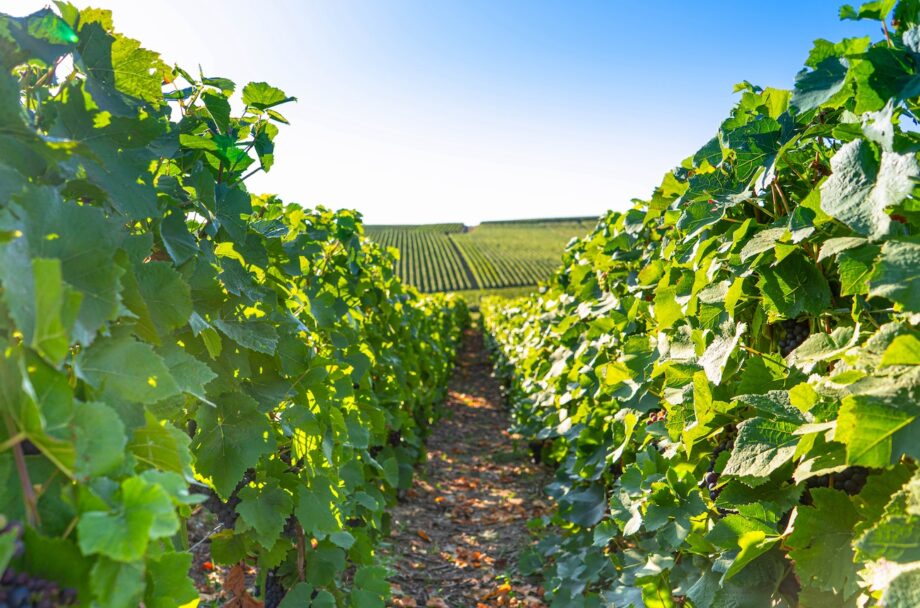
French vineyards, Credit: wilatlak villette / Moment via Getty Images

French wine is in a crisis that constitutes ‘one of the most serious in its history’, with both structural and cyclical challenges, industry bodies warned this week as they met with the country’s agriculture minister, Annie Genevard.

Winemakers currently face a ‘catastrophic’ economic situation, said the groups, including the Association Générale de la Production Viticole (AGPV), and Jeunes Agriculteurs, which represents young vintners.

Consumer markets are saturated, many cellars are ‘full to bursting’ ahead of the 2025 harvest and costs are rising, they said.

Producers are also dealing with repeated climatic hazards and international trade issues.

Calling for more urgent measures to help ‘save our wine sector’, they warned the industry is at a turning point and the choice is to either support it or witness its collapse.

France’s government has already offered to compensate growers to rip out vines to reduce supply. In late 2024, growers applied to grub up around 27,00 hectares in total, using around €109m of the €120m budget.

Most of the money left over will be used to create an emergency fund for young winemakers, the trade bodies said following their meeting with the agriculture minister this week.

Other measures were also discussed, such as protecting farmers’ income and the possibility of grubbing-up more vines. The trade bodies praised the minister for listening to their concerns.

French wineries aren’t the only ones facing difficulties. At the EU level, the European Commission recently proposed reforms to help make the bloc’s wine sector more competitive.

Proposals include efforts to promote wine but also to allow member states to pay producers for ‘green harvesting’, to cut supply.

Funds have previously been released for crisis distillation of excess wine, and this policy has made a return in some EU countries in recent years.

Several vineyard regions worldwide have also been grappling with oversupply, from parts of California to some areas of Australia.

Global wine consumption fell to its lowest level since 1961 last year, albeit this still constituted 214 million hectolitres (mhl), said the International Organisation of Vine & Wine recently.

Martinborough pinot noir named among world’s best as judges hail New Zealand vineyards as ‘extraordinary’

Alan Granville Stuff | June 25, 2025

Craggy Range in Martinborough won a Best in Show for its pinot noir.Craggy Range
Craggy Range in Martinborough won a Best in Show for its pinot noir. Craggy Range

A Martinborough vineyard is toasting its success after being awarded a prestigious ‘Best in Show’ honour at this year’s Decanter World Wine Awards.

Craggy Range’s 2024 pinot noir was the only wine from New Zealand to get the top honour.

More than 200 judges tasted thousands of wines from 57 countries and only the top 50 get a Best in Show award. That amounts to just 0.3% of all wines tasted.

Craggy Range chief winemaker Ben Tombs called it a “fantastic” achievement.

“It is the most influential wine awards in the world,” he told Stuff Travel.

“It’s an awesome accolade to have. It goes towards our ambition … to stand along the great wine estates of the world. So it gives you a lot of confidence.”

The judges hailed the pinot noir as “an uncompromisingly dark wine that plays to New Zealand’s strengths in terms of purity and vivacity of fruit: raspberry, cherry and plum come streaming from the glass, and the fine meshing of fruit and oak in this wine adds to its lustre and appeal”.

Craggy Range chief winemaker Ben Tombs called it a “fantastic” achievement.Craggy Range
Craggy Range chief winemaker Ben Tombs called it a “fantastic” achievement.
Craggy Range

“In the mouth, the wine is both long and broad but not in any way clumsy, and the fruit flavours (raspberry to the fore again) are hypnotic.“

Tombs said the 2024 vintage in Martinborough is “really strong and unique”: “It was quite a warm and dry summer period, and you had these really small berries that gave heaps of concentration.”

He added the vintage was “pretty iconic” and “it just translated all the way through to wine … into the glass”.

Tombs said the award is a big boost for the area.

“It’s special for Martinborough as well. We’re a tiny little region. It’s only 500 hectares of actual pinot noir that’s planted, which is minuscule in the scheme of it.

“So to have that award for Martinborough is incredible.”

Globally, New Zealand finished 11th with a total of 303 medals when all the Best in Show, platinum, gold, silver and bronze awards are handed out by Decanter. France, Italy and Spain were the top three countries.

But where Aotearoa comes into its own is when the results were broken down by the number of medals earned relative to a country’s vineyard area and wine production volume.

It’s similar to the Olympics when a country’s medal tally is rated by population rather than the total number of podium places.

Decanter’s two key indicators are:

  • Medals per 1000 hectares of vineyard (kha) – showcasing quality output relative to land.
  • Medals per million hectolitres of wine (mhl) – indicating how much of a country’s production reaches an award-winning standard.

Here, New Zealand finished second in the world, with 2.94 medals/kha and 84.2 medals/mhl.

Judges wrote: “Despite its modest size, the country achieved 303 medals from just 3.6 million hectolitres of wine – an extraordinary concentration of quality.”

Greece finished top of this metric.

As for who will win next year, Tombs is expecting something special from both Craggy Range vineyards in Martinborough and Hawke’s Bay.

“2025 is shaping up to be quite, quite different, but really strong again. It’s a different flavour profile. It was actually quite overcast throughout summer, so we’ve actually got some really more savoury pinot this year.

“But in Hawke’s Bay, chardonnay is a standout.”

Move over France … there’s a new kid on the European wine-making block

Move over France … there’s a new kid on the European wine-making block and it might just be a little too close for comfort, writes Fiona Whitty, & explore
the Wine Garden of England.

Believe it or not the United Kingdom is emerging as an exciting force in the wine-making industry, producing bottles that even the fussy French sometimes prefer.

In a now-notorious taste test among Parisien restaurateurs three English sparkling wines were pitted against three elite Champagnes. The English challengers came out on top.

And last year the UK’s biggest wine producer, Chapel Down, headed to France’s Champagne region under the guise of the literally translated Chapelle en Bas to put their own fizz against a top local brand. The result? A staggering 60% preferred the English version.

Now in a further nod to the quality of English sparkling, French Champagne giant Taittinger has hopped across the Channel and snapped up land near London – recently producing their first-ever non-French fizz.

There are some 700 vineyards dotted around England and Wales, blossoming thanks to warmer weather and, in some areas, chalky soil similar to that in the Champagne region.

And the county of Kent, southeast of London and where Domaine Evremond is based, is arguably the perfect place to start a wine discovery. It has more vineyards than anywhere else and garners a fantastic reputation, particularly for its sparkling.

Kent is dubbed the Garden of England thanks to its fantastic fruit growing. But viticulture fans could start by diving into the Wine Garden of England, a small band of esteemed vineyards that offer great experiences and fun events – and sometimes even top-class restaurants and accommodation.

We’ve etched out an itinerary below. As public transport in rural areas can be limited, hiring a car is best once you’ve caught a 55-minute train from London to Canterbury in the heart of Kent wine country. Companies generally offer automatics as well as manuals.

So, with the autumn harvest well under way, designate your driver and start popping open those Kent corks.

DAY ONE

Once off the train, get a feel for beautiful Canterbury. Its magnificent cathedral and city walls are testament to its 1400-year-old history.

For your first tasting, swing by Corkk, a shop and wine bar where two-thirds of its stock is home-produced, much of it from Kent.

Enjoy a tutored wine flight, a glass of a wine of the week or a sample from its vending machine-style wine taster, which allows you to buy small measures from 10 different wines.

Staff will be delighted to guide you … they’re experts at Britain’s best specialist retailer, as nominated by viticulture bible Decanter.

Afterwards motor over to Simpsons Wine Estate for a vineyard tour followed by a tutored tasting.

It’s run by Ruth and Charles Simpson, who had already built up an award-winning vineyard in France when they spotted England’s potential and started up in Kent 12 years ago. Their Derringstone Pinot Meunier is deliciously crisp and fresh.

For some shut-eye head to the Pig at Bridge Place. The Pigs, a small but perfectly formed band of hotels, have become a national institution, revered for their character, warm service, sustainability and support for local produce.

This one doesn’t disappoint, with quirky lounges, roaring fires, wood panels, roll-top baths and antique furniture. Late afternoon cake hour with help-yourself homemade cakes and tours of their extensive kitchen garden are additional treats.

You’ll see the latter’s fruits in much of the restaurant’s menus, mostly sourced within a 40km radius – like its roasted squash starter and lemon sole with foraged sea buckthorn.

Its drinks menu reflects the same ethos; its own Piggy Fizz was made in nearby Sussex and there are over 30 other English wines available, many from Kent.

DAY TWO

Take a leisurely weave across the rolling Kent Downs countryside to Balfour Winery.

In 2007, their Brut Rose was the first ever English wine to win an International Wine Challenge gold.

Their new Winemakers’ Kitchen restaurant features dishes designed to complement their different wines, rather than the other way round.

Try pan-seared scallops in estate cider sauce served with Balfour’s Skye’s Chardonnay, followed by slow-roasted beef short rib with Luke’s Pinot Noir.

Save a bit of room and head over to Chapel Down, the UK’s biggest producer, for a tour followed by a tutored wine and cheese pairing, where you may discover how a creamy extra mature cheddar
suits the apple-freshness of the Kit’s Coty chardonnay.

In the shop, you can pick up a bottle of the Kit’s Coty Coeur de Cuvee 2016, recently named Supreme Champion – England’s best wine – at the WineGB awards.

Bed down at the Grape Escape, a cosy cottage based at another nearby vineyard, Biddenden – and watch the sunset over the vines from the wood-fired hot tub.

Kent’s chalky soil is similar to the Champagne region, making it ideal for producing sparkling wine.

DAY THREE

Stop off at the delightful Loddington Farm Shop – grab their Owlet juices made from fruit grown there – then enjoy lunch over at Bowleys at the Plough, a pub-cum-restaurant that dates to 1483.

Alongside a Kentish tasting menu try Bowleys’ own wine, made at the nearby Redhill Winery.

Afterwards, try one of the regular tastings at the Silverhand Estate, the UK’s largest organic vineyard where sheep graze between the vines to boost soil health and aid natural fertilisation and pest control.

For lights out try the Tickled Trout pub near Maidstone. Owned by Balfour Winery, the drinks menu includes several of its wines by the glass or bottle as well as tasting flights.

ON THE WAY BACK

Call in at Westwell, the Kent wine family’s quirky cousin. In autumn visitors can catch the odd supper club and – on most weeks – Pizza Fridays when a pizza van rolls up outside the fairy-light illuminated winery.

Don’t miss the Pinot Meunier Multi Vintage, a tongue-tingling fizz made without additives that recently bagged best innovative sparkling at the WineGB awards.

Make one last stop at the Tudor Peacock, a wine bar and shop in an old hall dating to the 14th century. Based in Chilham near the new Domaine Evremond winery, it offers samples of Kent’s finest plus talks and themed tastings in a stunning vaulted tasting room.

Nelson’s Tohu Wines the toast of New Zealand

Nelson’s Tohu Wines are the toast of the New Zealand wine industry after taking out a coveted ‘Best in Show’ prize at the 2021 Decanter World Wine Awards.

Over the course of two weeks of rigorous wine-testing in London in June, Tohu’s Whenua Matua Chardonnay stood out from amongst the 18,000 wines judged, to win one of the 50 Best in Show accolades.

As the only New Zealand winery to receive a Best in Show award, it was a major achievement for Tohu – the world’s first Māori-owned winery.

French wines dominated the Best in Show category with 15 awards, along with nine from Spain and seven from Italy.

Decanter organisers said while New Zealand was more well-known for its Sauvignon Blanc, New Zealand Chardonnay had been quietly building its success in recent years. At the 2021 awards, Chardonnays from less-expected places like Canada and Germany also received Best in Show awards.

Tohu Wines’ 2018 Whenua Matua Chardonnay received one of the 50 Best in Show accolades at the 2021 Decanter World Wine Awards.

The Whenua Matua Chardonnay 2018 is a single-vineyard wine grown in the rich clay soils of the Upper Moutere region. The only other time a Nelson winery has won best in show for chardonnay was in 1992 when Neudorf Winery won for its 1991 Chardonnay, also grown in similar Moutere-clay soil.

Tohu winemaker Bruce Taylor said the Chardonnay was all about showcasing a single vineyard.

“Whenua Matua translates as ‘significant lands’ and the changing angles and orientations of the vineyard blocks lend themselves to the complexities of winemaking.

“The wine is selected from the very best barrels of our hand-picked, whole-bunch pressed 15-year-old Chardonnay vines.

“These single-vineyard wines hold great structure, exceptional varietal characteristics, texture and complexity.”

Owned by the Kono food and beverage company, Tohu Wines was established in 1998 and around 200,000 cases of wine are produced at its winery in the Awatere Valley.

Kono chief executive Rachel Taulelei says the company is immensely proud of winning the Decanter Best in Show award.

Tohu Wines also received a Gold Medal for its 2020 Sauvignon Blanc at the Decanter Awards.

“The chardonnay is a special release for us and follows on from our 23-year celebration last year. Each wine in the Whenua series is an expression of the uniqueness of our tūranagawaewae, our standing place, and our connection to the land.

“To be acknowledged and singled out from thousands of wines in such a prestigious wine competition is confirmation that care for the land and its bounty is tōtika, a beautiful balance.”

Jul 15 2021 | Stuff.co.nz