New Zealand 2025 harvest report: A return to form

Emma Jenkins MW Decanter | 2 May, 2025

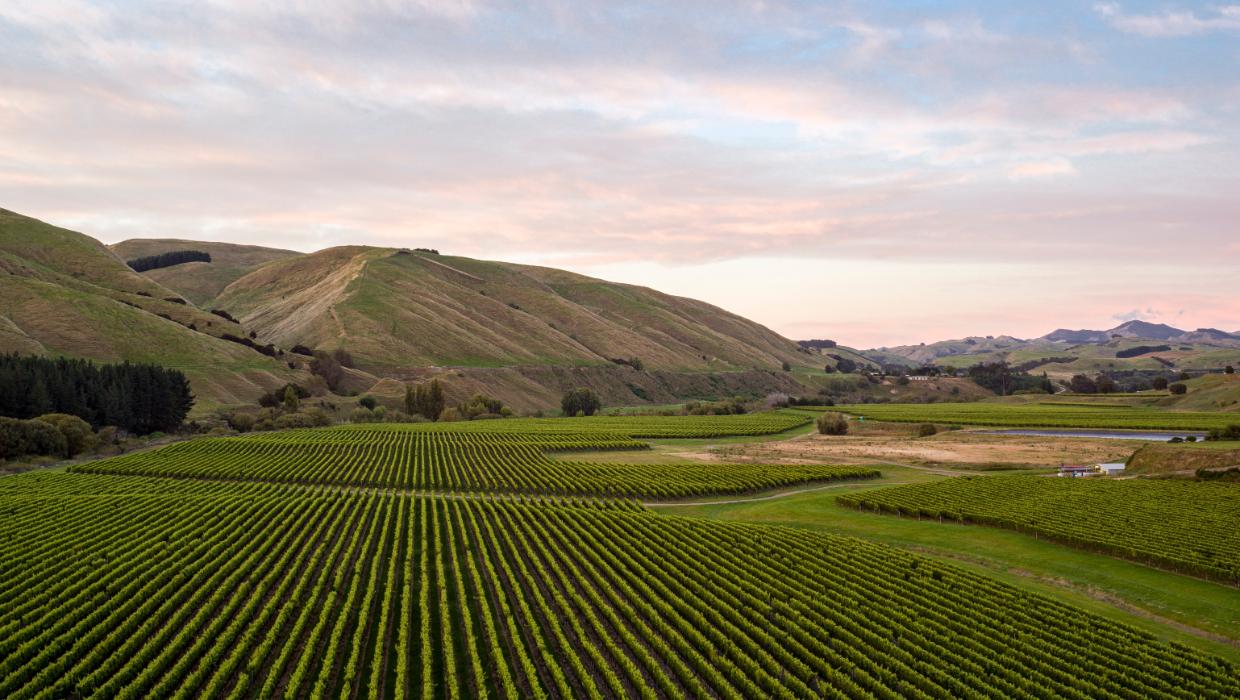
The 2025 New Zealand wine harvest has been widely welcomed following 2024’s reduced yields. Across the regions, winemakers reported not only a normalisation of volumes but also excellent fruit quality – notable in a country where diverse geography often leads to variability.

A warm, dry spring set the season up well, though a cooler, wetter December and January period tested nerves before settling into a classic Indian summer. While perhaps not as straightforward as the outstanding 2024 vintage, 2025 looks set to produce wines of finesse and charm across the regions and varieties, with the first releases just months away.

Auckland

Michael Brajkovich MW of Kumeu River expressed relief at a ‘normal’ sized vintage after two seasons down by 35-40%. Auckland experienced the driest summer since 1958, with consistent warmth but no heat spikes.

‘The fruit ripened evenly and with gradual aroma and flavour development,’ Brajkovich said. Chardonnay was once again the star, arriving early and in pristine condition.

Gisborne

Described as a ‘magnificent vintage’ by Kirsten Searle of Matawhero, 2025 brought full physiological ripeness and a return to normal yields after two lighter years. Chardonnay excelled, providing excellent fruit for both table wines and sparkling bases.

Searle also highlighted the Gewürztraminer from Matawhero’s Riverpoint vineyard as particularly impressive – a fitting celebration for the winery’s 50th anniversary.

Hawke’s Bay

There is genuine excitement in Hawke’s Bay, with some suggesting that 2025 may rival the renowned 2013 vintage. Ben Tombs noted Craggy Range’s earliest-ever harvest, with Chardonnay off the Gimblett Gravels picked on 8 February.

Whites show ‘electric flavour profiles with moderate alcohol’ while Syrah, despite late-summer humidity challenges, enjoyed extended hang time without excessive sugar accumulation, promising finely structured, vibrant reds.

Wairarapa

After four small vintages, Martinborough celebrated a strong yield. A relatively calm spring and lighter winds led to strong shoot growth and abundant flowering. Intensive canopy management paid off with Pinot Noir showing a savoury, charming profile.

Tombs commented on lower acidity and softer tannins compared to the more firmly structured recent vintages at Craggy Range’s Te Muna vineyard.

Nelson

Todd Stevens of Neudorf reflected positively on the vintage: ‘It’s still early but the whites appear beautifully balanced, while the Pinots show poise and should present very well.’ Initial signs point to good consistency across this smaller but significant region.

Marlborough

Murray Cook of Dog Point summed up 2025 as ‘a season of patience’. ‘With generous yields, the fruit took some time to ripen fully. Thankfully, we were blessed with classic dry and warm conditions which kept fruit quality high over what was our longest harvest period (46 days) in 24 years,’ he added.

However, with global inventories still high amid flat consumption and geopolitical uncertainties, many producers opted to leave fruit on the vines. The upside: only the best fruit was picked and consumers can look forward to excellent quality from this key region.

North Canterbury

A rollercoaster year, with Greystone’s Dom Maxwell describing it as one that ‘challenged us, then offered a lot, then challenged us again, and finally delivered in the end’.

Pure fruit flavours and clean fermentations made it a worthwhile ride. ‘We’re excited about the quality we have in the winery,’ Maxwell added.

Central Otago / Waitaki

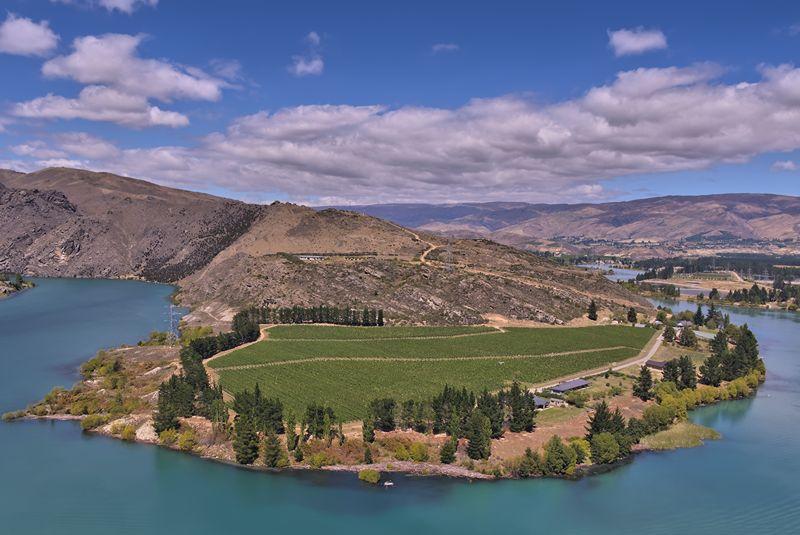
Valli’s Jen Parr described an unusually compressed harvest of around half the usual span. Despite spring frosts affecting yields, she was thrilled with the ‘tremendous concentration’ and ‘crazy colour’, particularly in Gibbston and Bendigo.

Small berries and clean fruit were common themes with Parr commenting that wines possess richness and an appealing ‘joyful’ quality that should drink well young but also reward a few years in bottle.

The Waitaki Valley – often marginal – had one of its best vintages in recent years, for both ripeness and volume.
The World’s 50 Best Vineyards 2025: the 51-100 list revealed

Emma Sleight, 50Best – 5 Nov 2025

View the extended list of The World’s 50 Best (actually 51st to 100th) Vineyards.

The list of The World’s 50 Best Vineyards 2025 will be revealed at a live awards ceremony in Margaret River, Western Australia, on 19 November.

From established names to rising stars, find out more about the storied estates ranked 51st to 100th in the global ranking, each of which dazzles with world-class terroir, immersive visitor experiences, and unforgettable hospitality.

The 51-100 New Zealand wineries in this prestigious list include:

No.100 Ata Rangi, Martinborough

Ata Rangi in Martinborough is a boutique, organic estate that has earned New Zealand Grand Cru status. It was founded by a dairy farmer who successfully turned his hand to grape growing (with the help of his wife and sister), hence its name, which translates to ‘new beginnings.’

No.100 Ata Rangi, Martinborough
No.98 Felton Road, Central Otago

Felton Road is a pioneer of natural wine and an artisan producer of pinot noir, chardonnay and riesling vintages in New Zealand’s Central Otago region. Surrounded by snow-capped mountains, African Boer goats roam the rugged landscape of these organic and biodynamic vineyards.

No.98 Felton Road, Central Otago
No.90 Kumeu River Wines, Auckland

Kumeu River Wines in Auckland features wines made by New Zealand’s first-ever Master of Wine, Michael Brajkovich. Covering 30 hectares of heavy clay soil over sandstone, the vineyard is known for producing world-class chardonnay.

No.90 Kumeu River Wines, Auckland
No.89 Greystone Winery, Waipara

Greystone Winery in Waipara, on New Zealand’s South Island, is an organic, regenerative wine estate that offers guests off-grid accommodation in a glass eco-cabin overlooking the vineyard.

No.89 Greystone Winery, Waipara
No.52 Wairau River Wines, Marlborough

Wairau River Wines was founded by viticulturalist Hamish Rose and his brother and winemaker, Sam Rose. This idyllic New Zealand vineyard is renowned for crafting award-winning sauvignon blanc.

No.52 Wairau River Wines, Marlborough

The list of The World’s 50 Best Vineyards 2025 has landed.

Cambridge Road Vineyard, Martinborough

Please note some of this information is from Cambridge Road’s website.

At the Luna evening in August, the presenter Joel Watson mentioned that a fellow local
vineyard, Cambridge Road Vineyard, had been experimenting using 90-year-old Totara barrels with two of its wines. So, I contacted the Vigneron, Lance Redgwell to find out more as I was immediately alerted to a potential story, as my husband who writes about whisky, has discovered that a NZ distillery, Pokeno, uses newly made totara barrels for some of its production. These have won gold medals overseas in blind-taste competitions!

The casks in question, crafted in the 1930s, are a far cry from the standard oak barrels of today. Hewn from the forest that carpeted this country, they hark back to a time before Stainless steel and imported European woods. The coopers tradition travelled with the early winegrowers to New Zealand and with them the first wines from this country began to emerge in the late 1800’s.

Ranging from 2,100 to 2,900 litres, these large-format casks, foudre or botte are commonly found in northern Italy, Germany, Austria, and Alsace and often used for high-acid varietals like Nebbiolo, Riesling, and Grüner Veltliner. “They provide lower oxidation levels and a more neutral wood profile,” explains Lance. “But beyond that, they carry mana, history, and a spirit that transcends a mere flavour profile. This is about rekindling a connection to the past and the
early history of winemaking in New Zealand.”

Discovered in a mothballed winery in the far-north town of Kaikohe, these barrels were traced back to the Brajkovich family, best known for their work with Kumeu River Wines in West Auckland. To bring the wood back to life, their restoration comes with immense challenges.

“Like restoring a vintage timber boat, it requires traditional techniques. We’ve had to use draw saws, working with the grain as they would have in the 1920s.
The wood is brittle, and every step requires immense care. It’s an ongoing journey, and we’re not there yet, it will take time.” says Lance Redgwell.

While this is a long-term project, the scale will always be limited by the number of barrels available.

Crystal Veil 2023 $45.00Cloudwalker $45.00

“My hope is that this effort will keep these barrels in use for another 95 years, inspiring future generations to take pride in New Zealand’s winemaking heritage,” says Lance. “And ultimately, my goal is to craft the most distinctly Kiwi wines on the planet— wine that speaks not just of place, but of history, tradition, and the land that nurtures it.”

Cambridge Road has two current wines released which employ Totara cask ageing:

  • 2023 Crystal Veil – rediscovering NZ’s winemaking heritage – a Sauvignon Blanc born in Totara – Sauvignon Blanc Crystal Veil 2023 is both clean and complex. The Totara cask imparts subtle structure and texture, what Lance describes as “a phenolic gift,” giving the wine tension and finesse, along with a faint, lingering memory of fennel seed on the finish. Whole bunch pressed, wild fermented, and left on lees for nearly two years. With zero skin contact, low sulphites (23ppm), and an alcohol level of 12%.
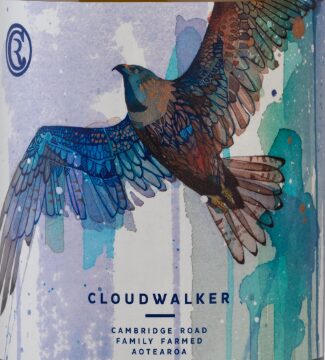
  • 2023 Cloudwalker – this is an orange wine, with varietals of Pinot Gris, Riesling, Pinot Noir. This year’s Cloudwalker sees a more delicate extraction than typical, making it more flexible in terms of end use and food matching. Again, it’s a single vineyard expression looking into the stony, sandy, windswept fringes of the Dry River southwest of town. The Pinot Gris brings colour, spice and stone fruit dimensions, modest levels of Riesling engage further spice and citrus lift. Beyond this a subtle gift of Pinot Rose’ smooths the complexion ever so slightly. This is a wine to enjoy immediately or sometime in the next 5-6 years. Lean toward aromatic curries, brown butter, nuts and mandarin, green peppercorn, white fish & capers, that kind of direction for food matches.

Looking Back – Luna Estate Martinborough w/ Joel Watson, Aug ’25

Sustainable, restorative farming, letting the fruit do all the talking

What a fabulous evening for everyone who attended. With an entertaining presenter and wines made in the Alsatian style that were different, for our tasting pleasure.

While the wines were above our normal price range, people enjoyed the different wine styles and orders were healthy. This is encouraging to your committee. Their cost to members was offset by a generous discount and the waiving of the delivery fee. Thank you Luna Estate for your support and
great tasting.

A reminder of the wines we tried on the night:

  • Luna Brut Rose a delightful welcoming wine for the evening
  • Luna Estate Sauvignon Blanc 2023 a blend of two very different blocks from Bue Rock Vineyard
  • Luna Estate Pinot Gris 2023
  • Luna Estate Pinot Meunier Rose 2024
  • Luna Estate Eclipse Chardonnay 2023 mature vine fruit used for this drop
  • Luna Estate Blue Rock Pinot Noir 2021 a blend from both of their vineyards
  • Luna Estate Eclipse Pinot Noir 2021

Martinborough pinot noir named among world’s best as judges hail New Zealand vineyards as ‘extraordinary’

Alan Granville Stuff | June 25, 2025

Craggy Range in Martinborough won a Best in Show for its pinot noir.Craggy Range
Craggy Range in Martinborough won a Best in Show for its pinot noir. Craggy Range

A Martinborough vineyard is toasting its success after being awarded a prestigious ‘Best in Show’ honour at this year’s Decanter World Wine Awards.

Craggy Range’s 2024 pinot noir was the only wine from New Zealand to get the top honour.

More than 200 judges tasted thousands of wines from 57 countries and only the top 50 get a Best in Show award. That amounts to just 0.3% of all wines tasted.

Craggy Range chief winemaker Ben Tombs called it a “fantastic” achievement.

“It is the most influential wine awards in the world,” he told Stuff Travel.

“It’s an awesome accolade to have. It goes towards our ambition … to stand along the great wine estates of the world. So it gives you a lot of confidence.”

The judges hailed the pinot noir as “an uncompromisingly dark wine that plays to New Zealand’s strengths in terms of purity and vivacity of fruit: raspberry, cherry and plum come streaming from the glass, and the fine meshing of fruit and oak in this wine adds to its lustre and appeal”.

Craggy Range chief winemaker Ben Tombs called it a “fantastic” achievement.Craggy Range
Craggy Range chief winemaker Ben Tombs called it a “fantastic” achievement.
Craggy Range

“In the mouth, the wine is both long and broad but not in any way clumsy, and the fruit flavours (raspberry to the fore again) are hypnotic.“

Tombs said the 2024 vintage in Martinborough is “really strong and unique”: “It was quite a warm and dry summer period, and you had these really small berries that gave heaps of concentration.”

He added the vintage was “pretty iconic” and “it just translated all the way through to wine … into the glass”.

Tombs said the award is a big boost for the area.

“It’s special for Martinborough as well. We’re a tiny little region. It’s only 500 hectares of actual pinot noir that’s planted, which is minuscule in the scheme of it.

“So to have that award for Martinborough is incredible.”

Globally, New Zealand finished 11th with a total of 303 medals when all the Best in Show, platinum, gold, silver and bronze awards are handed out by Decanter. France, Italy and Spain were the top three countries.

But where Aotearoa comes into its own is when the results were broken down by the number of medals earned relative to a country’s vineyard area and wine production volume.

It’s similar to the Olympics when a country’s medal tally is rated by population rather than the total number of podium places.

Decanter’s two key indicators are:

  • Medals per 1000 hectares of vineyard (kha) – showcasing quality output relative to land.
  • Medals per million hectolitres of wine (mhl) – indicating how much of a country’s production reaches an award-winning standard.

Here, New Zealand finished second in the world, with 2.94 medals/kha and 84.2 medals/mhl.

Judges wrote: “Despite its modest size, the country achieved 303 medals from just 3.6 million hectolitres of wine – an extraordinary concentration of quality.”

Greece finished top of this metric.

As for who will win next year, Tombs is expecting something special from both Craggy Range vineyards in Martinborough and Hawke’s Bay.

“2025 is shaping up to be quite, quite different, but really strong again. It’s a different flavour profile. It was actually quite overcast throughout summer, so we’ve actually got some really more savoury pinot this year.

“But in Hawke’s Bay, chardonnay is a standout.”

Wine Fair, Tuesday 24th June @ The Wellington Club

The Wellington Club (Te Pou Maruwehi)

Some of your committee attended, by invitation, a Wine Fair at The Wellington Club on Tuesday 24th June. The evening showcased the rich diversity of NZ’s wines and their distinctive winemakers from boutique producers across the country. And introduced most of us to a number of the smaller vineyards from Central to Matakana.

If you would like to Google some of the vineyards or hear more about them, these were the vineyards at the evening:

  • Schubert, Martinborough- est. in 1998
  • Hans Herzog, Blenheim – planted in 1996
  • Te Motu, Waiheke Island – est. in 1999 – the oldest family-owned vineyard on the island
  • Puriri Hills, Auckland – set up in 1996 – they make red wines in the French style
  • Rock Ferry, Blenheim – set up in 2005 – organic new world wines [10 varieties]
  • Valli, Central Otago – est. in 1993
  • Dragon Bones, Waitaki Valley, North Otago off-grid – est. 2005
  • Organised Chaos, Clive, Hawkes Bay
  • Mon Cheval, Waipara
  • Zenkuro Sake, Central – est. 2015 – rice and yeast are imported from Japan, they want to change the public perception of how to drink this
    Corofin, Blenheim
  • Gillman, Matakana – est. 1998 – they make unapologetically only red wines
  • Julz – Collaboration Wines, Hawkes Bay – est. 2010

The evening was an interesting sampling from some great vineyards, with above average priced wines that were discounted for the evening. It was nice to be able to talk with the growers/wine makers about how they produce the product and about their differing views on terroir etc.

Clearview Tasting – Sept 23

The evening was well attended, and our presenter was Tim Turvey, winemaker, vineyard owner and the person who had returned tanned from Australia the day before after planting a pineapple plantation.

Tim regaled us with the history of how and why he set up the vineyard, built the house, established a native tree nursery and the expansions through to other regions of New Zealand for the different grapes he wanted to be able to use. He has 28 grape varieties they currently work with, plus a 100-year-old Olive tree that the original property owner, Vidals, planted.

He told us how the ‘White Caps’ range got its name, simply by white caps being the only colour available at the time for the new wines.

Our special treat was the extra tasting of their 2022 Reserve Chardonnay with a big buttery nose and taste from a challenging vintage, so it is in short supply.

The evening was finished with their Sea Red Dessert wine, a nice sweet touch.

A reminder of the wines we tasted during the evening:

  • 2021 Clearview Sparkling Blush arrival wine
  • 2023 Clearview Coastal Pinot Gris
  • 2022 Clearview White Caps Chardonnay
  • 2020 Clearview Reserve Semillon
  • 2021 Clearview Martinborough Pinot Noir
  • 2021 Clearview Cape Kidnappers Syrah
  • Clearview Sea Red Dessert Wine [500ml]

Clearview Wines, presented by Tim Turvey – Sept 2023

Wednesday 13th September, 8 pm Start | Door Price: Members $10 / Guests $14

Clearview Estate has grown and owner-operated since 1986: Tim Turvey & Helma van den Berg.

TIM TURVEY & HELMA van den BERG

Purchased in 1986, the neglected but historic Vidal’s No.2 Vineyard at Te Awanga, Hawke’s Bay, was set to become Clearview Estate. Tim Turvey, with business partner Helma van den Berg, took on the challenge of bringing it back to life. Together, they hand-grafted and planted the first vines in the winter of 1988. Clearview Estate Winery Ltd was established for the first red wine vintage in 1989, following experimentation in prior years. Chardonnay began in 1991 with the release of the first Reserve Chardonnay.

Over the next several years, Tim and Helma planted thousands of trees, including avocado, olive, bay, citrus, gums, and melia. And they didn’t stop there. Together, they expanded the vineyard by three acres each year, grafting and planting vines, ramming posts, running wires, training young vines, and, for many years, completing all of the pruning themselves.

Today, the business proudly remains owner-operated. Tim oversees the vineyards and works with chief winemaker Matt Kirby and assistant winemaker Rob Bregmen to create legendary, much-awarded wines. Helma manages the finance, restaurant, gardens and her extraordinary team. Steeped in history, Clearview Estate Winery Cellar Door and Clearview Estate Restaurant have become an iconic and awarded destinations for both locals and visitors from afar.

194 Clifton Road, Te Awanga, Hastings, Hawke’s Bay.

Wines for our evening:

  • 2021 Clearview Sparkling Blush arrival wine
  • 2023 Clearview Coastal Pinot Gris
  • 2022 Clearview White Caps Chardonnay
  • 2020 Clearview Reserve Semillon
  • 2021 Clearview Martinborough Pinot Noir
  • 2021 Clearview Cape Kidnappers Syrah
  • Clearview Sea Red Dessert Wine [500ml]

Tasting – Everything Pinot – Feb 2022

The evening with Everything Pinot was a tippling success, with 37 people turning up for the Club’s own members to present to, plus a special guest for the evening’s last pinot – John Dawson with a whisky distilled in pinot barrels from Central Otago’s Lammermoor, ‘a farm to bottle distillery’: Lammermoor Distillery.

We tasted our way through the Club’s cellar after our opening pinot Waipara Hills Pinot Noir Rose’. Followed up with three 2017 Pinot Gris, from Peregrine Saddleback, Giesen Marlborough and Church Road McDonald series. The comparisons were quite distinct, and the discussion was good.

This was then followed by three 2016 Pinot Noirs, from Peregrine Saddleback Central Otago, Yealands Reserve Marlborough, and Russian Jack Martinborough.

Experience New Zealand’s oldest vineyards and wineries

Jo Burzynska, NZ Herald | 28 Sep, 2021

Drink up NZ’s rich history with a trip to one of our venerable vineyards, writes Jo Burzynska.

Sauvignon Blanc has the wow factor in Marlborough. Photo / MarlboroughNZ

On September 25, 1819, the Anglican missionary Reverend Samuel Marsden recorded planting the first grapevines in New Zealand in the grounds of the Stone Store, Kerikeri in the Bay of Islands. Sadly these never produced wine, allegedly being gobbled by local goats. Nevertheless, the promise that Marsden perceived for wine in Aotearoa has now been amply proven, and can be experienced alongside its history at vinous milestones that span the length of the country.

Bay of Islands – Vine Zero

Marsden Estate in Wiroa Road, Kerikeri. Photo / Supplied

Greater wine-growing success was achieved with the arrival of British wine enthusiast, James Busby to the Bay of Islands. He made New Zealand’s earliest recorded wine from vines planted in his grounds at Waitangi in 1833, described by French explorer Dumont d’Urville as “delicious”. While the wine industry followed more suitable climes and moved south, good wines still hail from this historic region. Head to Marsden Estate in Kerikeri, established 176 years after its namesake planted his vines. Select six wines to try at its cellar door, or grab a glass to savour in its subtropical – and goat-free – vineyard gardens or at its restaurant.

Gisborne – Organic Trailblazer

Millton, New Zealand's first biodynamic vineyard. Photo / Supplied
Millton, New Zealand’s first biodynamic vineyard. Photo / Supplied

Long before the New Zealand wine industry promoted its wines as the riches of a clean green land, James and Annie Millton were walking the talk. The couple established the country’s first organic and biodynamic wine estate in 1984 with the planting of their first vineyard near Manutuke where earlier settlers had planted grapevines in 1871. They now combine classic wines like their chardonnay with edgier examples in the skin-fermented whites of the Libiamo range influenced by the younger generation of Milltons. Sample these at their cellar door, set in beautifully landscaped grounds complete with olive grove.

Hawke’s Bay – Oldest Winery

Mission Estate Winery in Hawke's Bay. Photo / Mission Estate
Mission Estate Winery in Hawke’s Bay. Photo / Mission Estate

Christian orders helped spread the vine as well as their religion around the world, and it was Marist missionaries that transplanted vines from Bay of Islands to Hawke’s Bay, and in 1851 built the country’s oldest winery, Mission Estate. Its cellar door, housed in an imposing former seminary building, offers seated tastings that include insights into its history. Visitors can then wander through its underground cellar and extensive gardens that look out to sea, with an option to dine in its recently refurbished restaurant.

Wairarapa – Pinot’s First Place

Guests enjoying the sun at Ata Rangi vinyards, Martinborough. Photo / Pete Monk

New Zealand’s potential for Pinot Noir can be traced back to Wairarapa, where in the early 1880s Frenchwoman Marie Zelie Beetham and her husband William, planted the country’s first pinot vineyard near Masterton. Temperance put paid to that endeavour, but pinot noir grows once again at one of their vineyard sites, now Lansdowne Estate. Martinborough pioneers, such as Ata Rangi’s Clive Paton, then founded the modern pinot industry in 1980s. Ata Rangi continues to produce some of the country’s finest examples, which can be explored, along with its history, through intimate tastings held in their charming old winery cellar door.

Nelson – South Island Pioneers

The Neudorf Winery, Nelson. Photo / Supplied

In the early days of New Zealand wine, most vineyards were planted in the North Island as it was considered grapes couldn’t ripen further south. However, in the 1970s some brave souls started to plant vines on the mainland, including Tim and Judy Finn who founded Neudorf in Nelson when nobody knew what varieties might thrive there. Now they make some of the country’s top chardonnay and pinot noir.

These can be enjoyed at their cute cellar door overlooking their first Home Block vineyard, where picnic fare can also be selected from the “baby deli”.

Marlborough – Sauvignon Country Roots

Sauvignon Blanc has the wow factor in Marlborough. Photo / MarlboroughNZ

Our flagship Marlborough sauvignon blanc is a fairly new phenomenon. Planted there in 1973, on what is now Brancott Estate Vineyard, it went on to wow the world when Hunter’s Sauvignon Blanc won the UK’s prestigious Sunday Times Vintage Festival in 1986. Hunter’s still excels at sauvignon, as well as sparkling wines, which are shared in its farmhouse tasting room set in tranquil native gardens. The next generation continues to innovate, with the experimental Offshoot range that includes a naturally sparkling sauvignon “pet-nat”. Marlborough’s earliest history can be encountered at Auntsfield Estate, the site of the region’s first commercial vineyard and winery founded by David Herd in the 1870s. Take in the historic sites, such as the restored 1873 rammed earth cellar, on a vineyard tour and taste the impressive wines made by the Cowley family who re-established vines on the property.

Canterbury – Humble Beginnings

Take a trip around New Zealand's oldest vineyards and wineries. Photo / Graeme Murray
Take a trip around New Zealand’s oldest vineyards and wineries. Photo / Graeme Murray

An important chapter of Canterbury’s contemporary wine history started three decades ago in a Christchurch garage. This belonged to neurologist Ivan Donaldson, whose winemaking hobby resulted in Pegasus Bay, which went on to become a flagship winery of the region. Knowledgeable staff at its Waipara cellar door can talk you through its exciting range of wines. These can also be partaken of in the winery’s fabulous gardens or inside by the fire as part of a picnic of local fare from the mini deli it launches in December.

Central Otago – Natural Succession

Looking down over its sloping vineyards to Lake Wanaka, the views from Rippon vineyard are iconic. Photo / David Wall

It’s rare for a family to spend over a century cultivating their land, never mind close to 40 years in the wine-growing industry in New Zealand – and even rarer in Central Otago, where the wine industry only took off in recent decades. However, Rippon has long and strong ties to their special land, now managed biodynamically by second-generation winegrower Nick Mills. The views from Rippon Hall, where its cellar door is situated, are iconic, looking down over its sloping vineyards to Lake Wānaka and the mountains. Rippon’s site-expressive wines are equally spectacular.

Butterworth Estate – Oct 2021

Nick Newitt, General Manager

Renowned sailors, the Butterworth Family (Brad & Warren), is the new custodian of Julicher vineyard, planted in the iconic soils of Te Muna. The J-Knot on every bottle, the strongest knot you can tie, is a tribute to their vineyard’s founder, Wim Julicher.

Wim Julicher originally planted the Te Muna vineyard as an Olive Grove, but the site’s unique aspect made it far too cold for the olive trees. Luckily, it creates the perfect amount of pressure for the divine struggle required to produce world-class Chardonnay and Pinot Noir.

The Butterworth Family has a viticultural heritage dating back to the founding days of the New Zealand wine industry – the original 1890’s vineyard property is still in the family today.

The wines for our evening are from their Te Muna (Butterworth formerly Julicher vineyard and Layline ranges:

  • 2020 Butterworth Layline Martinborough Pinot Gris
  • 2021 Butterworth Dry Riesling (pre-release tasting)
  • 2019 Butterworth Layline Sauvignon Blanc
  • 2020 Butterworth Te Muna Chardonnay
  • 2020 Butterworth Regatta Rosé
  • 2018 Butterworth Layline Pinot Noir
  • 2018 Butterworth Te Muna Pinot Noir

Next & future events

Esk Valley Wines, September

We were to be entertained in September by Gordon Russell from Esk Valley. Gordon is described as one of the Godfathers of the wine industry.

Unfortunately, due to the current situation with the Delta variant of COVID19 this month’s Club evening has had to be cancelled. We can’t meet until we are down to Level 2.

While this is disappointing for us all, for your information and interest, the wines we were going to be tasting were largely from Esk Valley’s new range: Artisanal. Wine f.y.i.:

  • Artisanal Hawke’s Bay Chenin Blanc
  • Artisanal Hawke’s Bay Chardonnay
  • Artisanal Hawke’s Bay Gamay Noir
  • Artisanal Hawke’s Bay Syrah
  • Artisanal Gimblett Gravels Malbec Merlot Cabernet Sauvignon

Future events for 2021

  • 13 October – Butterworth Estate, Martinborough with either their Manager Nick Hewitt or Martin Bell their winemaker
  • 17 November – Crater Rim from Omihi Rise, Waipara
  • 11 December  – PLEASE NOTE THIS DATE as it is a Saturday for our Cellar
    Club’s Christmas dinner

Thanks, Editor