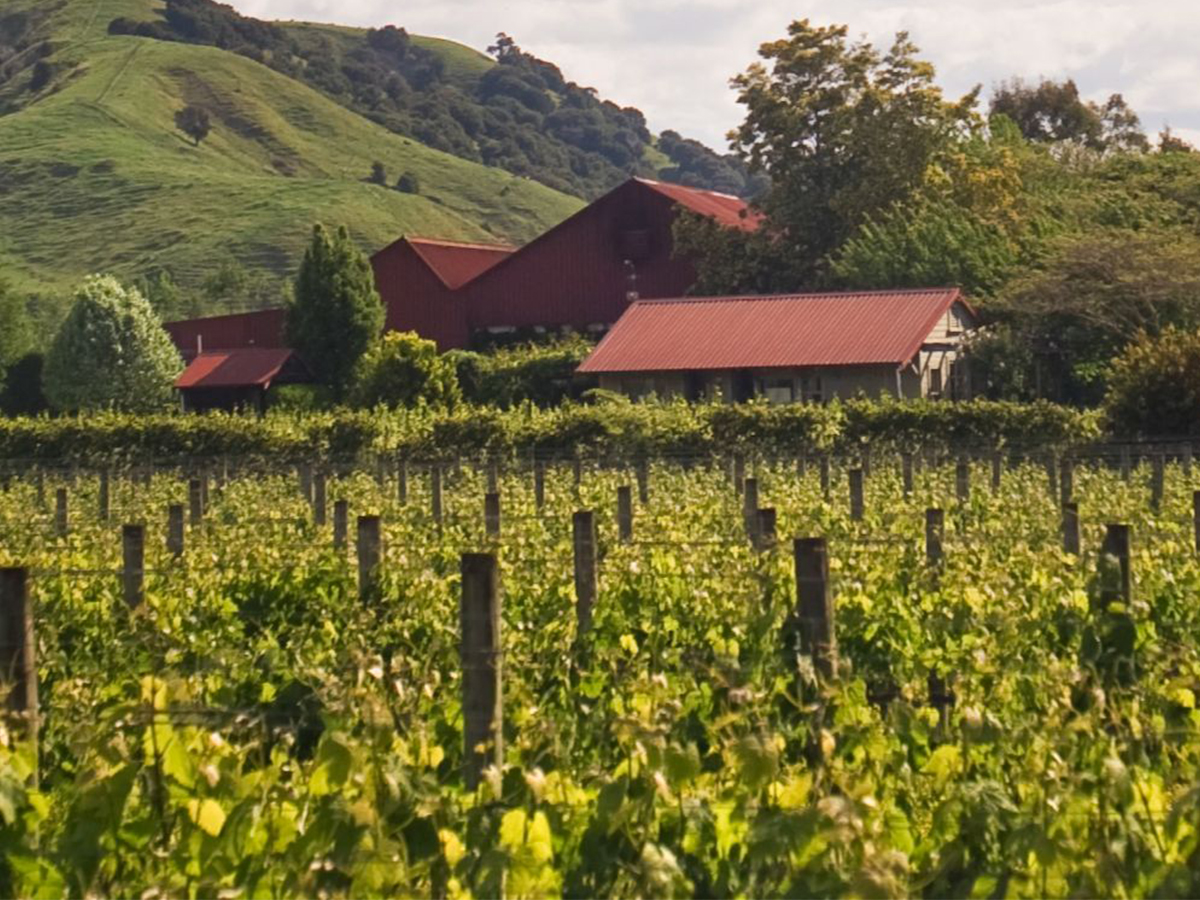
After more than 40 years as pioneers of the New Zealand wine industry, The Millton Vineyard has announced that its 2025 vintage was their last.
Founded in 1984 by Annie and James Millton, the estate became New Zealand’s first certified organic and biodynamic winery, setting a benchmark for sustainable winemaking.
“We have now decided to retire – both ourselves and the vineyards – we look forward to spending time with our family,” says Annie.
Over the next eight months, they will be gradually winding up the vineyard and winery operations but will continue to offer a range of wines until August 2026, or while stocks last.
“While this chapter is closing, the spirit of the Millton Vineyards will live on,” says Annie. “We have cared for this unique land for five generations, and will leave it in a better state for future generations.
“On behalf of our family and team, thank you for being part of the Millton story. I hope you have the opportunity to enjoy many more glasses of our wine in the months ahead.”
Drink up NZ’s rich history with a trip to one of our venerable vineyards, writes Jo Burzynska.
Sauvignon Blanc has the wow factor in Marlborough. Photo / MarlboroughNZ
On September 25, 1819, the Anglican missionary Reverend Samuel Marsden recorded planting the first grapevines in New Zealand in the grounds of the Stone Store, Kerikeri in the Bay of Islands. Sadly these never produced wine, allegedly being gobbled by local goats. Nevertheless, the promise that Marsden perceived for wine in Aotearoa has now been amply proven, and can be experienced alongside its history at vinous milestones that span the length of the country.
Bay of Islands – Vine Zero
Marsden Estate in Wiroa Road, Kerikeri. Photo / Supplied
Greater wine-growing success was achieved with the arrival of British wine enthusiast, James Busby to the Bay of Islands. He made New Zealand’s earliest recorded wine from vines planted in his grounds at Waitangi in 1833, described by French explorer Dumont d’Urville as “delicious”. While the wine industry followed more suitable climes and moved south, good wines still hail from this historic region. Head to Marsden Estate in Kerikeri, established 176 years after its namesake planted his vines. Select six wines to try at its cellar door, or grab a glass to savour in its subtropical – and goat-free – vineyard gardens or at its restaurant.
Gisborne – Organic Trailblazer
Millton, New Zealand’s first biodynamic vineyard. Photo / Supplied
Long before the New Zealand wine industry promoted its wines as the riches of a clean green land, James and Annie Millton were walking the talk. The couple established the country’s first organic and biodynamic wine estate in 1984 with the planting of their first vineyard near Manutuke where earlier settlers had planted grapevines in 1871. They now combine classic wines like their chardonnay with edgier examples in the skin-fermented whites of the Libiamo range influenced by the younger generation of Milltons. Sample these at their cellar door, set in beautifully landscaped grounds complete with olive grove.
Hawke’s Bay – Oldest Winery
Mission Estate Winery in Hawke’s Bay. Photo / Mission Estate
Christian orders helped spread the vine as well as their religion around the world, and it was Marist missionaries that transplanted vines from Bay of Islands to Hawke’s Bay, and in 1851 built the country’s oldest winery, Mission Estate. Its cellar door, housed in an imposing former seminary building, offers seated tastings that include insights into its history. Visitors can then wander through its underground cellar and extensive gardens that look out to sea, with an option to dine in its recently refurbished restaurant.
Wairarapa – Pinot’s First Place
Guests enjoying the sun at Ata Rangi vinyards, Martinborough. Photo / Pete Monk
New Zealand’s potential for Pinot Noir can be traced back to Wairarapa, where in the early 1880s Frenchwoman Marie Zelie Beetham and her husband William, planted the country’s first pinot vineyard near Masterton. Temperance put paid to that endeavour, but pinot noir grows once again at one of their vineyard sites, now Lansdowne Estate. Martinborough pioneers, such as Ata Rangi’s Clive Paton, then founded the modern pinot industry in 1980s. Ata Rangi continues to produce some of the country’s finest examples, which can be explored, along with its history, through intimate tastings held in their charming old winery cellar door.
Nelson – South Island Pioneers
The Neudorf Winery, Nelson. Photo / Supplied
In the early days of New Zealand wine, most vineyards were planted in the North Island as it was considered grapes couldn’t ripen further south. However, in the 1970s some brave souls started to plant vines on the mainland, including Tim and Judy Finn who founded Neudorf in Nelson when nobody knew what varieties might thrive there. Now they make some of the country’s top chardonnay and pinot noir.
These can be enjoyed at their cute cellar door overlooking their first Home Block vineyard, where picnic fare can also be selected from the “baby deli”.
Marlborough – Sauvignon Country Roots
Sauvignon Blanc has the wow factor in Marlborough. Photo / MarlboroughNZ
Our flagship Marlborough sauvignon blanc is a fairly new phenomenon. Planted there in 1973, on what is now Brancott Estate Vineyard, it went on to wow the world when Hunter’s Sauvignon Blanc won the UK’s prestigious Sunday Times Vintage Festival in 1986. Hunter’s still excels at sauvignon, as well as sparkling wines, which are shared in its farmhouse tasting room set in tranquil native gardens. The next generation continues to innovate, with the experimental Offshoot range that includes a naturally sparkling sauvignon “pet-nat”. Marlborough’s earliest history can be encountered at Auntsfield Estate, the site of the region’s first commercial vineyard and winery founded by David Herd in the 1870s. Take in the historic sites, such as the restored 1873 rammed earth cellar, on a vineyard tour and taste the impressive wines made by the Cowley family who re-established vines on the property.
Canterbury – Humble Beginnings
Take a trip around New Zealand’s oldest vineyards and wineries. Photo / Graeme Murray
An important chapter of Canterbury’s contemporary wine history started three decades ago in a Christchurch garage. This belonged to neurologist Ivan Donaldson, whose winemaking hobby resulted in Pegasus Bay, which went on to become a flagship winery of the region. Knowledgeable staff at its Waipara cellar door can talk you through its exciting range of wines. These can also be partaken of in the winery’s fabulous gardens or inside by the fire as part of a picnic of local fare from the mini deli it launches in December.
Central Otago – Natural Succession
Looking down over its sloping vineyards to Lake Wanaka, the views from Rippon vineyard are iconic. Photo / David Wall
It’s rare for a family to spend over a century cultivating their land, never mind close to 40 years in the wine-growing industry in New Zealand – and even rarer in Central Otago, where the wine industry only took off in recent decades. However, Rippon has long and strong ties to their special land, now managed biodynamically by second-generation winegrower Nick Mills. The views from Rippon Hall, where its cellar door is situated, are iconic, looking down over its sloping vineyards to Lake Wānaka and the mountains. Rippon’s site-expressive wines are equally spectacular.


 March Event: Penfolds Tasting
 March Event: Penfolds Tasting
 Loading...

 Reload document
  Open in new tab