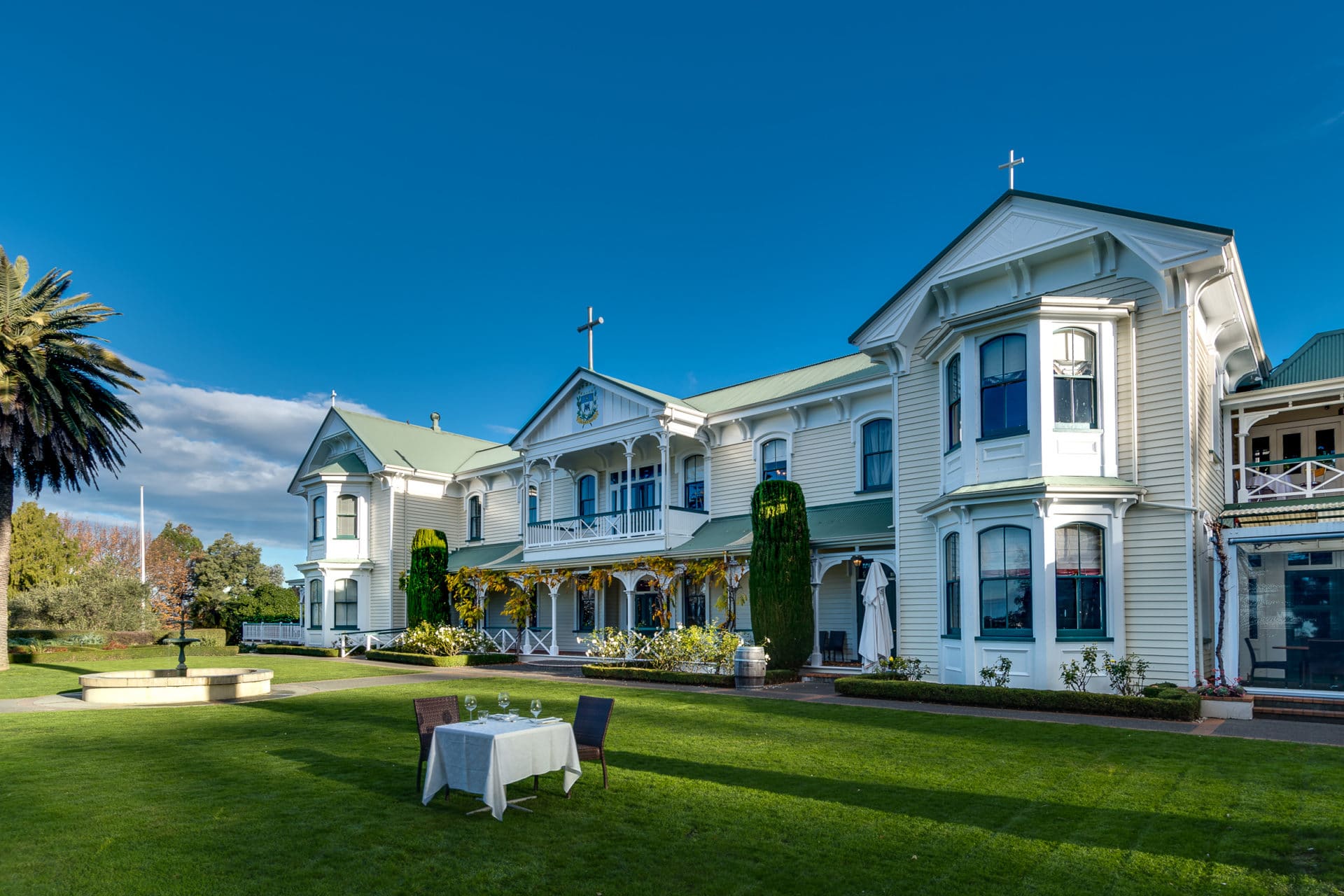
February tasting – Askerne Wines w/John Loughlin, Co-Founder and Director

Askerne Hawkes Bay
267 Te Mata Mangateretere Rd, Havelock North
Presenter – John Loughlin, Co-Founder and Director
Wednesday 11th February 8 pm start
Door Price: to be advised later
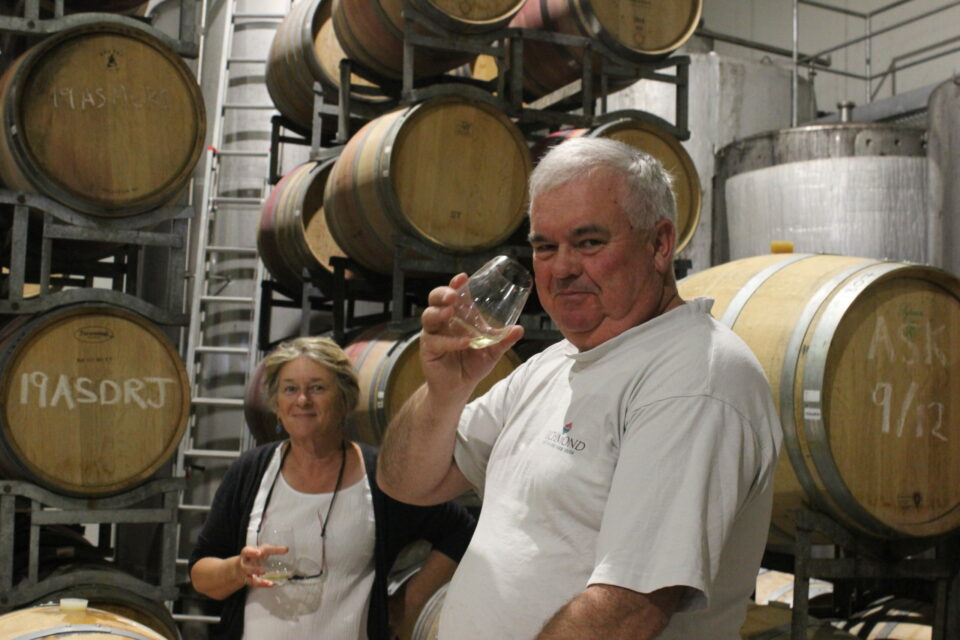
Askerne Estate winery commenced in April 1993 when wine lovers John and  Kathryn Loughlin purchased the original 11.6 hectares site in Te Mata  Mangateretere Road. John and Kathryn had studied winemaking and viticulture in the previous years with Kathryn, as the more diligent student, achieving the higher grades.

They called the property Askerne, being the olde English name of Kathryn’s birthplace, Askern in Yorkshire, England.

Sauvignon Blanc vines were planted in late 1993, Semillon and Riesling in 1994, Chardonnay in 1995 and Gewürztraminer in 1996. The first wines were made at the Waimarama Estate Winery (then owned by Dr John Loughlin, John’s father) in 1996.
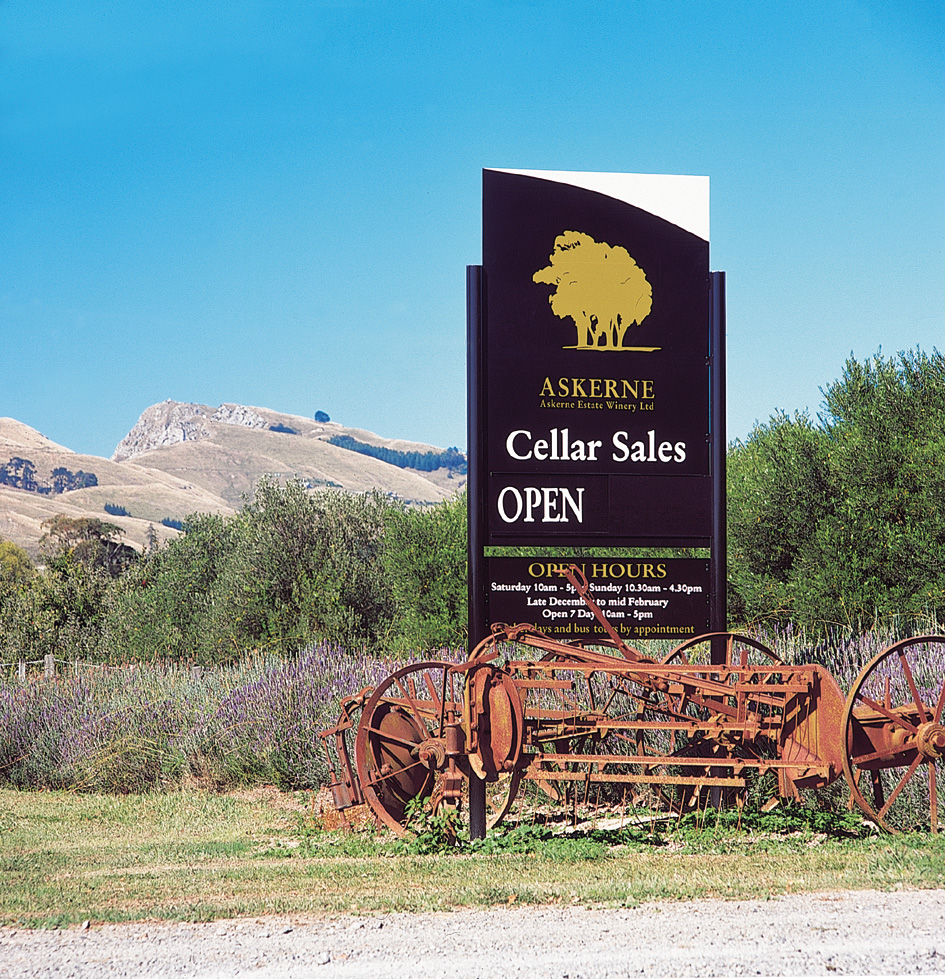
In February 1997, the Askerne cellar door was opened to the public, and it also sold Waimarama Estate’s red wines, including the then famous Waimarama Dessert Cabernet.

The 1997 vintage produced very fine wines from Sauvignon Blanc, and Chardonnay which confirmed the potential of the site. Askerne commenced exporting with wines from the 1997 vintage. It was a complete surprise to us when our Sauvignon Blanc won an award in The Netherlands as the best match with a cigar. It was not something we thought of in making the wine, nor have subsequently aspired to.

In 1998 Dr John Loughlin sold Waimarama Estate Winery and from the 1999 vintage, Askerne’s wines were made on site. The cellar door building was expanded to accommodate winemaking activities. The first red wine grapes were planted. Also, in 1999 the first Botrytis Semillon wine was made, and the first componentry was created for the Noble Noir wine which was first released in 2013.

In the significantly frost-affected 2001 the first red grapes were harvested, and a Cabernet Merlot Franc blend and Dessert Cabernet were made. Both these red wine styles were encouraging examples of the desired styles. A Chardonnay from the 2001 vintage won Askerne’s first gold medal.

In 2004 a new purpose-built winery was completed, only hours before it was used for vintage. The 2005 vintage saw the first multi-awarded wine with our Gewürztraminer winning double golds. The 2006 vintage saw the first trophy which was taken by our Noble Semillon. The 2007 vintage saw Askerne produce a Gewürztraminer that won 5 gold medals and a trophy.

Large vintages in 2008, 2009 and 2010 coincided with the global financial crisis and a downturn in business as customers changed and downsized and the market moved to cheaper price points. Export channels also dried up for Askerne. They launched their first white and gold label Rouge and Blanc blends as lower tier responses and sold them directly to consumers. Most of the fruit from the 2011 and 2012 vintages were sold as we sought to rebalance inventories with demand.

In 2014 Askerne commenced an exporting relationship in China with Beijing Touch World International Trading Company.

The 2018 vintage proved to be a great one and saw the launch of two of the planned new wine styles being a Sauvignon Blanc / Sauvignon Gris / Semillon blend and the first of the Icon series of wines in “The Archer” Chardonnay.
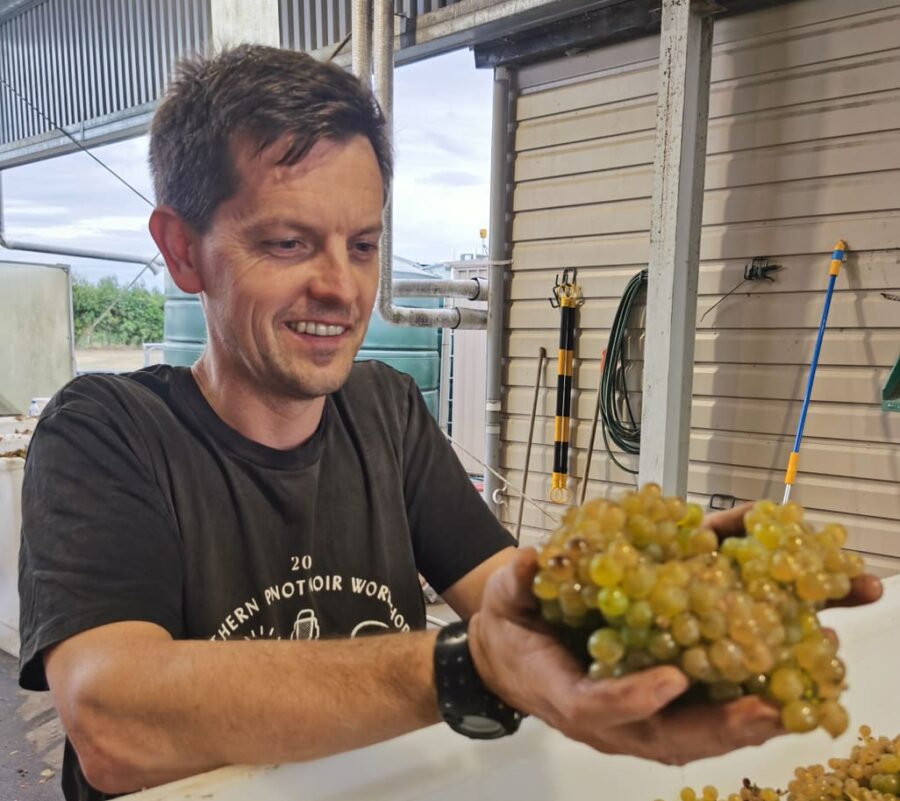
Cairn Coghill
Cairn Coghill

2018 also saw the 25th anniversary of the Askerne venture and was a time to think about the past and present The 2019 vintage was another excellent one which saw a second Icon wine produced in a Syrah called “Tere” which speaks of our site on Te Mata Mangateretere Road, adjoining the Tuki Tuki River.

The 2020 vintage was spectacular in terms of climate and quality. It was also unusual in terms of vintage operations which coincided with the covid-19 global pandemic, but Askerne was able to operate as an essential business.

From the 2020 vintage we added a new product to our range, being the first Sérieux rosé which was made from a blend of Carménère and Mourvèdre.

In January 2021 Cairn Coghill joined the Askerne team as winemaker.

New Zealand 2025 harvest report: A return to form

Emma Jenkins MW Decanter | 2 May, 2025

The 2025 New Zealand wine harvest has been widely welcomed following 2024’s reduced yields. Across the regions, winemakers reported not only a normalisation of volumes but also excellent fruit quality – notable in a country where diverse geography often leads to variability.

A warm, dry spring set the season up well, though a cooler, wetter December and January period tested nerves before settling into a classic Indian summer. While perhaps not as straightforward as the outstanding 2024 vintage, 2025 looks set to produce wines of finesse and charm across the regions and varieties, with the first releases just months away.

Auckland

Michael Brajkovich MW of Kumeu River expressed relief at a ‘normal’ sized vintage after two seasons down by 35-40%. Auckland experienced the driest summer since 1958, with consistent warmth but no heat spikes.

‘The fruit ripened evenly and with gradual aroma and flavour development,’ Brajkovich said. Chardonnay was once again the star, arriving early and in pristine condition.

Gisborne

Described as a ‘magnificent vintage’ by Kirsten Searle of Matawhero, 2025 brought full physiological ripeness and a return to normal yields after two lighter years. Chardonnay excelled, providing excellent fruit for both table wines and sparkling bases.

Searle also highlighted the Gewürztraminer from Matawhero’s Riverpoint vineyard as particularly impressive – a fitting celebration for the winery’s 50th anniversary.

Hawke’s Bay

There is genuine excitement in Hawke’s Bay, with some suggesting that 2025 may rival the renowned 2013 vintage. Ben Tombs noted Craggy Range’s earliest-ever harvest, with Chardonnay off the Gimblett Gravels picked on 8 February.

Whites show ‘electric flavour profiles with moderate alcohol’ while Syrah, despite late-summer humidity challenges, enjoyed extended hang time without excessive sugar accumulation, promising finely structured, vibrant reds.

Wairarapa

After four small vintages, Martinborough celebrated a strong yield. A relatively calm spring and lighter winds led to strong shoot growth and abundant flowering. Intensive canopy management paid off with Pinot Noir showing a savoury, charming profile.

Tombs commented on lower acidity and softer tannins compared to the more firmly structured recent vintages at Craggy Range’s Te Muna vineyard.

Nelson

Todd Stevens of Neudorf reflected positively on the vintage: ‘It’s still early but the whites appear beautifully balanced, while the Pinots show poise and should present very well.’ Initial signs point to good consistency across this smaller but significant region.

Marlborough

Murray Cook of Dog Point summed up 2025 as ‘a season of patience’. ‘With generous yields, the fruit took some time to ripen fully. Thankfully, we were blessed with classic dry and warm conditions which kept fruit quality high over what was our longest harvest period (46 days) in 24 years,’ he added.

However, with global inventories still high amid flat consumption and geopolitical uncertainties, many producers opted to leave fruit on the vines. The upside: only the best fruit was picked and consumers can look forward to excellent quality from this key region.

North Canterbury

A rollercoaster year, with Greystone’s Dom Maxwell describing it as one that ‘challenged us, then offered a lot, then challenged us again, and finally delivered in the end’.

Pure fruit flavours and clean fermentations made it a worthwhile ride. ‘We’re excited about the quality we have in the winery,’ Maxwell added.

Central Otago / Waitaki

Valli’s Jen Parr described an unusually compressed harvest of around half the usual span. Despite spring frosts affecting yields, she was thrilled with the ‘tremendous concentration’ and ‘crazy colour’, particularly in Gibbston and Bendigo.

Small berries and clean fruit were common themes with Parr commenting that wines possess richness and an appealing ‘joyful’ quality that should drink well young but also reward a few years in bottle.

The Waitaki Valley – often marginal – had one of its best vintages in recent years, for both ripeness and volume.

Looking Back – On our Mission Evening

Tasting – Summer Festive Evening, Mission Estate w/Tammy Edwards

This was a fun, festive evening, hosted by Tammy, Mission’s Rep, who
along with Wayne, chose the wines for our evening.

We were fortunate to have two of their premier Jewelstone range, to
savour, along with a Rose’ from Stables to compare with a Jewelstone
Rose, plus Mission’s Brut Cuvee bubbles, made in the champagne way.

Tammy updated us with the news that the CEO for the last 30 years was departing for other pastures. So they now have at Mission a new CE, new-ish vintner and new web page with new motto – ‘History in the Making’! Exciting times!

This evening has left everyone with some thoughtfully selected wines to source for Christmas celebrations. As a reminder of what to put on your shopping list, the wines we tasted were:

  • Mission Fete Brut Cuvee – Pinot Gris from Mission’s Home Block at Taradale, zesty with delicate pear and apple and fine mousse.
  • 2025 Stables Rose – made from a mix of grapes, to be used as an aperitif, cheap and cheerful
  • Jewelstone Rose [noting that 2024 has recently been released and is now called Blanc De Noir], This will cellar well for another five years if you want to. Handpicked whole bunch pressed organic Merlot grapes from Mere Rd in the Gimblett Gravels.
  • 2022 Jewelstone Chardonnay – these grapes were from their Green Meadows site in Taradale, made up of two clones, hand harvested and gently pressed, the firstly placed in French oak before spending time in neutral barrels.
  • Mission Reserve Syrah – Gimblett Gravels grapes, a nice light-ish wine, from a single vineyard. Can be kept for up to five years.
  • Mission Reserve Malbec – light, dry and on oak for 12 months, this can be cellared for five more years if you wish.
  • Mission Estate Late Harvest Riesling – this was a nice light-ish desert wine, and as well as going well with our Xmas fare provided by Wayne, it would pair nicely with lemon meringue pie.

Summer Festive Evening w/Tammy Edwards, Mission Estate

Wednesday 12th November, 8 pm Start

Door Price: Members $10, Guests $14

For our November we are returning to Hawkes Bay and trying some wines not previously tasted by us. We’ve described the evening as a Summer Festive Tasting as we are looking to taste some bubbles, compare two Rosés, as well as looking at two great reds that you might want to enjoy at a summer BBQ. We are finishing with a sticky that we know will appeal to many of our members.

That said, there is also plenty of quality in this tasting as it includes two wines from the Jewelstone range, Mission’s premier range, as well as two of their reserve wines. And the other good news is these wines have been heavily subsidised which is why the door price is so attractive.

Here’s what’s on our tasting list for the evening, in no particular order at this time.

  • Mission Fete Brut Cuvee
  • Stables Rosé
  • Jewelstone Rosé [noting the 2024 has recently been released and is now called Blanc De Noir]
  • Jewelstone Chardonnay
  • Mission Reserve Syrah
  • Mission Reserve Malbec
  • Mission Estate Late Harvest Riesling

And finishing our last formal tasting for the year, there will be a Christmas  morsel to go with the last wine. What a great way to finish!

This is going to be a fun evening, and we look forward to seeing you all there.

Tasting – Mission Wines, Hawkes Bay w/Tammy Edwards

A heritage like no other – Mission Estate Winery
Wednesday 12th March, 8pm
Door Price: Members $6 / Guests $10

Reaching NZ shores in 1838, pioneering French missionaries founded a legacy. From their many accomplishments now interwoven throughout history came New Zealand’s first winery, Mission , in 1851. Their inspiration, a legacy, continues.

Today their vineyards span two of NZ’s best winegrowing regions; Hawkes Bay and Marlborough. Hawkes Bay vineyards in the Gimblett Gravels and Taradale focus on Chardonnay, Merlot, Cabernet Sauvignon and Syrah; but also include small clocks of other varietals such as Semillon and Cabernet Franc.

Whereas, their Marlborough properties, perfect for producing cool climate wine styles, grow Sauvignon Blanc, Pinot Noir and Pinot Gris.

Mission Estate Winery established in 1851 by pioneering French Missionaries is New Zealand’s oldest winery and the birthplace of New Zealand wine.

Paul Mooney, our passionate winemaker since 1979, was trained by the Marist Brothers themselves, Paul imparts the very essence of Mission’s French heritage winemaking philosophy into both our Hawke’s Bay and Marlborough wines.

We consider ourselves guardians of our heritage and our land, and for more than 20 years we have been proud to be a founding member of Sustainable Winegrowing New Zealand. In 1998, we were also one of the first wineries in New Zealand to be certified with the internationally recognised environmental management system ISO 14001.

We start with 2024 Mission Estate Rosé as our conversation/entry tasting followed by:

  • 2023 The Gaia Project Pinot Gris
  • 2024 Mission Estate
  • 2023 Reserve Chardonnay
  • 2019 Mission Reserve Cabernet Franc
  • 2020 Mission Reserve Cabernet Sauvignon
  • 2023 Reserve Syrah

SPECIAL NOTE: The door prize on tasting night is going to be something a little special, namely a bottle of Lanvin Brut Champagne NV. Ticket prices for this will be $2 each.

Gold Medal Winners from the New Zealand International Wine Show Oct ’23

Hosted by Michelle Fraser, Clearview Sales Manager and occasional Wine Judge

Wednesday 10th April, 8 pm Start
Door Price: Members $14 / Guests $18

Please remember your tasting glasses

Immediately after the Gold Medal Winners from the New Zealand International Wine Show were announced last October, your club set out to acquire 3 bottles of 7 gold medal wines for us to taste
this month. April was chosen to do this as that is a time of the year when the wine industry is busy with harvest and thus many wineries are unavailable to present to us.

The beauty of doing this immediately that the announcements were made were two-fold. It meant that the wines were still available and more importantly it also gave us an opportunity to secure 5 that were trophy wines, one of which was also the overall Champion Wine of the Show.

And to help us present these wonderful wines to you all, we have invited Clearview Sales Manager, Michelle Fraser back to help us. You may recall that last year she mentioned that she has been a wine judge but she also comes with an extensive knowledge of viticulture and wine making, so is well placed to provide background and her take on each of our wines that we will be tasting.

The wines we will be tasting are:

  • Lindauer Special Reserve Rose NV – Gold & Trophy for Champion NZ Sparkling Wine
  • 2023 Giesen Estate Riesling – Double Gold & Trophy For Champion Riesling
  • 2022 Leefield Station Gewurztraminer -Double Gold & Trophy for Champion Gewurztraminer
  • 2022 Brancott Estate Letter Series O Chardonnay – Double Gold, Trophy for Champion Chardonnay plus Champion Wine of the Show
  • 2021 Daisy Rock Reserve Pinot Noir – Gold Medal
  • 2021 Esk Valley Artisanal Hawkes Bay Malbec Merlot Cabernet Sauvignon – Gold Medal
  • 2021 Trinity Hill Hawkes Bay Syrah – Double Gold, Trophy for Champion Syrah, Trophy for Champion Syrah & Predominant Blends & Trophy for Champion Commercial Red Wine

Clearview Tasting – Sept 23

The evening was well attended, and our presenter was Tim Turvey, winemaker, vineyard owner and the person who had returned tanned from Australia the day before after planting a pineapple plantation.

Tim regaled us with the history of how and why he set up the vineyard, built the house, established a native tree nursery and the expansions through to other regions of New Zealand for the different grapes he wanted to be able to use. He has 28 grape varieties they currently work with, plus a 100-year-old Olive tree that the original property owner, Vidals, planted.

He told us how the ‘White Caps’ range got its name, simply by white caps being the only colour available at the time for the new wines.

Our special treat was the extra tasting of their 2022 Reserve Chardonnay with a big buttery nose and taste from a challenging vintage, so it is in short supply.

The evening was finished with their Sea Red Dessert wine, a nice sweet touch.

A reminder of the wines we tasted during the evening:

  • 2021 Clearview Sparkling Blush arrival wine
  • 2023 Clearview Coastal Pinot Gris
  • 2022 Clearview White Caps Chardonnay
  • 2020 Clearview Reserve Semillon
  • 2021 Clearview Martinborough Pinot Noir
  • 2021 Clearview Cape Kidnappers Syrah
  • Clearview Sea Red Dessert Wine [500ml]

Babich Tasting – Aug ’23

Antonia presented us with some of the Babich wines, mainly from Marlborough, where their new winery is situated. Their base is still in the Henerson Valley, where the Babich family first settled.

Antonia regaled us with the Babich family members’ comings to New Zealand at an unsettled time for the world and why they turned to making wine, with their increasing presence here and their increasing knowledge base. An interesting evening for everyone.

The different labels certainly made for an interesting evening.

A reminder of the wines we tasted during the evening:

  • Family Estates Marlborough Organic Rosé
  • 2022 Family Estates Organic Albarino
  • 2022 Family Estates Organic Chardonnay
  • 2022 Irongate Gimblett Gravels Chardonnay
  • 2021 Black Label Pinot Noir
  • 2021 Classics Hawkes Bay Syrah
  • 2017 Irongate Cabernet Merlot Franc

Clearview Wines, presented by Tim Turvey – Sept 2023

Wednesday 13th September, 8 pm Start | Door Price: Members $10 / Guests $14

Clearview Estate has grown and owner-operated since 1986: Tim Turvey & Helma van den Berg.

TIM TURVEY & HELMA van den BERG

Purchased in 1986, the neglected but historic Vidal’s No.2 Vineyard at Te Awanga, Hawke’s Bay, was set to become Clearview Estate. Tim Turvey, with business partner Helma van den Berg, took on the challenge of bringing it back to life. Together, they hand-grafted and planted the first vines in the winter of 1988. Clearview Estate Winery Ltd was established for the first red wine vintage in 1989, following experimentation in prior years. Chardonnay began in 1991 with the release of the first Reserve Chardonnay.

Over the next several years, Tim and Helma planted thousands of trees, including avocado, olive, bay, citrus, gums, and melia. And they didn’t stop there. Together, they expanded the vineyard by three acres each year, grafting and planting vines, ramming posts, running wires, training young vines, and, for many years, completing all of the pruning themselves.

Today, the business proudly remains owner-operated. Tim oversees the vineyards and works with chief winemaker Matt Kirby and assistant winemaker Rob Bregmen to create legendary, much-awarded wines. Helma manages the finance, restaurant, gardens and her extraordinary team. Steeped in history, Clearview Estate Winery Cellar Door and Clearview Estate Restaurant have become an iconic and awarded destinations for both locals and visitors from afar.

194 Clifton Road, Te Awanga, Hastings, Hawke’s Bay.

Wines for our evening:

  • 2021 Clearview Sparkling Blush arrival wine
  • 2023 Clearview Coastal Pinot Gris
  • 2022 Clearview White Caps Chardonnay
  • 2020 Clearview Reserve Semillon
  • 2021 Clearview Martinborough Pinot Noir
  • 2021 Clearview Cape Kidnappers Syrah
  • Clearview Sea Red Dessert Wine [500ml]

Babich Wines w/Antonia Romero, Aug ’23

Sustainably Crafted New Zealand Wine – 100 years in the making

Wednesday 9th August, 8 pm Start
Door Price: Members $14 / Guests $18

People thought Josip Babich was crazy back in 1912. Planting vines in West Auckland and then patiently making wine the difficult way – with great vision, graft, thoughtfulness, ingenuity, and true craft. That pioneering spirit is something that still runs deep in our veins today, and we’ll keep ‘paying it forward’ for as long as we exist.

Over 20 years ago, we registered our first sustainable vineyard – a New Zealand first. But we’re not content to look back because what you’ve done is not who you are. We’re more excited about our future than ever and applying 100 years and three generations of winemaking experience to sustainably craft the most drinkable wines from New Zealand to the world.

Sustainability is always better when shared. Babich’s iconic NZ wine regions: Marlborough is home to some of the world’s finest Sauvignon Blanc. And a second home to Babich since we established vineyards there in 1989. Hawkes Bay is internationally renowned for its soil profile – perfect for supple, robust
and sophisticated reds.

Wines for the evening will be:

  • Family Estates Marlborough Organic Rose
  • Family Estates Organic Albarino
  • Family Estates Organic Chardonnay
  • Irongate Gimblett Gravels Chardonnay
  • Black Label Pinot Noir
  • Classics Hawkes Bay Syrah
  • Irongate 2017 Cabernet Merlot Franc

Mermaidary tackles the tricky topic of what wines to chill and by how much

Wine News – Imbibe from NZ House & Garden April 2023

Sparkling and sweet wines such as champagne and late harvests - 6-10C
Sparkling and sweet wines such as champagne
and late harvests – 6-10C

Mermaidary tackles the tricky topic of what wines to chill and by how much.

What temperature should you serve wine? The topic can be controversial. I have heard gasps of horror when pulling a bottle of chardonnay from the rack, opening and pouring it – bypassing the fridge. I prefer medium to full-bodied white wines at room temperature. And you can imagine the horror when I take a red wine from the fridge because I like reds slightly chilled, flying in the face of ‘the rules for how wine should be served.

The accepted serving temperatures are listed below, but I regularly flout those rules. I like my sparkling whites colder than 6C, which is a cardinal wine sin, but I find it gives the bubbles more vigour. I also enjoy reds when they are well below 13C, as it gives the wine more structure and definition.

In fact, in hotter climates such as in Australia, drinking red chilled is standard practice. Australian wine icon Taylors recently put a wine temperature sensor on its bottles which changes colour when the bottle reaches its optimum level of chill.

One place that always seems to get it wrong is your local bar or restaurant. Bar fridges are set to a standard temperature so juice, wine, beer and even milk are all stored in the same fridge at the same temperature. This means medium-bodied wines, in particular, can be served much too cold, which deadens the wonderful aromatics present in the wine. Red wines are invariably stored on a shelf in direct sunlight or near the warm kitchen. So, the best expression of your favourite wine might not be from your local eatery.

While there are guidelines, the perfect temperature is simply the one that you enjoy best. So open a bottle and you do you.

Agreed serving temperatures

Sparkling and sweet wines such as champagne and late harvests – 6-10C

Roses and light-bodied whites such as Sauvignon Blanc and Pinot Gris – 8-10C

Medium full-bodied whites such as Chardonnay and Albarino – 10-13C

Light-bodied reds such as Pinot Noir – 10-13C

Medium to full-bodied reds such as Syrah and Cabernet Sauvignon – 10-13C

Super 26 – wines consistently rated among NZ’s best

Bob Campbell MW | 12 Mar 2023

The classification highlights wines which have demonstrated outstanding quality time and time again. (Image: Depositphotos)

Twenty-six wines have achieved the highest possible ranking in the recently launched Real Review Wine Classification of New Zealand.

Check out the 3 (98 points or more in tastings), 2 (96 points or more) & 1 (95 points or more) Merit status wines, recognised as being iconic wines with an outstanding track record for 10 or more years.

Check out Bob’s article.